.
A lawn that stays hard and thin after watering needs more than a surface fix. Liquid aeration can support routine soil care, but severe compaction often calls for plugs.
Core aeration is a mechanical treatment that removes small soil plugs, opening compacted ground so air, water, and nutrients can reach roots more easily. Unlike liquid aeration, which treats the full lawn without leaving plugs, core aeration creates physical channels and directly removes compressed soil. Iowa State University Extension notes that the process relieves compaction, improves water and nutrient movement, and helps prevent thatch buildup. Professional core aeration is often the better next step for severely compacted, long-neglected, or poorly draining lawns that need direct relief. It also creates useful openings before overseeding, while trained technicians can assess soil conditions, mark hidden obstacles, and provide consistent coverage where the lawn needs it.
Knowing whether your lawn needs liquid care or physical plug removal starts with understanding the work below the surface. Next, core aeration explained: what actually happens to your lawn shows why the process can correct problems that liquid treatment may not fully address. Here is how.
Core aeration explained: what actually happens to your lawn
Core aeration is a lawn care method that removes small plugs of soil and thatch from the ground. Unlike tools that only press holes into soil, a core aerator brings material to the surface. The open channels give compacted soil room to loosen around the grass roots.
Thin turf, standing water, and hard soil can point to compaction, but each lawn needs a closer look. Homeowners who want help reviewing their options can Get a FREE Instant Quote before choosing a treatment.
How soil plugs relieve compaction
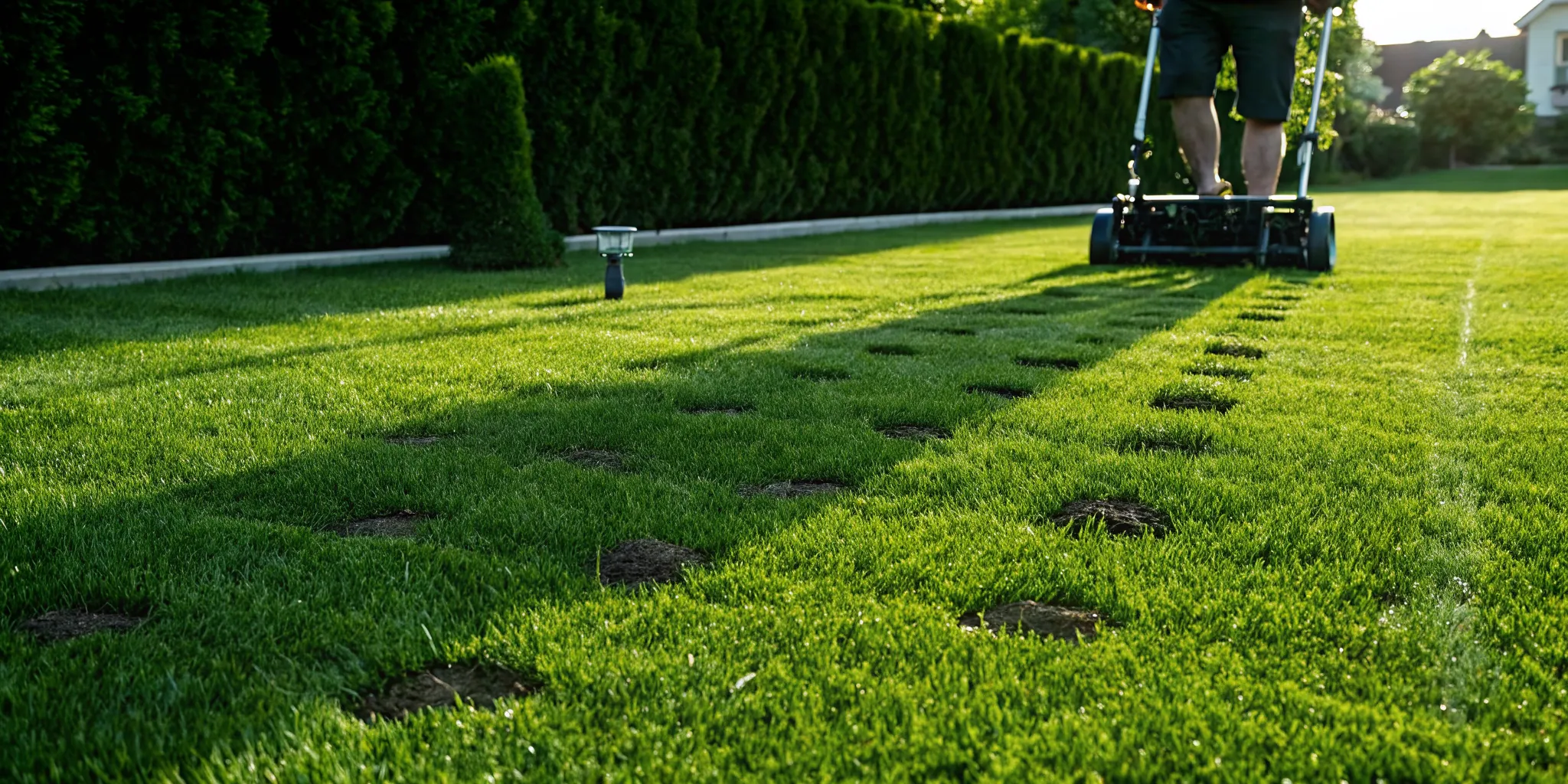
As an aerator crosses the lawn, hollow tines pull out narrow plugs at spaced intervals. This creates many small openings without removing the existing grass. The plugs stay on the lawn, where they break apart over time and return soil to the surface.
The main goal is to ease pressure in the root zone. According to Iowa State University Extension, core aeration relieves compaction and improves water and nutrient movement in soil. Those changes give roots a better setting for steady growth.
More room for water, air, and nutrients
Compacted soil has fewer open spaces between its particles. Water may move slowly into the ground, while roots have less access to air. Core aeration opens paths that help water reach the root zone instead of sitting near the surface.
Those channels also help lawn treatments move into the soil. Aeration does not feed grass by itself, and it cannot fix every turf problem. It improves the soil setting so water and nutrients can reach active roots more easily.
Thatch management and the right method
Thatch is the layer of living and dead plant material between grass blades and soil. A small layer is normal, but excess thatch can limit movement into the soil. Core aeration brings soil into contact with that layer, which supports natural breakdown.
ExperiGreen analyzes lawn conditions before recommending an aeration method. The team looks at compaction, thatch, turf type, and the lawn’s recent care. Core aeration may suit a heavily compacted or long-neglected lawn, while another method may fit different conditions.
Timing and follow-up care also shape the result. Homeowners considering seeding can learn more about using core aeration for turf health and why the two services often work well together.
Core aeration vs liquid aeration: which one fits your lawn?
Core aeration and liquid aeration can both support healthier soil, but they suit different lawn conditions. The right choice depends on compaction, past care, site features, and your goals for the season.
When core aeration is the stronger choice
Choose core aeration when the soil is severely compacted or the lawn has gone years without aeration. Foot traffic and heavy equipment often cause compaction. Clemson Cooperative Extension explains how compaction restricts turfgrass growth by limiting water movement and soil oxygen.
Core aeration removes small soil plugs, creating direct openings through compacted ground. Those visible plugs are a normal result of the work, not lawn damage. This corrective approach also fits lawns with heavy thatch or thin areas that need seeding.
If overseeding is part of the plan, the open holes can help seed reach the soil. ExperiGreen’s guide explains the role of core aeration before overseeding and the steps that follow.
| Decision factor. | Core aeration. | Liquid aeration. |
|---|---|---|
| Best fit. | Severe compaction or long-neglected turf. | Ongoing soil care. |
| After treatment. | Visible soil plugs. | No soil plugs. |
| Coverage. | Mechanical passes across the lawn. | Full lawn coverage. |
| Site concerns. | Requires care around marked underground features. | Safer around underground irrigation and fences. |
| Long-term plan. | Corrective care when conditions call for it. | Can alternate annually with core aeration. |
When liquid aeration fits the property
Liquid aeration may fit a maintained lawn that needs broad coverage without soil plugs. It can also make sense when underground irrigation or invisible fence lines make mechanical work a concern. Homeowners who prefer a clean surface after service may favor this option.
Still, liquid aeration is not always enough for severe compaction or a long-neglected lawn. In those cases, removing soil cores gives the root zone direct relief. The choice should follow the condition of the soil, rather than convenience alone.
A plan based on current lawn conditions
Aeration does not have to be the same every year. Alternating liquid and core aeration annually can support ongoing soil care. This plan reserves core work for seasons when it offers the most value.
An ExperiGreen technician can assess compaction, thatch, turf density, and site features before recommending a method. This approach helps avoid using liquid aeration where corrective core work is needed. Review the available lawn aeration services to see how each option supports a broader lawn care plan.
When should you choose core aeration?
Time the work for active growth
Choose core aeration when grass is growing well enough to recover after soil plugs are removed. For cool-season lawns, fall is often the best window. Spring can also work when soil compaction or drainage problems should not wait.
Iowa State University Extension lists September and April as the best times for Kentucky bluegrass and other cool-season lawns. Local weather can shift those windows, so use grass growth and soil conditions as your guide. This overview of when to perform core aeration can help you plan around your grass type and region.
Avoid aerating soil that is hard and dry or soaked with water. Slightly moist soil lets the machine pull clean cores without creating a muddy mess. Active turf can then fill open spaces and recover faster.
Signs your soil needs core aeration
Heavy foot traffic is a strong reason to consider core aeration. Repeated use presses soil particles together and leaves less space for air and water. Clemson Cooperative Extension explains that traffic is a leading cause of lawn soil compaction.
Compacted soil may show several symptoms at once. Look beyond a single thin patch, since shade, pests, and disease can cause similar damage. A lawn assessment can help confirm whether the root zone is too dense.
- Water pools after rain or runs off instead of soaking into the soil.
- Turf becomes thin in busy areas, along paths, or where children and pets play.
- Grass responds poorly to normal watering and fertilizer applications.
- Roots stay shallow, and the lawn struggles during heat or dry weather.
- A dense thatch layer blocks water and air from reaching the soil.
Core aeration is useful when these signs point to severe or long-term compaction. Removing plugs opens paths through the root zone instead of treating only the surface. It can also help manage the conditions that allow thatch to build up. Learn how core aeration reduces thatch before deciding whether the lawn needs aeration or dethatching.
Pairing aeration with overseeding
Fall core aeration is also a smart choice when a cool-season lawn needs overseeding. The open holes give seed more contact with soil, while active growth supports new grass. This pairing can help fill thin areas while addressing the compacted soil beneath them.
Core aeration is not necessary for every weak lawn. Poor light, watering issues, disease, or insect damage may call for another fix. Check the full lawn first, then choose aeration when the timing and symptoms both support it.
What to expect before, during, and after professional core aeration
Core aeration removes small soil plugs so air, water, and nutrients can move through the root zone. Iowa State University explains that core aeration also relieves compaction and helps prevent thatch buildup. A professional visit adds a planned process, commercial equipment, and a trained technician who can adjust the work to your lawn.
Before the appointment
The service starts before the aerator reaches the grass. Your provider may send preparation notes, such as watering guidance or a request to mark hidden obstacles. Following those notes helps the machine pull clean plugs while lowering the chance of damage.
-
Lawn review: The technician checks turf condition, compacted areas, slope, moisture, and access points. This review helps set the route and decide where extra passes may be useful. It also confirms whether professional lawn aeration fits the lawn’s current needs.
-
Obstacle marking: Sprinkler heads, shallow irrigation lines, invisible fences, drainage parts, and other hidden items should be marked before work begins. The technician can then plan a safe path around them. Tell the provider about any feature that may not be easy to see.
-
Aerator passes: The technician guides a core aerator across the planned areas, often changing direction to improve coverage. Commercial equipment pulls soil cores instead of only pressing holes into the ground. Training helps the operator control turns, avoid marked obstacles, and limit missed strips.
-
Soil plugs left in place: The plugs stay on the lawn after service and break down over time. Do not rake them away just because the lawn looks different. As they break apart, soil returns to the turf surface.
-
Follow-up care: The provider explains when to water and whether seeding or fertilization should follow. Keep traffic light while the lawn receives this care. If seed is part of the plan, review how to pair core aeration before overseeding with steady watering.
During core aeration
Expect noise, visible passes, and rows of plugs during the visit. The technician may slow down or make another pass where soil is more compacted. Professional equipment and a set route help produce more even coverage than scattered passes with a small rental machine.
After the aerator leaves
Your lawn will not look finished the moment service ends. The plugs, open holes, and follow-up care are part of the process. Water and any planned seed or fertilizer can reach the newly opened soil more easily.
Keep following the provider’s care notes in the days after service. Avoid removing plugs or changing the watering plan without asking first. If weather shifts or an area looks missed, contact the provider for guidance instead of repeating the work on your own.
Should you overseed after core aeration?
Yes, overseeding after core aeration is often a smart choice for a thin or patchy lawn. Aeration opens the soil surface, while overseeding adds new grass where the lawn needs more growth. Together, these services can improve turf density and support a more even lawn.
Why the pairing works
Grass seed needs close contact with soil to start growing. Core aeration creates open channels where some seed can settle instead of resting on grass, thatch, or hard ground. These openings also give developing roots access to air, water, and nutrients.
The pairing also addresses two lawn problems at once. Core aeration helps loosen compacted soil, and new seed fills space between existing grass plants. Iowa State University Extension explains that core aeration improves water and nutrient movement in the soil.
Lawns that benefit from overseeding
Overseeding is worth considering when the lawn looks thin, has bare patches, or struggles to recover after stress. It may also help older turf that has lost density over time. Thick new growth can fill open areas where weeds might otherwise find room.
Not every bare spot has the same cause. Shade, poor drainage, insects, disease, and heavy foot traffic can all weaken turf. Before spreading seed, correct the main problem so the new grass has a better chance to last.
Seed type matters as well. Choose grass that fits the site’s sun, soil, and local growing conditions. ExperiGreen’s guide to core aeration before overseeding explains how preparation and follow-up care support new growth.
Fall timing and follow-up care
Fall is often a good time to pair overseeding with core aeration on cool-season lawns. The soil is still warm, while cooler air can reduce stress on young grass. Starting before winter also gives seedlings time to form roots before the next summer.
After seeding, keep the upper soil layer damp without flooding it. Limit foot traffic while seedlings develop, and avoid mowing until the new grass is ready. Steady care during this stage is just as important as the aeration and seed work.
ExperiGreen evaluates the lawn before recommending a turf health plan. That review can reveal compaction, thinning, bare areas, and site conditions that affect seed choice. Learn more about professional overseeding services and how they can fit with core aeration.
Is DIY core aeration worth it?
DIY core aeration can work for a small, open lawn when the soil is only mildly compacted and the homeowner is comfortable using heavy equipment. It is less simple on a lawn with slopes, tight gates, irrigation parts, tree roots, or uneven soil moisture. The machine has to pull full plugs, not just mark the surface.
Equipment and coverage matter
Rental aerators are heavy, loud, and harder to turn than many people expect. If the operator rushes or avoids awkward areas, coverage can become patchy. Missed strips leave compacted soil in place, while sharp turns can scuff turf.
Professional service adds a planned route and equipment suited for repeated lawn work. A trained technician can slow down in tight spots, avoid marked obstacles, and make extra passes where the soil needs more help. That consistency is one reason core aeration is often better handled by a pro.
Hidden risks below the surface
Sprinkler heads, invisible fence lines, shallow irrigation, drainage parts, and exposed roots all change the work. A homeowner may not know where every obstacle sits. Marking them first reduces risk and helps the technician adjust the route.
Soil moisture also matters. Dry soil can keep tines from entering deeply, while wet soil can smear and make a mess. Professional timing helps the aerator remove clean plugs and gives the lawn a better chance to recover.
Know when to call for help
If your lawn is thin, hard, and slow to drain, guesswork can waste a service window. A professional can confirm whether the lawn needs core aeration, liquid aeration, seeding, or another fix. That keeps the plan tied to actual soil conditions.
For homeowners who want a clear next step, Get a FREE Instant Quote from ExperiGreen. The team can review your lawn needs and recommend an aeration plan that fits the property.
Frequently Asked Questions
When is the best time for core aeration?
Schedule core aeration while the grass is actively growing so it can recover quickly. For cool-season lawns, fall is usually preferred, although spring can also work. The Iowa State University Extension identifies September and April as the best times for cool-season lawns in Iowa. Warm-season lawns are generally aerated in late spring.
How often should you aerate your lawn?
The right schedule depends on soil compaction, lawn use, and turf condition. Lawns with heavy foot traffic, dense soil, or ongoing drainage problems may need aeration more often. For routine soil care, ExperiGreen recommends alternating liquid aeration and core aeration annually. A lawn analysis can determine whether the soil needs mechanical core removal sooner.
Should I overseed immediately after core aeration?
Yes, core aeration creates openings that help seed contact the soil, making it a practical time to overseed thin areas. ExperiGreen recommends pairing overseeding with fall core aeration for strong germination conditions. After seeding, follow the recommended watering schedule and limit traffic while new grass establishes. Timing may vary by grass type and local weather.
Do I need professional core aeration for my lawn?
Professional core aeration is a strong next step when a lawn has severe compaction, heavy thatch, poor drainage, or years of neglected soil care. Mechanical equipment removes plugs across the lawn at a consistent depth. According to the Clemson Cooperative Extension, compaction restricts turf growth by reducing water infiltration and soil oxygen. A professional assessment can also identify irrigation lines and other obstacles before work begins.
Ready to Choose the Right Aeration for Your Lawn?
Waiting to address severe soil compaction can leave grass roots with limited access to the air, water, and nutrients needed for steady, healthy growth. Delaying until the wrong season can also push meaningful lawn improvement farther out, especially when professional core aeration is the stronger corrective option. Starting now gives a professional time to assess soil conditions, choose the right method, and schedule treatment within an appropriate seasonal window for your lawn.
Ready to stop guessing and make a practical plan for your lawn before another useful service window passes? Get a FREE Instant Quote to request an assessment and see whether professional core aeration fits your lawn this season with confidence.