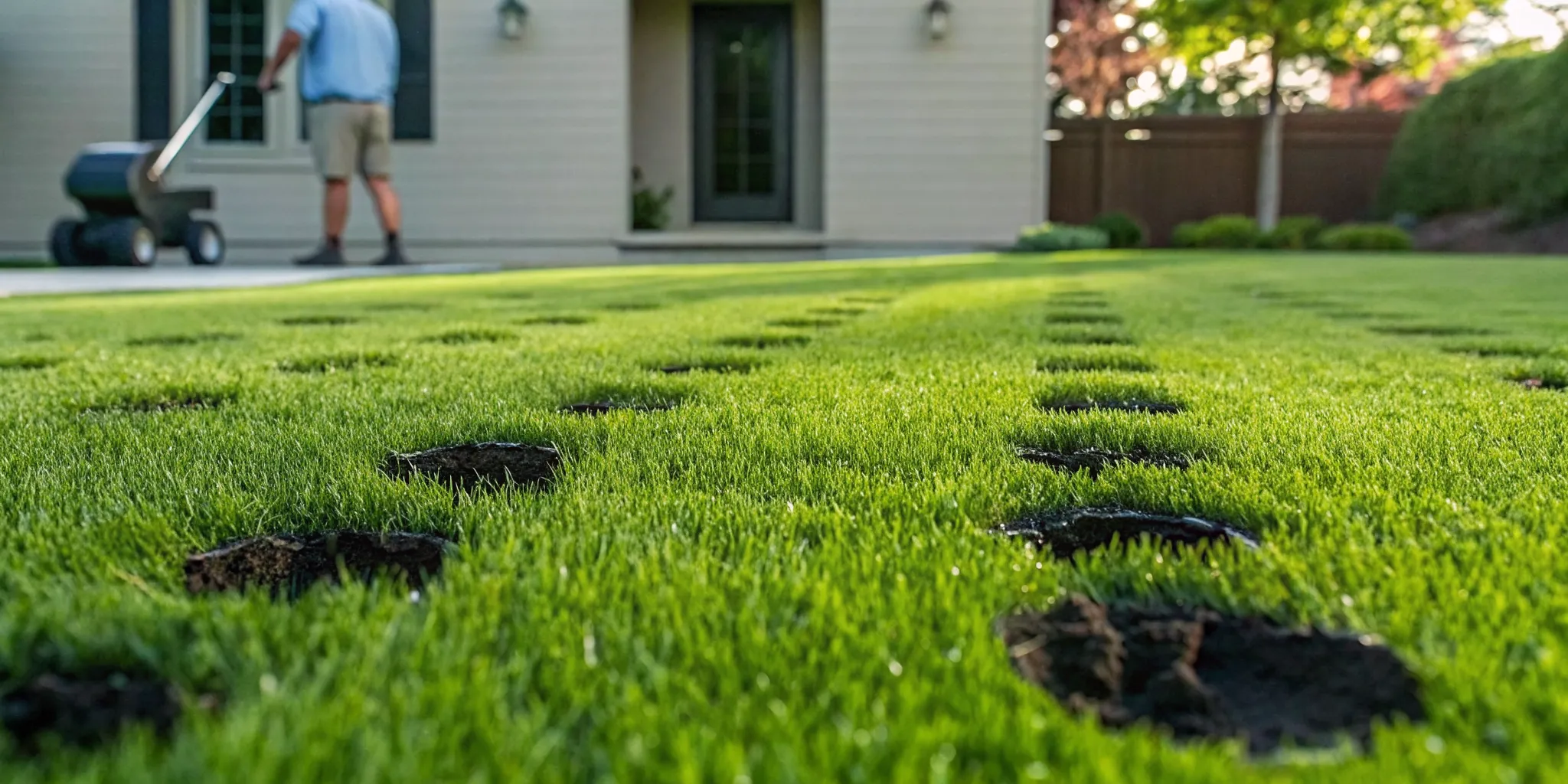
A compacted lawn needs aeration during active growth, not on a fixed date. Standing water, thin patches, and heavy foot traffic can make that timing more urgent.
Request Your Lawn Aeration Quote
The answer to when to aerate lawn areas starts with your grass type, region, and its active growing season. For cool-season lawns across much of the Midwest, early fall is usually best, with spring as a backup when the turf is actively growing. Warm-season lawns in the Southeast generally need late spring aeration, after growth resumes and before the lawn faces peak summer stress. Timing matters because compacted soil has less pore space for air and water movement, which can limit deep root development and slow recovery after aeration. Aerate sooner within the right seasonal window if water puddles, soil feels hard, turf thins, or regular foot traffic has packed the ground.
So, how do you narrow the calendar for your yard without aerating too early or too late? The first step is When to aerate lawn by grass type, since cool-season and warm-season turf recover on different schedules. Your region and lawn condition will narrow the window further. Here’s how:
When to aerate lawn by grass type
The right aeration window starts with the turf, not the calendar. Turfgrasses fall into two broad groups: cool-season and warm-season grasses. The University of Minnesota Extension explains that cool-season grasses grow best in spring and fall. Warm-season grasses follow a different cycle.
Cool-season lawns in the Midwest
For a cool-season lawn, aerate in early fall when possible. Grass is growing, summer heat has eased, and there is time for recovery before winter. Early spring is the next practical window if the fall visit was missed.
This pattern fits many Midwestern lawns in Illinois, Indiana, Michigan, and Ohio. Conditions still vary by weather and lawn health, so use growth as your guide. If the turf has not started active spring growth, wait rather than relying on a fixed date. Homeowners can also compare local timing details for Chicago lawn care, Indianapolis lawn care, Cincinnati lawn care, Columbus lawn care, and Detroit lawn care.
Warm-season lawns in the Southeast
For warm-season grass, shift the schedule later. Aerate in late spring or early summer after the lawn is actively growing. The University of Missouri Extension notes that warm-season grasses grow best during hot weather.
This timing is a better fit for many Southeastern lawns in North Carolina and Georgia. It gives the turf an active growth window after service. Do not copy a Midwestern fall schedule onto a Southern lawn simply because fall aeration advice is common online.
Timing adjustments for the lawn in front of you
Grass type is the first filter, but it is not the only one. Soil, rainfall, heat, and the lawn’s current growth can shift the best week. A shaded lawn or a stressed lawn may need a different plan from the yard next door.
Compacted soil also matters. Compaction presses soil particles together and reduces pore space, which limits room for air and water movement. Homeowners comparing when to aerate lawn should pair the seasonal window with the lawn’s actual condition.
- Cool-season grass: choose early fall first, then early spring if needed.
- Warm-season grass: choose late spring to early summer during active growth.
- Border-zone lawn: confirm the grass type before using a regional rule of thumb.
How region changes your aeration window
The right aeration window depends on how your grass grows, not one date on the calendar. Soil warmth, steady growth, heat stress, and recovery time all matter. Turf should be growing well enough to recover after treatment. That is why the answer to when to aerate lawn differs between a Midwest yard and a Southeast yard.
Midwest cool-season lawns
Many Midwest lawns grow most strongly outside the hottest part of summer. The University of Minnesota Extension notes that cool-season grasses grow best in spring and fall. For these lawns, fall often offers a useful aeration window. Grass can recover while soil remains warm enough for root growth.
Spring can also work when the lawn is growing well and the soil is not soggy. But timing needs care. Aerating during summer heat can add stress when turf is already working hard to hold moisture. Aerating too early can also limit recovery if the lawn has not started active growth.
Southeast warm-season lawns
Southeast lawns often follow a different pattern. Warm-season turf becomes a better candidate after active growth starts in late spring. The University of Missouri Extension explains that warm-season grasses grow best during hot weather. This makes late spring a practical target in many southern markets.
The goal is not to wait for peak summer stress. Instead, schedule aeration after green-up and before harsh heat limits recovery. Grass type still matters within the region. A local lawn assessment can help narrow the window before booking lawn aeration services. If you are in North Carolina, ExperiGreen’s Charlotte lawn care team can help match warm-season timing to local conditions.
Conditions that shift the schedule
Regional advice is a starting point, not a rigid rule. A cool spring can delay active growth. Early heat can shorten a comfortable work window. Recent rain may soften dry ground, but saturated soil is not a good target for core aeration.
- Check whether the lawn is actively growing.
- Look for enough recovery time before seasonal stress.
- Avoid aerating waterlogged soil or turf under heat stress.
- Match the plan to the grass type, not a fixed month.
When conditions line up, aeration gives the lawn a better chance to recover. That simple check is more useful than choosing the same weekend every year.
How to tell if your lawn needs aeration
Aeration is most useful when the soil is compacted or the lawn is struggling to move air, water, and nutrients through the root zone. You do not have to guess. A few simple signs can tell you whether aeration should be on the schedule.
Water sits on the surface or runs off
When soil particles are pressed tightly together, there is less pore space for water to move through. The USDA Natural Resources Conservation Service describes compaction as soil particles being pressed together, reducing pore space. On a lawn, that can show up as puddles, runoff, or dry patches even after watering.
If water races across the surface instead of soaking in, the roots may not be getting consistent moisture. Aeration helps create pathways so water can move into the soil more effectively.
The turf is thinning even with regular care
Thin grass can have many causes, including shade, disease, poor fertility, or drought. Compaction is another common reason. When roots have limited room, the lawn may look weak even when it receives regular mowing and fertilization.
Look for worn paths near play areas, gates, driveways, sidewalks, and patios. These areas often receive repeated foot traffic or equipment traffic. They compact faster than low-traffic parts of the yard.
The soil feels hard underfoot
A simple screwdriver test can help. Try pushing a screwdriver into the soil when it is slightly moist. If it is difficult to push in, compaction may be part of the problem. You can also inspect a small soil slice to see whether roots are shallow or restricted.
Thatch is another clue. Briggs and Stratton notes that aeration is recommended when the thatch layer is greater than one-half inch. A small amount of thatch is normal, but too much can interfere with air and water movement.
The lawn gets heavy use
Lawns used by children, pets, gatherings, or frequent mowing equipment are more likely to compact over time. Newer construction lawns can also have compacted subsoil from grading and equipment traffic.
These lawns may need aeration even if they still look acceptable from the street. The goal is prevention as much as repair. Opening compacted soil before decline becomes severe can support deeper roots and better seasonal recovery.
If several of these signs are present, it may be time to schedule professional lawn aeration. A local team can confirm whether core aeration, liquid aeration, or a longer-term plan makes the most sense.
Core aeration vs. liquid aeration: which timing fits?
The right method depends on your lawn’s condition, grass type, and long-term care plan. ExperiGreen offers both core and liquid aeration, so the choice is not one-size-fits-all. Both options help address compacted soil. The USDA Natural Resources Conservation Service explains that soil compaction reduces pore space for air and water movement.
When core aeration fits
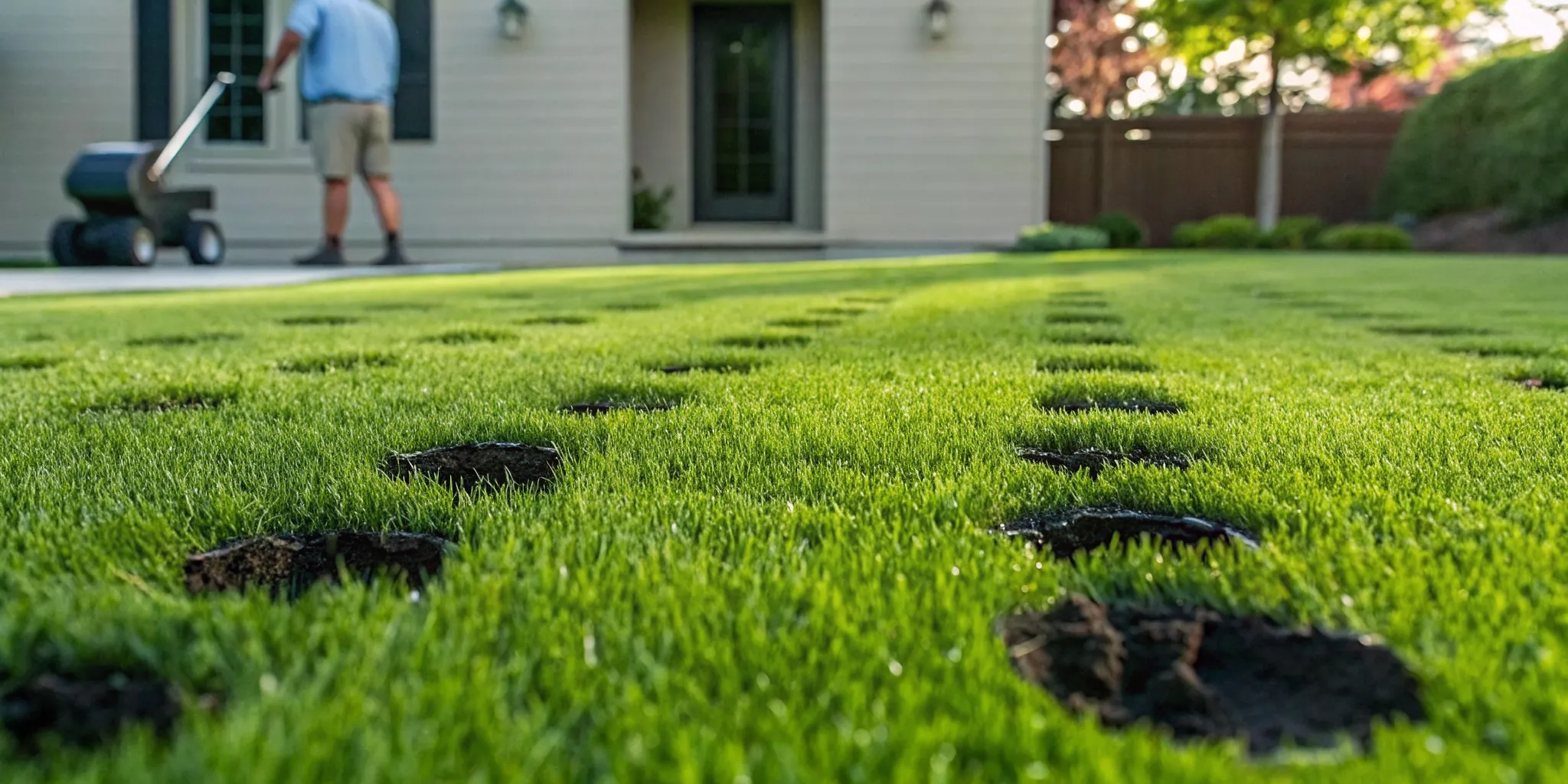
Core aeration removes small plugs of soil across the lawn. This method helps relieve compaction, limit thatch buildup, improve water movement, and support root growth. It is a practical choice when the soil feels dense or water has trouble soaking in.
Timing should match active growth, since grass needs time to recover after service. Cool-season grasses grow best in spring and fall, according to University of Minnesota Extension guidance. Core aeration is also the usual choice when fall overseeding is part of the plan.
When liquid aeration fits
Liquid aeration treats the full lawn without pulling soil plugs. It can fit a maintenance year when you want broad coverage and a tidy surface after service. It also avoids the risk of a mechanical aerator contacting underground irrigation lines or electric dog fences.
Liquid aeration is not a direct copy of core aeration. It does not leave the same visible soil plugs, and the service process differs. A local lawn expert can weigh soil conditions, turf stress, and past care before choosing a method.
| Factor | Core aeration | Liquid aeration |
|---|---|---|
| Best use | Dense soil or fall seeding. | Broad maintenance coverage. |
| Timing fit | Active growth periods. | Between core service years. |
| Surface impact | Leaves temporary soil plugs. | Leaves no soil plugs. |
A multi-year plan
ExperiGreen often recommends alternating approaches over the years: liquid aeration one year and core aeration the next. This plan combines the strengths of both methods instead of treating them as rivals. Your schedule may still shift based on grass type and regional weather.
If you are deciding when to aerate lawn, start with your turf’s needs rather than the calendar alone. ExperiGreen’s lawn aeration service covers both methods and can help map the right timing for your yard.
What should you do before and after aerating?
A little prep helps aeration go smoothly. It also protects the work after the machine leaves your yard. The goal is to open the soil, then give the lawn time to recover without added stress.
Why prep matters
Compacted soil has less pore space between its particles, according to the USDA Natural Resources Conservation Service. That leaves less room for air and water movement. Aeration helps address this issue, but the right steps depend on the method used.
Core aeration removes small plugs from the soil. Liquid aeration covers the lawn without leaving plugs behind. If you are deciding between those options, review ExperiGreen’s lawn aeration services before making a plan.
Before and after aeration steps
Use this simple checklist before the appointment and during the days that follow. Ask your local lawn care team for advice if your soil stays wet or your grass is under stress.
- Mow before the service. Cut the lawn to its normal mowing height. This gives the aeration equipment a clear path and makes it easier to see sprinkler heads.
- Water if the soil is dry. Aim for soil that is moist, not soggy. If heavy rain has soaked the yard, ask whether the visit should be moved.
- Mark hidden obstacles. Before core aeration, flag sprinkler heads, irrigation lines, shallow cables, and electric dog fences. Show the technician any spots that need extra care.
- Leave the plugs in place. Core aeration leaves soil plugs across the grass. Let them break down on their own as the lawn is mowed and watered.
- Add seed when the timing fits. For cool-season lawns, fall overseeding is often paired with core aeration. Openings in the soil create a useful chance to spread seed. ExperiGreen’s overseeding services page explains this seasonal approach.
- Keep new seed moist. Follow the watering plan from your lawn care team. The right schedule can vary with rain, soil, and local weather.
- Limit heavy traffic. Keep pets, children, and equipment off newly seeded areas when possible. Give the lawn space while seed starts to grow and the turf recovers.
Local timing and lawn conditions
When to aerate lawn areas depends on grass type, region, and current soil conditions. Cool-season grass and warm-season grass do not follow the same growth cycle. Your aeration plan should fit the lawn in front of you.
Do not force the work onto a saturated yard or a stressed lawn just to meet a date. A local team can help adjust watering, aeration, and overseeding steps for current conditions.
Can you aerate too early or too late?
Yes. Aeration works best when the lawn can recover quickly. If the grass is dormant, drought-stressed, heat-stressed, or close to winter shutdown, the service can disturb the lawn without giving it enough time to respond.
Aerating too early
Early spring can be tempting, especially after a rough winter. The problem is that soil may still be cold, wet, or slow to support active growth. Heavy equipment on saturated soil can also create more compaction or surface damage.
For cool-season turf, wait until the lawn is actively growing if spring aeration is necessary. For warm-season turf, avoid early spring aeration while the lawn is still coming out of dormancy. Late spring to early summer is usually a better fit.
Aerating too late
Late timing creates a different problem. Cool-season grass needs recovery time before winter. Warm-season grass needs recovery time before dormancy. If the lawn is aerated at the end of its growth cycle, roots and shoots may not respond strongly enough before seasonal stress arrives.
Late aeration can also complicate seeding. If you plan to pair aeration with overseeding, the new seed needs enough time, moisture, and mild weather to establish. That is why fall timing is so important for many cool-season lawns.
Aerating during stress
A lawn under severe drought, heat, disease pressure, or recent herbicide stress may need to stabilize before aeration. The same is true for soil that is either powder-dry or soggy. Moist soil is usually easier to work with, but saturated soil is not ideal.
If the timing is questionable, pause and evaluate conditions. A short delay can be better than forcing the service into a poor window. The best answer to when to aerate lawn areas is rarely just a month. It is the month plus grass growth, soil moisture, and recovery time.
When professional aeration makes sense
Some lawns are simple enough for a homeowner to evaluate. Others need a more precise plan. Professional aeration makes sense when the lawn has recurring compaction, unclear grass type, irrigation concerns, or a larger care program that includes seeding and fertilization.
It is especially helpful when you are deciding between core and liquid aeration. Core aeration can be the right call for dense soil, thatch, and overseeding. Liquid aeration can be a cleaner maintenance option when full-lawn coverage and no soil plugs are priorities. ExperiGreen offers both options, which allows the recommendation to fit the lawn rather than forcing one method every year.
Call for help when conditions are mixed
Professional guidance is valuable if one part of the lawn is shaded, another gets heavy foot traffic, and another dries out quickly. Those areas may not need the same timing or follow-up care. A local technician can look at soil, turf density, traffic patterns, and regional weather before recommending a schedule.
It also makes sense to ask for help if your lawn has underground irrigation, invisible pet fencing, or shallow utility concerns. Those features should be identified before mechanical core aeration. In some cases, liquid aeration may be the safer option.
For homeowners who want a healthier lawn without guessing at the calendar, ExperiGreen’s lawn care services can connect aeration timing with fertilization, weed control, seeding, and seasonal maintenance. That full-program view is often more effective than treating aeration as a one-time task.
Frequently asked questions about when to aerate lawn areas
When is the best time to aerate a cool-season lawn?
Early fall is usually best for cool-season lawns because grass is actively growing and has time to recover before winter. Early spring can work as a backup if fall was missed, but avoid saturated soil and weak early growth.
When should I aerate a warm-season lawn?
Warm-season lawns are usually best aerated in late spring to early summer, after the turf is actively growing. This gives the lawn time to fill in and recover before seasonal growth slows.
Should you put grass seed down after aerating?
For many cool-season lawns, yes. Core aeration can create better seed-to-soil contact, which is why overseeding is often paired with fall aeration. Warm-season lawns may need a different plan depending on turf type and region.
Should I dethatch or aerate first?
If thatch is heavy, dethatching may come before aeration so the soil surface is easier to reach. If thatch is minor and compaction is the bigger issue, aeration may be enough. A professional can inspect the lawn before recommending either service.
Ready to choose the right aeration window?
The best aeration plan is built around your grass type, your region, and your lawn’s actual condition. ExperiGreen can help you decide whether core aeration, liquid aeration, seeding, or a seasonal lawn care program is the right next step.
Request your lawn aeration quote
Get local guidance on when to aerate your lawn for stronger roots, better water movement, and healthier turf.