
Maintaining a healthy Cincinnati lawn requires a precise schedule that aligns with local soil temperature shifts. Ohio weather transitions quickly, leaving narrow windows for critical treatments like pre-emergent weed control and fall aeration.
A lawn care maintenance calendar for Cincinnati and Dayton homeowners provides a monthly guide for managing cool-season grasses like fescue and bluegrass. This plan begins in early spring with weed control applied when soil temperatures reach 55 degrees Fahrenheit to stop crabgrass before it grows. During the summer months, the focus shifts to preventive grub control and deep watering to protect roots from heat stress and pests. Fall remains the most critical time for recovery, featuring core aeration and overseeding to repair summer damage and build thick turf. By following this local schedule, you ensure each treatment happens during the specific window when it works best for your soil and climate.
Get a FREE Quote to start your personalized Cincinnati lawn care plan today.
Understanding the timing for each of these steps is the first move toward a better lawn. Many homeowners struggle to know why certain treatments fail when applied at the wrong time. A well-planned calendar matches each task to the natural growth cycle of your grass, so every treatment lands when it does the most good.
Why Cincinnati Lawns Need a Lawn Care Maintenance Calendar
Cincinnati and Dayton sit in a unique spot for yard care. This area is in USDA zones 6a and 6b. Most yards here grow cool-season grasses like Kentucky bluegrass and tall fescue. These plants need care based on local weather. A Cincinnati lawn care plan must watch these changes to keep the turf thick and green. Without a set schedule, you might miss the short times when your yard is ready for help.
The Growth Cycle of Local Grass Types
Cool-season grasses in the Midwest grow fast during the cool days of spring and fall. When the hot sun and dry air of summer arrive, these grasses often go dormant to stay alive. This cycle is why a year-round lawn care maintenance calendar is so helpful. It aligns your work with the natural life of the turf. It helps you time your work for when the plants are most active.
Heat and cold play a big role in this cycle. Grass blades grow best when air temperatures stay between 55 and 75 degrees Fahrenheit. Below the surface, roots prefer soil that stays between 50 and 65 degrees. When the weather moves out of these ranges, the grass stops growing. In the Ohio Valley, these good days can be short. A calendar helps you track these windows so you feed the lawn when it can use the food.
Precise Windows for Vital Treatments
Timing is key when you want to stop weeds and pests. Crabgrass is a big problem in Ohio yards. This weed starts to sprout once soil heat reaches 55 degrees Fahrenheit. You must put down a shield before this happens. Experts at Ohio State University say that soil heat is the best way to know when to act. If you wait until you see the weed, the seeds have already won.
Aeration also needs a strict plan. The best time for our local grass is the fall. Fall work lets roots grow deep while they are in their peak phase. It also helps the lawn heal from summer heat before the winter cold hits. Putting down food during these active months helps the grass build strength. This keeps the yard healthy even when growth slows down in the winter.
The Cost of Bad Timing
Poor timing can lead to lost cash and hard work. If you feed the lawn too early in the spring, you might force top growth too fast. This makes the grass weak and less able to handle the hot summer days. On the other hand, adding too much food in a hot July can cause real harm. The grass is already stressed by the heat and cannot take in the extra nitrogen. This can burn the lawn and leave brown spots.
A calendar also stops you from missing the time to fight pests. Grub control works best in early summer when the young bugs start to eat. If you miss this gap, the grubs grow large and can kill whole patches of grass by late August. By following a steady plan, you stay away from these common slips. A smart path keeps your soil rich and your yard strong against the changing weather of the Ohio Valley.
What Lawn Care Does Your Cincinnati Lawn Need in Spring?
Spring is the most vital time for your Ohio lawn. As the ground thaws in Cincinnati, your grass wakes up from its winter nap. Focus on cleanup, weed prevention, and root health to help your turf thrive before the summer heat arrives. Following a lawn fertilization and weed control program ensures you hit every mark on time.
March cleanup and soil prep
March is the time to clear away the debris of winter. You should rake up dead leaves, twigs, and any trash that blew onto your yard. This cleanup lets air and light reach the grass blades. It also helps you find thin spots where weeds might try to grow. Crabgrass and other grassy weeds often take root in bare or damaged areas of the lawn.
This is also the best time for a soil test. Knowing your soil’s health helps you avoid waste. Most lawns need a pH level between 6 and 7 to stay healthy. You should test healthy lawns every three to four years, but check problem spots every year. According to Pennington, annual tests for these spots help you fix issues before they spread.
April weed prevention
April is all about stopping weeds before they start. In Cincinnati, soil temperature is the best way to know when to act. Crabgrass seeds begin to sprout when the soil stays near 55 degrees Fahrenheit. You must apply a pre-emergent herbicide before this happens. If you wait too long, these weeds will emerge and become much harder to kill later in the year.
Proper timing is key for this step. Experts at the University of Minnesota suggest applying these products in mid-spring. This barrier keeps weed seeds from growing into full plants. By acting now, you protect your lawn’s health and save yourself from extra work in the summer. It is much easier to block a weed than to pull one out later.
May feeding and spot checks
By May, your grass is growing fast. This is the time to start your seasonal fertilization schedule. But you must be careful not to feed your lawn too early in the spring. Feeding too soon can force the grass to grow too fast. This can hurt the roots or waste the energy the plant needs to stay strong. Wait until the grass is active and ready to use the food.
You should also look for broadleaf weeds that popped up despite your efforts. Instead of spraying the whole yard, try to treat only the spots where you see weeds. This method is often more helpful for the lawn than a full spray. Using a targeted spot treatment helps you control dandelions and clover without stressing the healthy grass nearby.
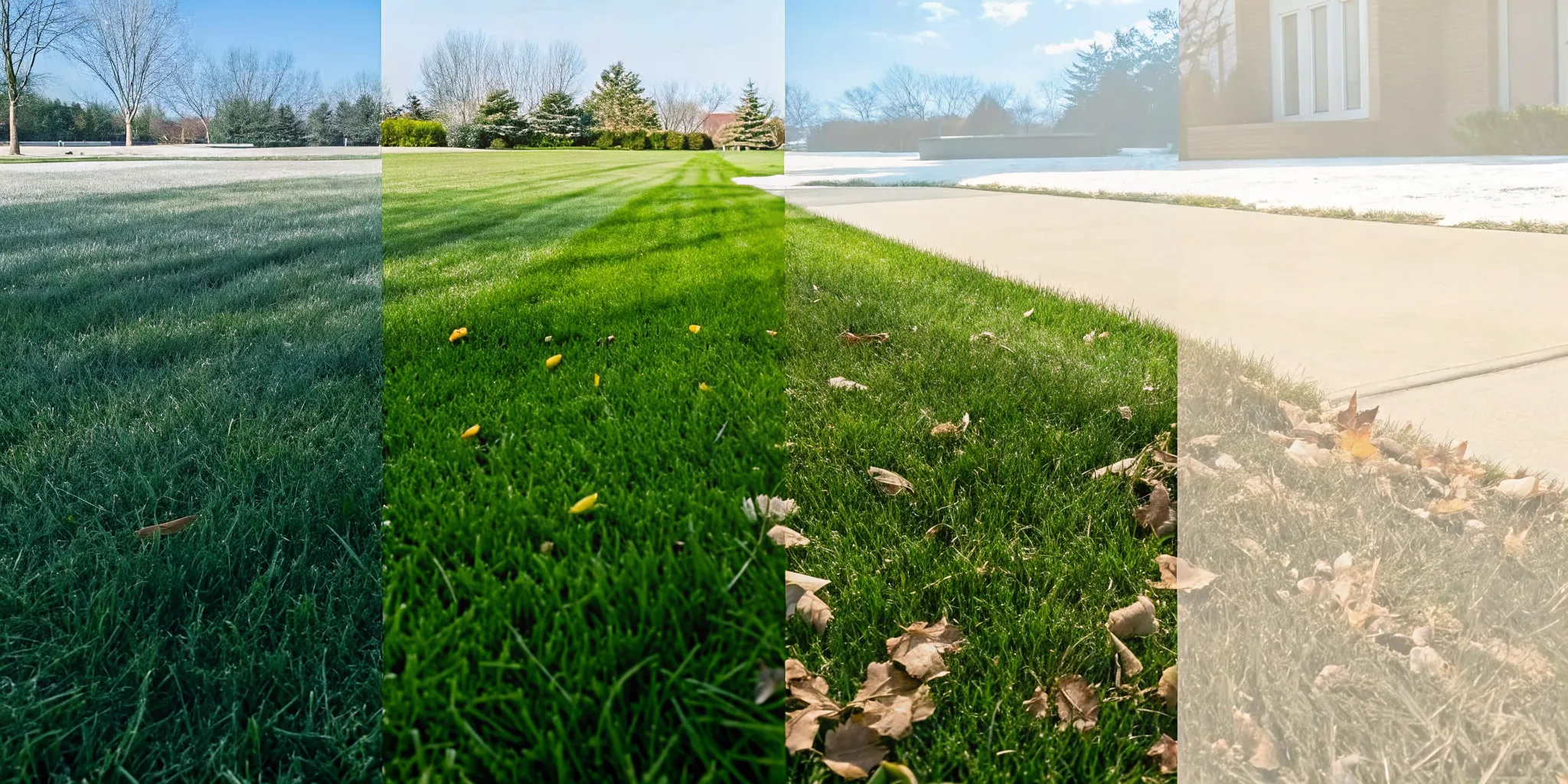
How Do You Protect Your Lawn During Cincinnati Summers?
Summer brings high heat that can stress cool-season lawns in the Midwest. Your main goals are managing heat stress, watering correctly, and preventing grub damage. These steps keep your lawn alive and green through the hottest months when grass naturally wants to go dormant.
Managing heat and water needs
You should keep your mower height at least 2 inches to protect the roots. Tall grass blades shade the soil and help the plant hold moisture during dry spells. Taller grass also keeps the soil cooler, which helps the turf stay healthy when sun and heat rise in June and July.
Your lawn needs regular water to stay green and strong during a hot Cincinnati summer. Experts suggest 1.5 to 2 inches of water each week during the summer months. This helps the grass keep its color and health as it faces the bright sun. Watering deeply but less often is better than light watering every day because it helps the roots grow deep into the soil.
Protecting against grub damage
White grubs can destroy a lawn by eating the roots just below the surface. A count of ten or more grubs per square foot usually means you need to treat the soil. These pests cut off the roots, which makes the turf easy to pull up like a piece of old rug. Healthy lawns can handle some grubs, but high numbers will cause brown spots and dead grass across your yard.
Timing is key when you use grub control services to stop these pests. You should apply protective products between May and July before the grubs grow too large. It is also wise to sample your lawn in mid-August to see if the care worked. Checking for small bugs early helps you stop a big outbreak before the cool fall season starts.
Seasonal pest control strategy
Do not apply fertilizer during the hot mid-summer months. Using too much fertilizer in the heat can cause lasting damage to your lawn. The grass grows slowly or goes dormant when it is very hot, so it does not need extra food. Waiting until the weather cools down in the fall is much safer for your grass and soil.
A full lawn care plan should include mosquito control to keep your yard pleasant for your family. Many people choose a program with four to eight visits throughout the warm months. These steps help lower the number of pests that can ruin your time outside. Effective control keeps your kids and pets safer from bites while you enjoy the summer weather in your backyard.
Integrated Pest Management, or IPM, uses many tools to keep a lawn healthy and green. This method combines proper mowing, watering, and feeding with pest control. A healthy lawn is the best defense against weeds and bugs. By using all these steps together, you can create a yard that stays strong even during the toughest summer heat waves.
When Should You Aerate and Overseed Your Cincinnati Lawn?
Fall is the most vital time for your Cincinnati lawn care maintenance calendar. As air turns cool, grasses like fescue and bluegrass leave summer dormancy. They enter a phase of fast growth to build strength for winter. This is the ideal window for aeration and overseeding because the soil stays warm while the air cools, creating perfect conditions for new roots to establish.
Aeration and thatch management
Thatch is a layer of old grass parts between the green blades and the soil. When thatch grows over 1/2 inch thick, it can block water and food from reaching the roots. Per Ohio State University, heavy thatch can also hide lawn pests. Using core aeration helps by pulling small plugs of soil from the ground. This lets air and nutrients sink deep into the dirt. It also helps thatch break down by letting oxygen into the soil.
You can choose between core and lawn aeration services that use liquid sprays. Liquid aeration covers the whole yard and does not leave soil plugs behind. It is also safer if you have pet fences or watering lines in the ground. Both ways help fix hard soil, which is common in Midwest clay. Fall is the best time to aerate and overseed your lawn because the soil is still warm.
Soil health and seeding
Success in the fall starts with the right soil balance. Most lawns grow best when the soil pH is between 6.0 and 7.0. In the Midwest, soil often has plenty of phosphorus, but a test can find exactly what your grass needs. Getting a professional test helps you avoid using too much fertilizer. This saves you money and keeps local water safe from runoff.
September is the peak time to add new grass seed. Overseeding fills in bare spots where weeds might try to grow. You should keep the new seed damp for two to three weeks until it starts to sprout. Once new grass is up, you can shift to leaf care. Do not let thick piles of leaves sit on the lawn, as they can smother the grass. Use a mower to chop up small amounts of leaves to add natural food back into the soil.
Winter preparation and fertilizer
The last step in your fall plan is a winterizer feed in late October or November. This high-nitrogen treatment helps the grass store food in its roots. While you will not see much top growth in the cold, the roots stay active until the ground freezes. Proper fall feeding helps your lawn turn green earlier in the spring without the need for harsh early-season chemicals.
Winter Lawn Care: December Through February
During the cold months in Cincinnati and Dayton, your lawn enters a time of rest. Taking a few small steps now ensures your grass stays strong through the frost and is ready to grow when the spring thaw arrives. Even in winter, you can prepare your yard for a successful growing season.
Winter rest and lawn prep
Cool-season grasses in the Midwest survive harsh winters by going dormant during the coldest weeks. When your grass goes dormant, it stops growing and often turns brown. This is a natural shield that helps the plant save strength and water. You should avoid walking on the lawn when it is frozen, as the blades can break and hurt the crown of the plant.
Winter is a great time to look at your lawn care chart and plan for the new year. Take notes on which areas had weeds or pests last summer. You can also use this time to look for new tools or services that can help your yard look its best. Prep work early helps you stay ahead of the rush when the weather warms up. The University of Minnesota Extension notes that healthy turf can survive harsh winter cold.
Soil testing and tool care
January is perfect for indoor lawn tasks like checking your tools. You should grind your mower blades now so they are ready for the first spring cut. Dull blades tear the grass rather than slicing it, which can invite germs. You should also clean and oil your spreaders to stop rust from damp air and salt. Taking care of your tools now means fewer delays once the growing season starts in March.
If you did not test your soil last fall, do it now. Experts say you should test healthy lawns every three to four years to check for food gaps. Soil test results provide clear facts on what your yard needs, which helps you avoid using too much plant food. You can find more facts on testing through the Ohio State University Extension. If you have spots where grass refuses to grow, you might need to test those exact areas once a year.
Early spring prep and booking
As February begins, focus on spring prep. This is the time to order weed block goods to stop crabgrass before it starts. You should also reach out to your lawn care team to book spring aeration and seeding. Booking early ensures you get the best timing for these vital services. In Cincinnati and Dayton, the spring prep window can be short, so booking now is a smart move.
You should also walk your yard to check for winter damage. Look for tunnels under the snow or thin spots caused by pests like voles and moles. Early spring is also when winter weeds like chickweed and henbit might start to show. Spotting these issues now lets you plan the right fix before they spread. These small steps in late winter set a solid base for a lush, green lawn all year long.
Contact ExperiGreen today to schedule your fall aeration and overseeding before the prime windows fill up.
Common Ohio Lawn Care Mistakes to Avoid
Following a strict lawn care maintenance calendar helps prevent common yard errors. Many homeowners in the Cincinnati and Dayton area face unique challenges due to our local climate. Small slips in timing or product choice can lead to thin turf or persistent weed growth.
Timing your yard work correctly
One of the biggest errors is working against the natural growth cycle of cool-season grass. In Ohio, species like Kentucky bluegrass and tall fescue grow fastest during the mild spring and fall. These plants often stop growing and go dormant during the peak heat of summer. Forcing growth with too much food or water during these rest periods can stress the lawn and invite pests.
Feeding and mowing for health
Applying nutrients at the wrong time can cause lasting harm. You should not add fertilizer too early in the spring because it forces grass to grow when it should remain slow or quiet. Likewise, feeding your lawn in the hottest summer weeks can cause permanent damage to the roots. Keeping your mower blade high also protects the grass. You should wait until grass is at least two inches tall to prevent root injury during the first cut of the year.
Comparison of lawn care habits
| Task | Common Mistake | Correct Approach |
|---|---|---|
| Aeration Timing | Aerating in the spring when weeds sprout. | Aerate and overseed your lawn in the fall. |
| Crabgrass Control | Skipping the spring pre-emergent treatment. | Apply pre-emergent in mid-spring before weeds emerge. |
| Mowing Height | Cutting the grass very short in the summer. | Keep grass between three and four inches high. |
| Fertilizer Timing | Feeding the lawn during hot summer months. | Only fertilize your lawn in spring and fall. |
| Watering Habits | Watering for a few minutes every day. | Provide one to 1.5 inches of water once a week. |
| Weed Control | Applying weed-and-feed over the whole yard. | Spot treat weeds as they appear for better results. |
Smart weed management strategies
Many people try to fix every lawn issue with a single product. Using a broad weed-and-feed mix too early often fails to stop the toughest weeds. Instead, focus on building a dense lawn that naturally crowds out invaders. When specific weeds do pop up, targeted treatments are often more effective and safer for the overall health of your yard. This careful method ensures your customized lawn care programs deliver the best value and results.
Frequently Asked Questions
What is the 1/3 rule for lawn care?
This rule says you should not cut more than one-third of the grass height at one time. If you cut too much, you stress the plant. This can stop the roots from growing deep. In the hot Ohio summer, taller grass helps shade the soil. This keeps the ground from drying out too fast. For a healthy lawn, set your mower high so you only take a small bit off the top each time.
What is the 150 rule for lawns?
The 150 rule helps you find the risk for a lawn disease called Pythium blight. To use it, add the low temp of the day to the level of moisture in the air. If the sum is 150 or higher, your lawn is at risk for fungus. This often happens in our humid weather. If you see slimy or fuzzy spots on your grass, you should call for an expert treatment to stop the damage.
How often should I test my lawn soil?
As stated by Pennington, you should test healthy lawns every three to four years. If you have spots that stay thin or brown, you should test them once a year. Soil tests find the exact food levels in your yard. This helps you avoid using too much lawn food. Most lawns in Ohio grow best when the soil pH stays between 6.0 and 7.0 so the grass can eat well.
Can I apply weed control and grass seed at the same time?
Most weed control products will stop new grass seed from growing. If you plan to put down new seed, you must wait a few weeks after you use weed killers. For Cincinnati lawns, it is best to treat weeds in the spring and save your seeding for the fall. Following this yearly schedule makes sure your new grass has the best chance to grow thick and healthy.
How many grubs in my lawn is too many?
You should check your soil if you see brown spots or if your grass feels loose. As stated by Cornell, a lawn with more than ten grubs in one square foot often needs help. Healthy lawns with deep roots can sometimes handle a few more. If you find too many grubs, you should apply a grub control product in early summer to stop them from eating the roots of your grass.
Ready to set up your Cincinnati lawn care plan?
Missing the right window for seasonal lawn care leads to thin grass and tough weeds that are hard to kill later in the year. If you start your expert lawn care now, you will stop pests and lawn bugs before they can take over your yard and cause damage. You can learn more about our local work on our Cincinnati lawn care page and see how we help your area stay green. Waiting too long means you might face a full year of brown spots that need much more work and cost to fix. Starting today ensures your grass has the food it needs to grow thick and strong for the next growing season.
Ready to get started? Get a FREE Quote to set up your expert lawn care plan today and keep your Cincinnati yard healthy through every season.