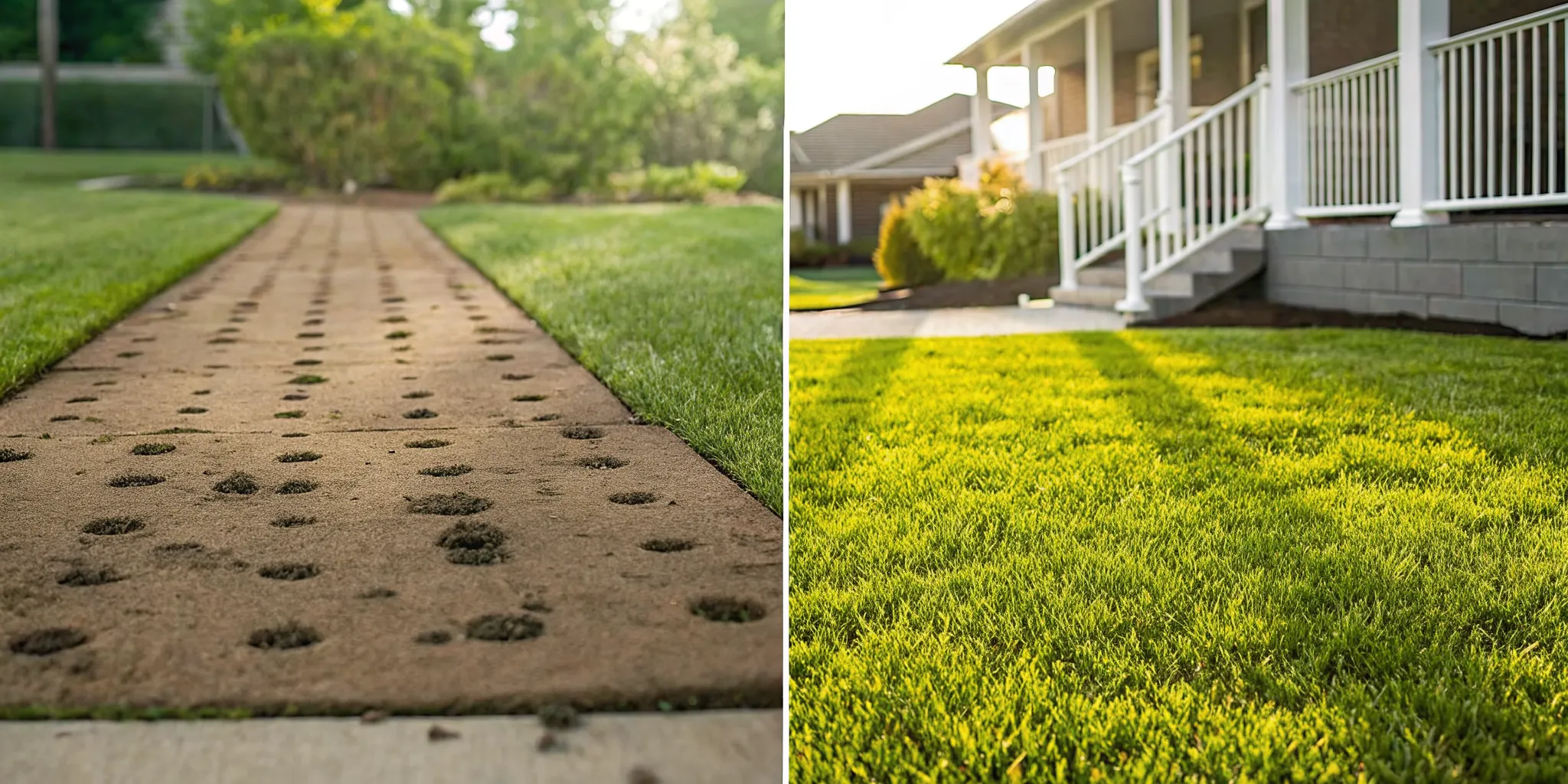
Heavy clay soil in Indianapolis often causes standing water and thin grass that survives but never thrives. When your lawn feels like concrete, you must choose between two common ways to help it breathe again. Choosing the winner of liquid aeration vs core aeration depends on your specific soil and goals.
Liquid aeration vs core aeration is a common debate for homeowners dealing with tough, compacted clay in Central Indiana. Core aeration is the industry-standard choice for severe compaction because it uses machines to remove soil plugs. This creates fast holes that allow water, air, and fertilizer to reach the root zone. In contrast, liquid aeration uses natural products to slowly loosen soil over time. While liquid treatments have a lower upfront cost, core aeration often provides better long-term results for soil health. According to the University of Nebraska-Lincoln, core aeration is the best way to reduce soil compaction. ExperiGreen experts can check your lawn in Carmel or Fishers to help you pick the right approach.
Before you choose a method for your home, you must look at why the ground gets so hard. Central Indiana is known for thick dirt that can quickly squeeze the life out of your grass roots. We will start by Understanding Soil Compaction in Indianapolis Lawns. Here is how it begins.
Liquid Aeration Vs Core Aeration: Understanding Soil Compaction in Indianapolis Lawns
Indianapolis lawns face a unique challenge because of heavy clay soil. This soil type gets tight fast. When soil is packed down, it is hard for air, water, and food to reach grass roots. In cities like Carmel and Fishers, people often notice their grass thinning out or water pooling in the yard. ExperiGreen provides professional lawn aeration services to help fix soil health and keep your grass lush. Our experts can check your lawn to see if it needs help.
The struggle with Indiana clay soil
Many Indianapolis lawns have soil with high clay and silt content.
According to university researchers, soils with high clay are prone to compaction. These tiny soil bits stick together easily. This leaves very little space for air. When soil is packed too tight, grass roots cannot grow deep. A tight soil also has less oxygen, which makes it hard for grass to stay strong. This leads to a lawn that looks thin and struggles in the summer heat.
For lawns with heavy clay, experts usually recommend core aeration as the best choice. Spike tools fail in these spots. Spikes just push soil together, which can make the ground harder between the holes.
Common causes of lawn compaction
Soil does not get hard on its own. Frequent foot traffic from kids and pets is a main cause of hard soil in home yards. Heavy lawn machines and cars also press down on the grass. This squeezes the life out of the turf. Over time, these daily tasks turn the ground into a hard crust. The soil then repels water instead of soaking it in. This makes it hard for the grass to stay green and healthy during the hot months. Even a lawn that looks good can have hidden tight spots from years of use.
Signs of a compacted lawn
You can spot tight soil if you know what to look for. One clear sign is water puddling on the grass after a rain storm. You may also see thin grass or bare spots in high-traffic areas. These spots often show up near driveways or gates.
If your soil feels like stone when you try to push a tool into it, it is likely compacted. Core aeration helps by pulling out plugs of soil to open up the ground. When looking at liquid aeration vs core aeration, the best method depends on how bad the compaction is. For the heavy clay found in central Indiana, a real fix is often needed to get results that last.
What Is Core Aeration and How Does It Work?
Core aeration is a mechanical way to help your lawn breathe. It uses a tool to pull small plugs of soil and grass from the ground. These plugs are often two to three inches deep. By taking these cores out, the tool makes open paths in the dirt. This helps air, water, and food reach the roots of your grass. You can learn more about professional lawn aeration services to see how this fits your yard care plan.
How the process works
Most pros use a tool with hollow tubes. As the tool moves over your yard, these tubes sink into the ground and pull out soil plugs. This is much better than using solid spikes. Spikes can make the soil tighter by pushing dirt bits closer. Hollow-tine core aeration is the best way to open the soil and help your lawn grow. It is very helpful for heavy clay soils that get hard and packed over time.
Help for soil and roots
When the soil is too tight, roots cannot grow deep or stay strong. Aeration fixes this by letting the soil move into the new holes. This lowers soil pressure and lets roots spread out. It also helps your lawn use water and food better. Instead of sitting on top of the grass, these items sink deep into the root zone. Our what to expect from aeration guide shows how this helps your lawn stay healthy.
Managing thatch and debris
Thatch is a layer of dead grass and roots. It builds up between the green blades and the soil. A thin layer is fine, but more than half an inch can block water and air. Core aeration helps manage this layer by pulling it up and mixing it with soil. This helps the thatch break down fast and keeps it from getting too thick. Doing this makes core aeration a key part of an aeration and overseeding plan for a thick, green yard.
Liquid Aeration: How It Works and What It Offers
Liquid aeration is a newer way to treat your lawn. Instead of using a machine to pull out plugs of soil, you spray a liquid over the grass. These products often use special formulas with humates and surfactants to help the soil. Many homeowners like this method because it is fast and easy to apply. You can treat a whole yard in just 15 to 30 minutes with a simple garden hose.
The Science of Liquid Products
The main goal of liquid aeration is to break down the soil structure over time. Companies that sell these products say they can help the soil hold more water. They also claim it helps grass roots grow better by using biological activity. This method relies on additions to change how the soil works, rather than moving the dirt by hand. Over a few months, these ingredients may help loosen tight soil so air and water can reach the roots.
Research and Limits
While the idea sounds good, research shows some clear limits. Experts at Colorado State University found that home liquid products lack proof of success. They do not seem to reduce soil bulk density as well as professional lawn aeration services that use core machines. It is also important not to mix these up with high-pressure water tools used on golf courses. Those systems are much more powerful than the bottles you buy at a store. For heavy clay soil, a liquid spray usually cannot match the power of a mechanical tool.
Results and Cost
Liquid aeration often has a lower upfront cost than core aeration. You might pay $30 to $40 for a small bottle of product. This makes it a popular choice for people who want to save money.
However, you often need to apply it two to four times per year to see any real change. Because it does not physically open the soil, it works best as an extra tool. It is not a full replacement for core aeration if your lawn is very hard or packed. In places like Indianapolis, the heavy clay usually needs the deeper reach that only a core machine can provide.
Core Aeration vs Liquid Aeration: Side-by-Side Comparison
Choosing the right method for your yard depends on your soil and lawn goals. Core aeration uses a machine to pull soil plugs. Liquid aeration uses a spray to soften the ground. This comparison helps you see which path works best for your home.
Physical vs Natural Methods
Core aeration is a mechanical process. It pulls small soil plugs from the turf to open the ground. This change helps water and air reach the roots fast. In contrast, liquid sprays aim to break down soil through natural means. Experts at the University of Nebraska-Lincoln say that core aeration is the best way to reduce heavy soil compaction. This is key for the clay soil found in many local yards.
Liquid sprays use soaps or microbes to create tiny paths in the soil. These products do not remove any dirt. Instead, they try to make the soil more porous over time. While the spray is easy to apply, it lacks the raw power of mechanical tools. Most lawns with hard soil need a physical fix to let the grass breathe again.
| Detail | Core Aeration | Liquid Aeration |
|---|---|---|
| How It Works | Physical plug removal | Natural spray |
| Compaction Relief | Fast and visible | Slow or uncertain |
| Results Timeline | 2 to 4 weeks | 4 to 8 weeks |
| Thatch Reduction | Good over 1/2 inch | Minimal effect |
| Annual Cost | $107 to $202 | $180 to $580 |
| Underground Safety | Must mark lines | Safe for all pipes |
| Yard Look | Plugs for 2 weeks | No surface change |
Surface Impact and Safety
Core aeration leaves small plugs of soil on your grass. These plugs take about one to two weeks to break down. While they may look messy, they return nutrients to your yard. Liquid sprays leave no mess behind. This makes them a popular choice for people who want a clean lawn right away. However, the lack of surface change means you are not removing any thatch. Core tools are better if you have a thick layer of old grass buildup.
Safety is another factor to think about. Core machines reach deep into the ground. You must mark your irrigation lines and fence wires before you start. This prevents the machine from hitting a pipe. Liquid sprays are safe for all underground lines. You can use professional lawn aeration services to ensure your yard is safe during the job. Professionals know how to spot risks and avoid damage to your lawn equipment.
Cost and Timing Factors
Professional core aeration costs about $107 to $202 once per year. You can also rent a machine for about $100. Liquid sprays cost less per visit but need more treatments to work. Most yards need two to four sprays each year to see a change. This can raise the total cost to over $500. For most homeowners, one core treatment provides more value for the money spent.
The timeline for results also differs between the two. Core aeration provides quick relief for hard soil. You will see grass roots grow into the open holes within a month. Liquid products take longer to show a shift. It may take up to eight weeks to see any change in the soil density. For heavy clay common in the Indianapolis area, the fast results of core aeration are often the better choice.
Choosing the Best Aeration Method for Your Indianapolis Lawn
When to Pick Core Aeration
People in Indianapolis often deal with heavy clay soil. This type of dirt packs down fast. When the soil is too tight, air and water cannot reach the roots. Core aeration is the best way to fix this common problem. It uses a machine to pull small soil plugs out of the yard. These holes give the dirt room to breathe and help roots grow deep into the ground.
You should pick core aeration if your lawn feels hard or has a thick layer of thatch. Thatch is the mix of dead grass and roots on top of the soil. If this layer is more than half an inch thick, water cannot sink in. Machine aeration breaks up this layer better than a spray. Most Indianapolis lawns need this service once per year to stay healthy. It is a foundation for a lush yard.
When to Use Liquid Aeration
Liquid aeration is different because it uses a spray instead of a big machine. This spray has tools that help break down the soil over time. It does not leave any soil plugs on your lawn. Your yard looks clean and neat right away. This method is a good choice for lawns that do not have bad soil packing or thick thatch. It is also safe for yards with hidden wires or pipes.
But studies show that liquid sprays might not work as fast as core tools for heavy clay. Experts from the University of Nebraska-Lincoln say core aeration is the best way to fix tight soil. You can use liquid sprays to help your lawn between core sessions. It helps keep the soil loose throughout the year. This way, your grass stays green even in the hot summer months.
A Full Plan for Indianapolis Grass
The best choice for your yard depends on your soil and your goals. The choice of liquid aeration vs core aeration is not always one or the other. Many top lawns in Carmel and Fishers use a mix of both to get the best results. An expert team can check your yard and find the right path for you. They will look for signs of stress and tell you which method fits your grass type.
To get the best results, you should link aeration with other care. Adding new grass seed after you aerate helps fill in thin spots. The holes from the cores give the seeds a safe place to grow. You should also use food for your grass to help the new roots grow strong. This aeration and overseeding plan makes your yard thick and green. ExperiGreen gives a free review to help you pick the best method for your lawn.
Best Time to Aerate Your Lawn in Central Indiana
Timing is a key factor when you decide between liquid aeration vs core aeration for your Indianapolis lawn. To get the best results, you must work with the natural growth cycle of your grass. Most lawns in central Indiana feature cool-season grasses like Kentucky bluegrass or tall fescue. These grasses need air and space when they are at their strongest.
Find the Right Season
You should plan to aerate when your grass is growing fast so it can heal quickly. For the cool-season lawns found in cities like Fishers and Carmel, the best windows for aeration are early spring or early fall. In the spring, aim for April or May. For the fall, the window opens in late August and lasts through October. Most experts prefer the fall because the soil is warm and there is less competition from summer weeds.
Plan Your Aeration Steps
If you want to know when to aerate your lawn, follow this simple sequence for the best outcome. Proper prep work helps the tools reach deeper into the heavy clay soil common in our area. If your soil is very hard, you may need to aerate twice a year to keep the turf healthy.
- Check your grass type. Most local lawns use cool-season grass that grows best in the spring and fall.
- Pick a fall window. Late August to October is the top choice for Indianapolis lawns to allow for strong root growth before winter.
- Pre-water the turf. Water your lawn deeply two days before you start. This softens the ground so the machine can pull deeper plugs.
- Choose your method. Decide if you want a mechanical core service or a liquid treatment based on your soil compaction levels.
- Combine with seeding. Use the fresh holes in the soil to add new grass seed and fertilizer for a thicker lawn.
Prepare for Success
Before the machine arrives, make sure the ground is ready. Dry soil is hard to penetrate, which can limit the benefits of your service. Deep watering helps the tines reach a depth of at least three inches. This ensures that air, water, and food can reach the roots where they are needed most.
ExperiGreen serves homeowners in Chicago, Charlotte, Canton/Akron, Cincinnati, Columbus, Detroit, Indianapolis, South Bend, and more.
Frequently Asked Questions
What is the difference between liquid aeration and core aeration?
Core aeration uses a machine to pull small plugs of soil out of the ground. According to University of Nebraska-Lincoln experts, this physical process opens up the soil surface to help roots grow. Liquid aeration uses a mixture of soaps or food for soil life to help soften the ground. While the liquid version is easier to use, it does not provide the same quick physical relief for packed soil as core aeration does.
Is liquid aeration better than core aeration for Indianapolis lawns?
Most Indianapolis lawns have heavy clay soil that gets packed down easily. For these lawns, core aeration is usually the better choice. It physically removes soil to let the ground breathe. Liquid aeration can be a good extra step, but it lacks proof that it can fix hard clay as well as a machine can. Experts at Colorado State University note that liquid products often lack proof that they lower soil density.
Can liquid aeration remove thick thatch?
No, liquid aeration is not the right tool to get rid of thick thatch. Thatch is a layer of dead grass that sits on top of the soil. If this layer is more than half an inch thick, it can block water and food from reaching the roots. Core aeration is much better at breaking up this layer. The machine pulls out plugs of soil and thatch, which helps the lawn stay healthy and green.
How often should I core aerate my lawn?
Most lawns in the Indianapolis area need core aeration once or twice every year. It is best to do this when the grass is growing fast, such as in the spring or fall. Regular aeration keeps the soil loose and helps the roots grow deep. If your soil is very hard or has a lot of clay, you might need two visits a year to see the best results for your grass.
Which aeration method is more cost-effective?
Liquid aeration usually costs less for a single visit. However, core aeration often provides better value over time. Because core aeration physically changes the soil, the benefits last longer. This means you may need fewer visits to keep your lawn healthy. For homeowners in cities like Carmel and Fishers. Paying for core aeration can lead to a thicker lawn that needs less work in the long run to stay green.
Ready to Give Your Lawn the Aeration It Needs?
If you wait too long to fix hard soil, your grass will stay thin and weak because air and water cannot reach the deep roots of the lawn. Hard dirt also leads to more weeds and brown spots that will ruin the look of your yard if you do not act fast. Taking action now makes sure your lawn stays healthy and strong before the next big growing season in the Central Indiana area.
Ready to get started? Schedule a free lawn evaluation to talk to a lawn care expert. Our local team will help you find the best plan for your home. We are ready to help your grass grow.