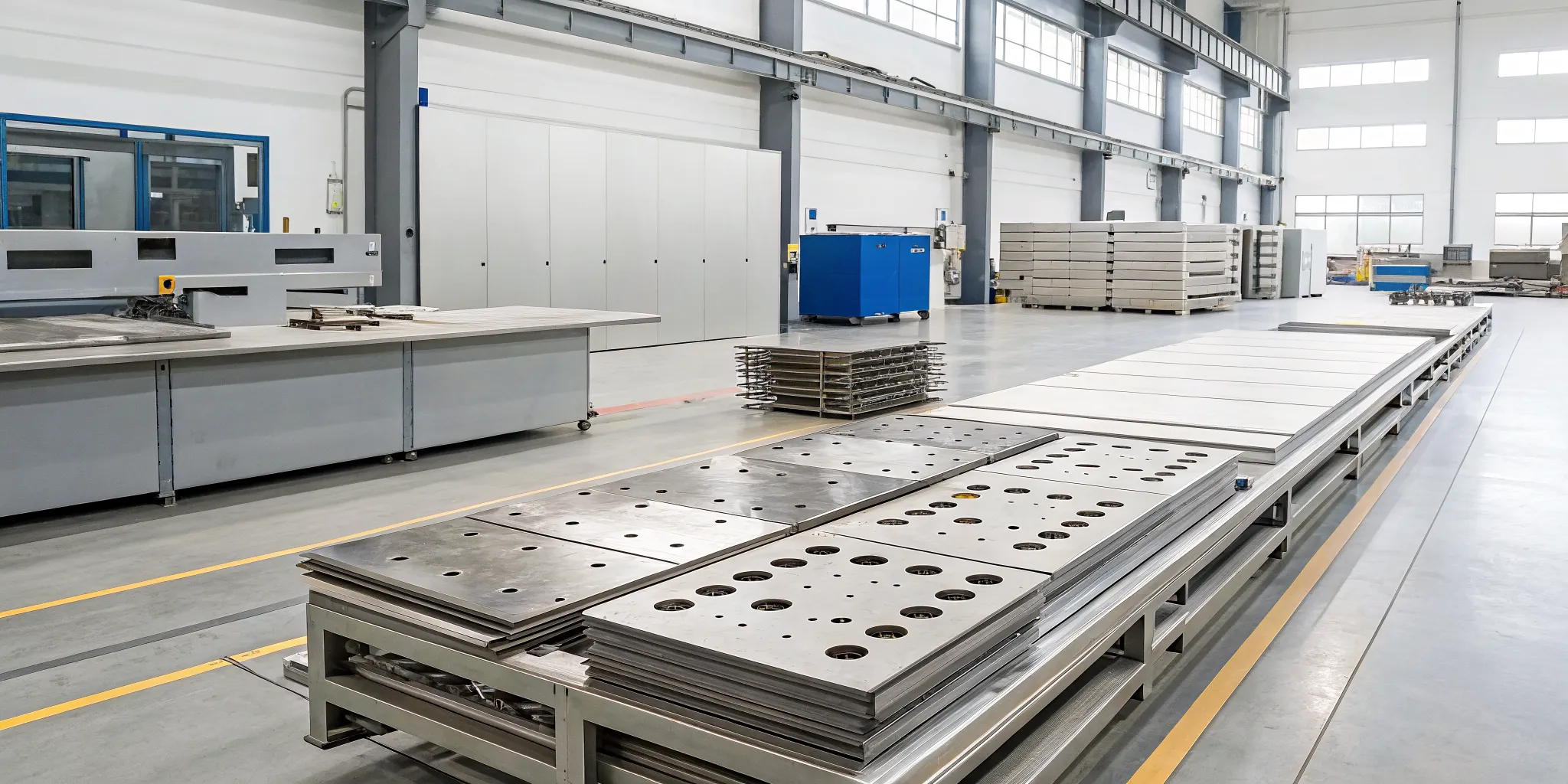
Think of pricing a fabrication project like ordering a custom piece of furniture. The type of wood you choose is just the starting point. The final price also depends on the complexity of the design, the number of joints and carvings, the type of finish applied, and the artisan’s time. Sheet metal fabrication works the same way. The raw metal sheet is your base material, but every cut, bend, weld, and finishing treatment adds to the final cost. Understanding this helps you see your quote not as a single expense, but as the sum of many small, deliberate steps. This guide will give you the complete breakdown, showing you how each part of the process contributes to the answer to, “how much does sheet metal fabrication cost?”
Ready for a Lawn You’ll Love?
Get expert lawn care from your local ExperiGreen team — fertilization, weed control, pest programs, and more.
Serving homeowners across OH, MI, IL, IN, NC & more | No obligation quote
Key Takeaways
- Understand what you’re paying for: The price of the metal is just the starting point; your final quote is mostly determined by the labor, machine time, and number of steps (like cutting, bending, and finishing) your part needs.
- Design smarter to save money: The easiest way to lower your quote is by simplifying your design. Stick to standard bend radii, reduce the number of bends, and question if every tight tolerance is truly necessary for your part’s function.
- Communicate clearly and plan ahead: Get an accurate quote by providing detailed CAD files from the start. You can also lower your per-part cost by ordering in larger quantities and allowing for standard lead times to avoid expensive rush fees.
What Is Sheet Metal Fabrication?
Think of sheet metal fabrication as the process of turning a flat sheet of metal into a useful three-dimensional object. It’s a series of manufacturing steps that cut, bend, and assemble metal sheets into a final product or component. This versatile manufacturing method is behind countless items we use every day, from the sturdy chassis of a truck and the body of a car to the sleek casing of a kitchen appliance. It’s a foundational technique for creating durable, precise parts.
The journey from a simple metal sheet to a finished part involves a blend of skilled craftsmanship and advanced technology. On one hand, you have experienced operators who understand how different metals behave under pressure. On the other, you have computer-controlled machines that execute complex cuts and bends with incredible precision. Because it’s so adaptable, fabrication is a go-to solution in nearly every industry, including aerospace, automotive, construction, and electronics. Understanding this process is the first step to getting a handle on your project’s costs. Every action, from the initial cut to the final coat of paint, has an impact on the final price tag. By learning what goes into making your part, you can make smarter design choices that save you money without sacrificing quality. It puts you in a better position to have productive conversations with your fabricator and get a more accurate quote.
Key Fabrication Processes
Fabrication isn’t a single action but a sequence of steps. Each one requires specific machinery and expertise, which is why your design’s complexity can influence the cost so much. While every project is unique, most parts go through a few core stages.
- Cutting: This is where it all begins. The flat sheet of metal is cut to the precise size and shape needed for your part. Methods like laser cutting and water jet cutting are popular for their incredible accuracy, especially with complex designs.
- Bending: Once cut, the flat metal needs to be shaped. Using a machine called a press brake, the metal is carefully bent to create angles, curves, and the part’s overall structure. The number and complexity of bends are key factors in your project’s cost.
- Welding: If your design consists of multiple metal pieces, they need to be joined together. Welding is a critical process that securely fuses parts using techniques like MIG or TIG, creating a strong and permanent bond.
- Finishing: This is the final touch. Finishing processes like powder coating, painting, or anodizing are applied to protect the part from corrosion, improve its durability, and give it a clean, professional appearance.
What Factors Drive Fabrication Costs?
When you get a quote for a sheet metal project, you might wonder what exactly goes into that final number. It’s not just the price of the raw material. A variety of factors influence the total cost, from the complexity of your design to the finish you choose for the final part. Understanding these key drivers helps you make informed decisions, optimize your design for cost-effectiveness, and see why one quote might differ from another.
Think of it like building a custom piece of furniture. The type of wood is just the starting point. The intricate carvings, the number of drawers, the specific paint or stain, and how quickly you need it all play a role in the final price. Sheet metal fabrication works the same way. Getting a handle on these elements will not only demystify your quote but also give you the tools to manage your project budget more effectively. Let’s break down the main components that determine the cost of your fabrication project.
Material Type and Grade
The material you select is one of the biggest factors in your project’s cost. Metals like aluminum, stainless steel, and carbon steel all have different price points that can fluctuate with the market. The specific grade of the metal matters, too. Beyond the type of metal, its thickness and the total sheet size required for your parts will directly influence material costs. Thicker materials are more expensive and can sometimes require more powerful machinery to cut and form, which also adds to the price.
Design Complexity
As a general rule, simpler designs are less expensive to produce. A straightforward part with a few simple bends will cost less than one with intricate cuts, tight tolerances, and multiple complex forming operations. Complex designs require more programming time, longer machine run times, and more hands-on labor from skilled technicians. Every additional feature or process adds a step to the manufacturing workflow, which in turn adds to the overall cost of the part. We’ll explore more ways to simplify your design later on.
Production Volume
How many parts do you need? The answer has a significant impact on the per-unit cost. Ordering a larger quantity at once often leads to a lower price for each part. This is because fabricators can buy materials in bulk at a discount and set up their machines for a single, continuous run. This efficiency, known as economies of scale, reduces the setup time and material waste per part. A small batch of 10 prototypes will have a much higher per-unit cost than a production run of 1,000 units.
Labor and Machine Time
The time your project spends on the shop floor is a major cost component. This includes both the time a skilled technician spends working on your parts and the time the parts spend on machines like laser cutters or press brakes. Highly precise parts that demand tight tolerances often require extra quality checks and careful handling, increasing the labor involved. Similarly, complex machine setups or longer cutting and bending cycles contribute to the final price. This is where the expertise of the fabrication team really comes into play.
Finishing and Surface Treatments
A raw metal part is often just the beginning. Many projects require secondary finishing processes to improve appearance, prevent corrosion, or prepare the surface for painting. Services like powder coating, anodizing, painting, and polishing all add to the total cost. While these treatments increase the price, they also add significant value by enhancing the part’s durability and aesthetic appeal. It’s important to factor these necessary finishing steps into your budget from the start to avoid surprises down the line.
Lead Time and Rush Fees
Planning ahead can save you a lot of money. Standard lead times allow fabricators to schedule jobs efficiently and manage their workflow without disruption. If you need your parts faster than the standard turnaround, you’ll likely face rush fees. These fees cover the extra costs associated with expediting your order, such as overtime pay for workers and re-prioritizing the production schedule. Providing your fabricator with as much lead time as possible is one of the easiest ways to keep your project costs in check.
How Material Choice Affects Your Price
The material you choose for your project is one of the biggest factors determining your final cost. It’s not just about the price per pound; your material selection influences which fabrication processes are needed, how much machine time is required, and what finishing treatments are possible. Understanding the cost-benefit trade-offs between different metals is the first step to creating a realistic budget and finding opportunities to save. Let’s break down some of the most common options.
Mild/Carbon Steel
Think of mild or carbon steel as the go-to, cost-effective workhorse for many fabrication projects. It’s strong, easy to work with, and widely available, which helps keep its price down. For example, one fabricator estimated a project would cost around $2500 using unpainted carbon steel. While it’s a great starting point for saving money, remember that it lacks natural corrosion resistance. This means you’ll need to factor in the cost of painting, powder coating, or another protective finish if your part will be exposed to the elements, which adds a secondary step to your project.
Aluminum
If you need a part that is both lightweight and naturally resistant to rust, aluminum is an excellent choice. It’s a bit more of an investment than carbon steel, but you can keep costs in check by being strategic. A key way to cut sheet metal fabrication costs is to stick with common materials that suppliers have in stock. For aluminum, this means choosing popular grades like 6061-T6 or 5052-H32. This simple choice reduces lead times and material expenses, giving you the performance of aluminum without unnecessary costs.
Stainless Steel
Stainless steel is known for its superior strength, durability, and corrosion resistance, making it ideal for harsh environments or medical and food-grade applications. This high performance, however, comes with a higher price tag. To give you a direct comparison, the same project that cost $2500 in carbon steel was quoted at about $4000 for stainless steel. This price jump reflects the material’s inherent value and the specialized handling it sometimes requires during fabrication. When you need maximum longevity and minimal maintenance, stainless steel is often worth the upfront investment.
Copper and Brass
Copper and brass are premium materials often chosen for their unique aesthetic appeal and conductive properties. As you might expect, they are among the more expensive options. The cost of sheet metal fabrication with these metals is highly dependent on the current market price, as well as the thickness and size of the sheet you need. Because of their cost and specific applications, they are typically reserved for projects where their distinct look or electrical performance is a critical feature, such as decorative architectural elements or electrical components.
What’s a Typical Price Range for Fabrication?
Pinpointing a single price for sheet metal fabrication is tricky because every project is custom. Instead of looking for a flat rate, it’s more helpful to understand the key variables that build your final quote. The price of your project will almost always come down to a combination of three main factors: the material you choose, the complexity of the fabrication process, and the total number of parts you order. By looking at how each of these components contributes to the cost, you can get a much clearer picture of what your project might cost and where you can find opportunities to save.
Cost by Material
A good rule of thumb is that you can expect to pay about three times the cost of the raw sheet metal for the finished part. So, if the raw material for your component costs $10, the fabricated part might be around $30. This isn’t a perfect formula, but it’s a solid starting point for a rough estimate. This markup isn’t just profit; it accounts for the labor, machinery, and overhead required to transform a simple sheet into your custom component. The cost of the material itself sets the baseline, and all other factors add to it from there.
Cost by Process Type
Think of it this way: every time a fabricator has to touch your part, it adds to the cost. A simple design with a single laser cut and one bend will be significantly cheaper than a complex enclosure that requires cutting, bending, welding, hardware insertion, and powder coating. The main reason a part costs more is that the manufacturer has to perform more steps or operations to create it. Each additional process adds labor and machine time, which are two of the biggest drivers of your final quote.
Cost by Project Size
This is where economies of scale come into play. You can often save money by ordering more items at once, as the initial setup costs get distributed across a larger number of parts. Setting up a machine for a specific job takes the same amount of time whether you’re making one part or one hundred. For a single prototype, that entire setup cost is applied to one item, making it quite expensive. For a run of 100 parts, that same cost is divided by 100, dramatically lowering the price per piece.
Common Myths About Fabrication Costs
When you’re trying to budget for a project, it’s easy to get tripped up by common assumptions about fabrication costs. Believing these myths can lead to inaccurate quotes and unexpected expenses. Let’s clear up a few of the most persistent misconceptions so you can approach your next project with a clearer understanding of what really drives the price. By knowing what to look for, you can have more productive conversations with your fabricator and find the most effective ways to manage your budget without sacrificing quality.
“Raw material is the only major expense.”
It’s easy to assume the metal itself is the biggest line item on your invoice, but that’s only part of the picture. While material costs are significant, they are far from the only factor. The final price of a fabricated part is a combination of materials, labor, machine time, and any finishing processes. A seemingly simple part made from inexpensive steel can become costly if its design requires multiple complex bends, tight tolerances, or special welding. Understanding the different manufacturing processes involved is key to seeing how costs can add up beyond just the raw material.
“Complex designs always cost more.”
While it’s true that intricate designs often have a higher price, “complexity” can be misleading. The real cost driver is the number of distinct operations required to create the part. A design that looks simple might require multiple machine setups or manual processes, increasing its cost. Conversely, a visually complex part might be produced efficiently in a single, automated operation. Instead of just focusing on aesthetics, consider how many steps a fabricator will need to take. This shift in perspective can help you find ways to cut sheet metal fabrication costs without compromising your part’s function.
“Custom tooling is always a good investment.”
Creating a custom tool, like a unique punch or die, can seem like a great way to achieve a specific feature. However, this isn’t always a cost-effective solution, especially for low-volume runs. The costs associated with custom tools can be substantial, sometimes running over a thousand dollars for a single tool. Before committing, ask yourself if the feature is truly necessary or if it can be achieved using the fabricator’s standard tooling. For high-volume production, the investment might pay for itself, but for smaller projects, it can needlessly inflate your budget.
“A higher material cost means a higher total cost.”
Don’t automatically rule out a material because of its high initial price. Sometimes, choosing a more expensive material can actually save you money in the long run. For example, a stronger or more corrosion-resistant alloy might eliminate the need for secondary processes like heat treating or painting. In other cases, a material might be easier to form or weld, reducing labor and machine time. It’s always a good idea to discuss the best material choices with your fabricator. They can provide insight into how different options will affect not just the material line item, but the total project cost.
How Design Complexity Affects Your Quote
It’s a simple rule of thumb in fabrication: the more complex your design, the more it will likely cost to produce. But what does “complex” really mean in this context? It’s not just about how a part looks on your screen. For a fabricator, complexity is measured by the number of steps and the level of precision required to bring your design to life. Every cut, bend, and finish adds time and requires specific machine operations, which are the primary drivers behind your final quote.
Think of it this way: the main reason a sheet metal part costs more is because the manufacturer has to perform more operations to make it. A simple flat bracket with two holes is much faster and cheaper to produce than a multi-faceted enclosure with intricate vents, welded corners, and tight-fitting components. Each of those extra features requires another touchpoint, another machine setup, or another quality check. Understanding where this complexity comes from is the first step to designing more cost-effective parts without sacrificing function. Let’s look at the three main areas where design choices can significantly affect your price: tight tolerances, the number of bends, and the need for custom tools.
Tight Tolerances and Intricate Cuts
When your design calls for very specific measurements with little room for error, you’re asking for tight tolerances. While precision is important, parts that are tricky to design or have extremely strict measurements usually cost more. Achieving that level of accuracy requires more advanced machinery, longer setup times, and more frequent quality checks during production. It can also lead to a higher scrap rate, as any part that falls even slightly outside the specified range must be discarded. Similarly, intricate cuts, like fine lattices, small holes, or complex contours, demand more machine time, often from slower and more expensive equipment like a laser cutter.
Number of Bends and Forming Operations
Each bend in a sheet metal part is a distinct manufacturing step that adds to the total cost. Every time a part is bent, it has to be handled by an operator and set up in a press brake. The more bends you have, the more time and labor are involved. This is especially true for bends that are close together or oriented at odd angles, as they may require special handling or multiple setups. Beyond simple bends, other forming operations like creating stamped features, louvers, or countersinks also add steps to the process. Reducing the number of bends is one of the most direct ways to cut your fabrication costs.
Custom Tooling Requirements
Sometimes a design includes a unique feature, like a specific emboss or an unusual hole shape, that can’t be made with a fabricator’s standard tools. In these cases, custom tooling is required. Creating a custom die or punch is a significant upfront expense that gets added to your quote. While the money spent on special tools can be high, it is spread out over all the items made. This means custom tooling can be economical for very large production runs. For prototypes or small batches, however, it can dramatically increase your per-part cost. Always ask your fabricator if a standard tool could create a similar feature before committing to a custom solution.
How Fabricators Price Their Work
When you receive a quote from a fabricator, it can feel like a black box. How did they arrive at that number? Understanding the pricing models fabricators use can help you make sense of your quote and identify opportunities for savings. While every shop has its own method, most prices are calculated using one of three common structures. Each one accounts for the core cost drivers: materials, labor, machine time, and overhead. Knowing which model your fabricator is using gives you a clearer picture of what you’re paying for, whether it’s the complexity of the work, the time spent on the machine, or a simple per-unit cost. This insight is key to having productive conversations about your project and your budget. Let’s look at the main ways fabricators price their work.
Per-Part Pricing
This is one of the most straightforward pricing models. With per-part pricing, you pay a fixed price for each individual piece produced. This method is common for larger production runs where the process is repeatable and the costs are predictable. A general rule of thumb you might hear is that the final part price can be around three times the cost of the raw material. This isn’t just arbitrary markup; this multiplier accounts for everything else that goes into making your part, including labor, machine setup and run time, wear and tear on tooling, and general shop overhead. This model gives you clear, predictable costs, which makes budgeting for high-volume orders much easier.
Hourly Rate Pricing
With an hourly rate model, you are paying for the time it takes to complete your job. This rate covers the skilled labor of the machine operators and technicians as well as the operational cost of the machinery itself. This pricing structure is often used for prototypes, repair work, or very small, custom batches where it’s difficult to predict the exact time commitment upfront. More complex parts that require intricate setups, multiple quality checks, or very tight tolerances will naturally take more time, which in turn increases the final cost. When you see an hourly rate, you’re paying for the expertise and focused attention your project requires from the fabrication team.
Project-Based Quotes
A project-based quote is a flat fee for the entire job, and it’s one of the most common pricing methods for custom fabrication. To create this quote, the fabricator performs a comprehensive analysis of your project, considering all the variables we’ve discussed: material type and cost, design complexity, required tooling, labor, machine time, and any finishing operations. This all-in-one price gives you cost certainty, as the fabricator assumes the risk of any time overruns. Because so many factors are involved, the best way to get an accurate price is to provide a detailed request and talk to a professional steel fabricator about your specific needs.
How to Get an Accurate Quote
Getting a quote that’s both accurate and fair is all about clear communication. Think of it less like placing an order and more like starting a conversation. When your fabricator has a crystal-clear picture of your project from the get-go, they can give you a price that reflects the real-world cost, without any guesswork or surprise fees down the line. This process is a two-way street. It involves providing detailed information upfront and asking the right questions to understand how your price is calculated and where you might be able to save.
What to Include in Your Request
To get the most precise quote, you need to give your fabricator all the puzzle pieces. Providing clear and complete information upfront prevents delays and ensures the price you get is the price you’ll pay. Start with your 3D CAD files and 2D drawings with tolerances. Include a detailed Bill of Materials (BOM) that lists every component, from the sheet metal itself to the specific nuts, bolts, and inserts you plan to use. The more detailed you are, the less room there is for assumptions. This simple step helps the manufacturer confirm everything fits perfectly and avoids a frustrating game of phone tag later on.
Questions to Ask Your Fabricator
Once you’ve sent your request, the conversation isn’t over. This is your chance to learn more about your potential partner and how they work. Don’t be afraid to ask questions that go beyond the final number. You can talk to a professional steel fabricator to get an exact price, and you should also ask what factors are driving that price. Inquire about their pricing structure, potential discounts for larger orders, and their standard lead times. A great question to ask is, “Based on my design, do you see any opportunities to reduce cost without sacrificing quality?” An experienced fabricator’s feedback can be incredibly valuable.
How to Reduce Your Fabrication Costs
Getting a handle on your fabrication costs doesn’t mean you have to sacrifice quality. In fact, some of the most effective ways to save money involve making your parts easier and more efficient to produce. While factors like raw material prices are out of your hands, many of the key cost drivers are directly tied to your design choices and project planning.
By thinking like a fabricator, you can make small adjustments that add up to big savings. It’s about designing smarter, not cheaper. From simplifying your geometry to communicating clearly with your manufacturing partner, you have more control over the final price than you might think. Let’s walk through seven practical steps you can take to lower your quote and get the most value from your budget.
Simplify Your Design
The most direct way to lower fabrication costs is to simplify your part design. As a general rule, the more complex a part is, the more it will cost to make. Intricate features, tight tolerances, and complex curves require more programming, specialized tooling, and longer machine run times. Each of these factors adds to the final price tag. Before you finalize your design, ask yourself if every feature is truly necessary for the part’s function. Removing non-critical elements can lead to significant savings without compromising performance.
Use Standard Bends, Features, and Sheet Sizes
Fabricators have standard tools they use for most jobs. When your design incorporates common features, they can produce your part faster and more affordably. Try to design with standard bend radii, which are typically between 0.030 inches and the material’s thickness. This allows the shop to use their existing press brake tooling instead of creating a custom setup. Similarly, designing your part to fit on standard sheet sizes minimizes material waste. Sticking to these conventions is a simple way to make your part more manufacturable and cost-effective.
Choose Cost-Effective Materials
Unless your project has highly specific strength or corrosion-resistance requirements, choosing a common, readily available material is a smart move. Materials like aluminum (6061-T6, 5052-H32), carbon steel (CRS1008), and stainless steel (304-2B) are fabrication shop staples. Because they are always in stock, their cost is generally lower and more stable than exotic alloys. Fabricators buy these materials in bulk, and those savings get passed on to you. Always consider if a standard, less expensive material can meet your application’s needs before opting for a pricier alternative.
Minimize Secondary Operations
A part’s cost often increases because of the number of steps required to complete it. Every process after the initial cutting and bending, known as a secondary operation, adds labor and time to the project. These operations can include things like hardware insertion, welding, deburring, painting, or plating. Review your design to see if any of these steps can be eliminated. For example, could you design a self-fixturing part to reduce welding, or can the as-machined finish suffice without additional surface treatment? Fewer manufacturing steps will almost always result in a lower price.
Increase Your Order Volume
You can often achieve a lower per-part cost by ordering a larger quantity at once. This is because of economies of scale. Fabricators have fixed setup costs for every job, which include programming the machines and preparing the tooling. That setup cost is the same whether they’re making 10 parts or 1,000. When you place a larger order, that initial cost is spread across more units, significantly reducing the price of each individual part. If you know you’ll need more parts in the future, ordering them all in one batch is an effective way to save money.
Plan Ahead to Avoid Rush Fees
Time is money, especially in manufacturing. Rush orders disrupt a fabricator’s production schedule, forcing them to delay other jobs or pay overtime to their staff. As a result, they charge significant fees for expedited turnarounds. You can completely avoid these extra costs by planning your project well in advance. Giving your fabricator a generous lead time not only helps you avoid rush fees but also gives them more flexibility to schedule your job efficiently. It may even allow them to find better prices on materials, offering another avenue for savings.
Listen to Your Fabricator’s Feedback
Your fabricator is an expert in making things. They can often spot opportunities to make your part more efficiently and at a lower cost. When you submit a design for a quote, pay close attention to any feedback or suggestions they provide. Many shops offer free design for manufacturability (DFM) analysis that can highlight potential issues or cost-saving adjustments. These small tweaks, often related to tolerances, material choice, or feature geometry, can make a part much easier to produce. Treating your fabricator as a partner and being open to their input is one of the best ways to optimize your design for cost.
Related Articles
- 11 Ways to Cut Sheet Metal Fabrication Costs
- Sheet Metal Fabrication Cost: A Comprehensive Pricing Guide
- Fabrication Cost Estimator: The Essential Guide
- Design for Manufacturability (DFM) Guide
Ready for a Lawn You’ll Love?
Get expert lawn care from your local ExperiGreen team — fertilization, weed control, pest programs, and more.
Serving homeowners across OH, MI, IL, IN, NC & more | No obligation quote
Frequently Asked Questions
Why is my single prototype so much more expensive per part than a large production run? The high cost of a prototype comes down to setup fees. For every new job, a fabricator has to program machines and prepare the right tooling, which takes a fixed amount of time and effort. When you order just one part, that entire setup cost is applied to that single item. If you order 1,000 parts, that same setup cost gets divided across all of them, which dramatically lowers the price for each piece.
Is choosing the cheapest material, like carbon steel, always the best way to save money? Not necessarily. While carbon steel has a low upfront cost, it rusts easily. If your part needs to be durable, you will have to pay for a secondary finishing process like powder coating to protect it. In some cases, the cost of that extra step can make the total project more expensive than if you had started with a slightly pricier, naturally corrosion-resistant material like aluminum. It’s important to consider the total cost, not just the material price.
What’s the most effective way to reduce my fabrication costs without changing the material? The most impactful thing you can do is simplify your design. The final price is heavily influenced by the number of manufacturing steps required. By reducing the number of bends, using standard hole sizes and bend radii, and removing any features that are not critical to your part’s function, you directly cut down on the labor and machine time needed. This is often the quickest path to a lower quote.
My part looks complicated. Does that automatically mean it will be expensive to make? A part’s visual complexity isn’t always the best indicator of its cost. The real cost driver is the number of distinct operations needed to produce it. A part that looks intricate might be created efficiently in a single, automated laser-cutting operation. On the other hand, a visually simple part could require multiple manual setups for bending and welding, making it more expensive. It’s more about the process than the appearance.
What information is absolutely essential to provide for an accurate quote? To get a fast and accurate quote with no hidden surprises, you should provide three key things: your 3D CAD model, a 2D drawing that clearly specifies all tolerances and critical dimensions, and a complete Bill of Materials (BOM) listing any hardware like screws or inserts. Providing this complete package allows the fabricator to understand exactly what you need and price the job without having to make any costly assumptions.