
A green lawn does not need fertilizer every time its color changes.
Request a quote for a customized lawn fertilization schedule.
If you are wondering how often to fertilize lawn grass, start with the conditions that control nutrient use. The right schedule depends on grass type, soil, weather, irrigation, and the product being applied.
For most established cool-season lawns, fertilize several times during active growth rather than every two weeks. A planned program often spaces visits about 5 to 7 weeks apart, with special attention to late summer and fall. The exact timing should reflect the grass, soil, weather, and fertilizer label. University of Minnesota Extension identifies fall as a critical fertilization period for cool-season turf.
That approach is especially useful for homeowners in Chicago, Detroit, Columbus, Cincinnati, Indianapolis, and South Bend. Where cool-season grass may face summer heat followed by a shorter fall recovery window. A lawn in Charlotte can follow a different rhythm when warm-season grasses and a longer growing season change the timing. The sections below explain how to build a practical plan without overfeeding the turf.
How Often to Fertilize Lawn Grass Without Overfeeding It
For most established cool-season lawns, fertilize several times during active growth, usually about 5 to 7 weeks apart. The exact interval depends on grass type, soil, weather, irrigation, and the product label. Fall often deserves special attention, while heat-stressed or dormant turf may need a pause.
Established cool-season lawns usually benefit from several well-timed applications during the growing season. A useful starting point is an application about every 5 to 7 weeks when the lawn is actively growing. That interval is not a universal prescription. It is a planning range that gives the turf time to use available nutrients before another treatment is considered.
Kentucky bluegrass, perennial ryegrass, and tall fescue grow most actively during cooler periods. Their needs often increase in early spring, late summer, and fall, then decrease during the hottest part of summer. A lawn that is dormant or semi-dormant from heat or drought should not automatically receive more nitrogen simply because it looks less green.
Soil conditions can change the answer. A soil test may reveal that the lawn needs a specific nutrient, has an unsuitable pH, or does not need additional fertilizer at all. Soil texture, organic matter, drainage, and irrigation also affect how quickly nutrients move through the root zone. Following the product label and local recommendations is safer than copying a neighbor’s calendar.
Why a fixed calendar can miss the lawn’s needs
Weather can move the schedule in either direction. Extended rain may delay an application, while drought may require the lawn to recover before feeding. Recent seeding, disease, compaction, and heavy thatch can also change how the grass responds. The best frequency is a responsive plan, not a promise that every property needs the same number of treatments.
A Seasonal Fertilizer Schedule for Cool-Season Turf
Use the schedule below as a framework for established cool-season grass. It emphasizes timing and lawn condition rather than repeated applications on fixed dates. Always follow the product label and local regulations for rates, watering, setbacks, and weather restrictions.
| Season | Practical focus | Why it matters |
|---|---|---|
| Early spring | Wait for steady active growth. Use soil information to decide whether nutrition is needed. | Fertilizing too early can encourage shoots before roots are ready to use the nutrients efficiently. |
| Late spring | Use a measured application only when the lawn and weather support it. | Heavy spring nitrogen can create rapid top growth and leave less support for summer stress. |
| Peak summer | Generally avoid routine nitrogen on heat-stressed or semi-dormant cool-season turf. | Extra growth during heat or drought can increase stress and may raise disease pressure. |
| Late summer | As active growth returns, consider a measured treatment based on soil and turf conditions. | The lawn may begin recovering from summer stress and preparing for fall growth. |
| Fall | Make fall a central fertilization window, with timing and rate matched to the site. | Cool-season turf can use this period to recover and build roots before winter. |
For related preparation steps, see ExperiGreen’s early spring lawn preparation guide. Seasonal work should fit together. Fertilization cannot replace mowing, irrigation, overseeding, or attention to compacted soil.
Why fall deserves special attention
Fall is more than the last chance to improve color before winter. Cooler temperatures often let cool-season turf grow roots and recover from summer wear without the same heat pressure. A carefully timed fall application can support that recovery. It does not mean applying as much fertilizer as possible. Excess nitrogen can produce soft growth, increase disease risk, and move into runoff when applied incorrectly.
In northern markets, fall timing can be narrowed by an early freeze or a short growing window. In the Midwest, a lawn in Chicago or Detroit may need a different date from one in Columbus or Cincinnati. Local weather and grass growth matter more than a national calendar.
Can You Fertilize Your Lawn Every Two Weeks?
For established cool-season turf, fertilizing every two weeks is usually too frequent. A 5 to 7 week interval during active growth gives the lawn time to use nutrients. Heat, drought, slow growth, and heavy rain are reasons to pause and reassess rather than add more fertilizer.
Applying fertilizer every two weeks is usually not a safe default for an established cool-season lawn. Shortening the interval can put more nitrogen into the soil than the grass can use, especially during heat, drought, slow growth, or heavy rain. A lawn may become greener quickly, but rapid top growth is not the same as stronger roots.
Overfeeding can also make maintenance harder. Grass may require more frequent mowing, and uneven spreading can leave dark stripes or scorched patches. Excess nitrogen may make turf more vulnerable to some diseases. Nutrients that the lawn cannot use may move with rainfall or irrigation toward storm drains and waterways.
Signs the lawn may be over-fertilized
- Brown or yellow leaf tips soon after an application.
- Dark stripes or patches caused by overlapping spreader passes.
- A sudden flush of growth that requires much more mowing.
- More disease symptoms during humid or wet weather.
- Runoff, granules on pavement, or fertilizer near a drain or waterway.
If one of these signs appears, do not add another application to correct the color. Follow the product instructions, water only as directed, and ask a qualified lawn professional to evaluate the turf when damage is significant. A soil test can help determine whether the issue is excess nutrients, a pH problem, drought, disease, or another stress.
How Do You Apply Lawn Fertilizer Safely?
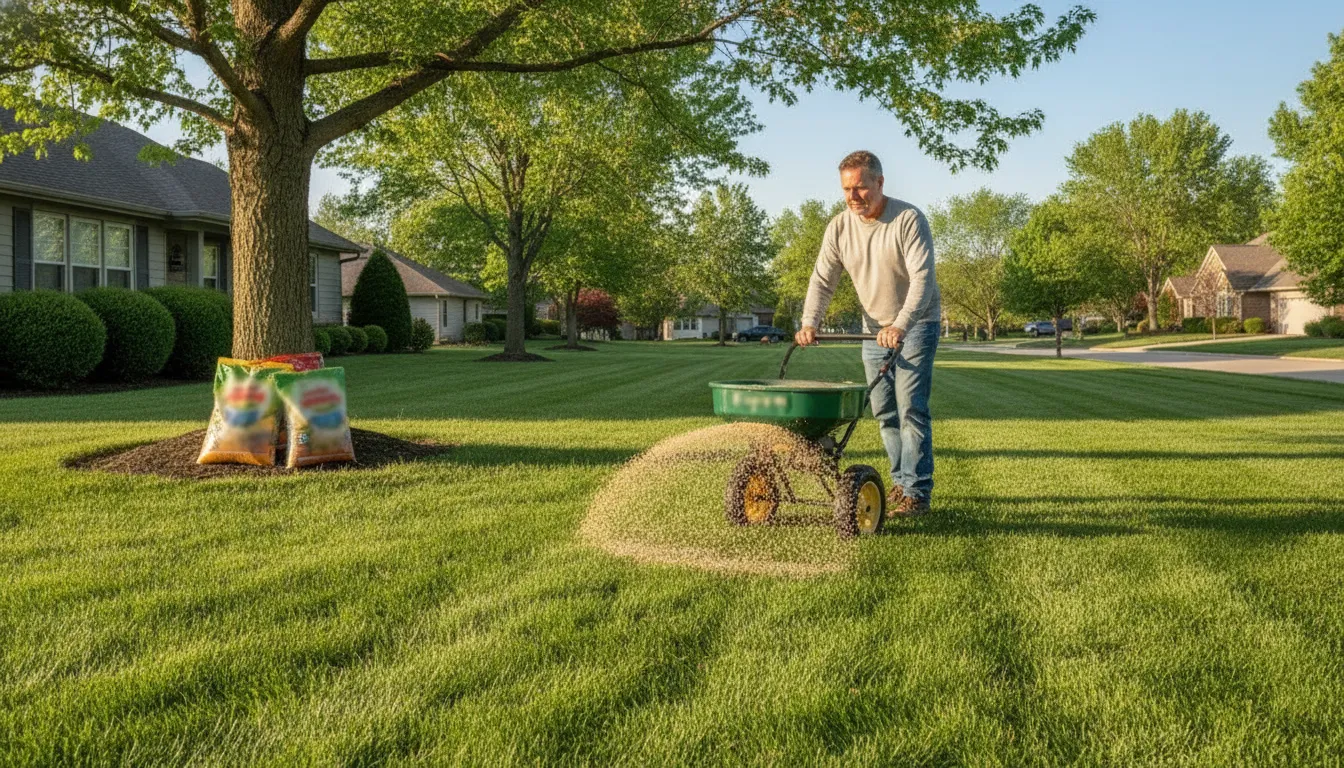
Apply lawn fertilizer safely by matching the product and rate to the grass, calibrating the spreader, and keeping granules away from hard surfaces and water. Soil information, weather, label directions, and even coverage matter as much as the date on the calendar.
Application technique matters as much as frequency. The goal is even coverage at the labeled rate, with no concentrated piles and no product carried into water. A careful process also makes it easier to see whether the lawn responds as expected.
- Identify the grass and current condition. Confirm whether the lawn is cool-season or warm-season, and note drought, disease, recent seeding, compaction, or thin areas.
- Use soil information. A soil test can guide nutrient selection and help avoid applying products the lawn does not need. University of Maryland Extension explains that soil testing is a reliable way to understand nutrient needs in established lawns.
- Read the product label. Follow the listed rate, timing, watering directions, weather restrictions, and instructions for keeping products away from water.
- Calibrate the spreader. Do not rely on a setting from another product. Test the spreader, keep the application pattern consistent, and avoid stopping while the spreader is open.
- Protect hard surfaces and water. Keep granules off sidewalks, driveways, streets, storm drains, ponds, and streams. Sweep stray product back onto the lawn instead of washing it away.
- Coordinate mowing and irrigation. Use mowing and watering practices suited to the grass. Do not use fertilizer to compensate for poor drainage, severe drought, scalping, or compacted soil.
For a lower-impact approach to lawn nutrition and weed management, read ExperiGreen’s guide to eco-friendly fertilization and weed control. The most useful plan combines appropriate products with good cultural practices.
Ask ExperiGreen about a lawn care program built around your grass, soil, and seasonal conditions.
How ExperiGreen Plans Fertilization Frequency
ExperiGreen does not treat every scheduled visit as an identical fertilizer application. Its lawn programs use a 5 to 7 week service cycle, while the treatment at each visit depends on the lawn, season, grass type, and current needs. That distinction matters when homeowners compare a program’s total visits with the number of fertilizer applications.
| Program | Typical services per year | Additional focus |
|---|---|---|
| Essential | 6 to 8 | Core lawn analysis, weed control, and season-long fertilization. |
| Preferred | 8 to 10 | Essential services plus surface insect control, grub control, and liquid aeration. |
| Preferred+ | 10 to 12 | Preferred services plus lime, overseeding, and soil analysis. |
These programs are designed around the lawn’s broader health, not a goal of applying more nitrogen. A visit may address weeds, insects, soil pH, aeration, or overseeding. The Essential and Preferred programs are typically scheduled on a 5 to 7 week cycle, with actual treatment decisions adjusted to regional conditions.
Why more program visits do not mean more fertilizer
The Preferred program adds insect and grub protection and liquid aeration. Preferred+ adds soil amendment, overseeding, and soil analysis. Those services address concerns that fertilizer alone cannot solve. A thin lawn may need seed and better soil contact. A compacted lawn may need aeration. A lawn with insect pressure may need a targeted treatment instead of additional nutrition.
ExperiGreen’s locally managed, nationally supported model also recognizes regional differences. Cool-season lawns in Ohio, Illinois, Indiana, and Michigan face different weather patterns from lawns in the Charlotte market. The plan should reflect the property instead of forcing every homeowner into the same calendar.
What Changes How Often to Fertilize Lawn?
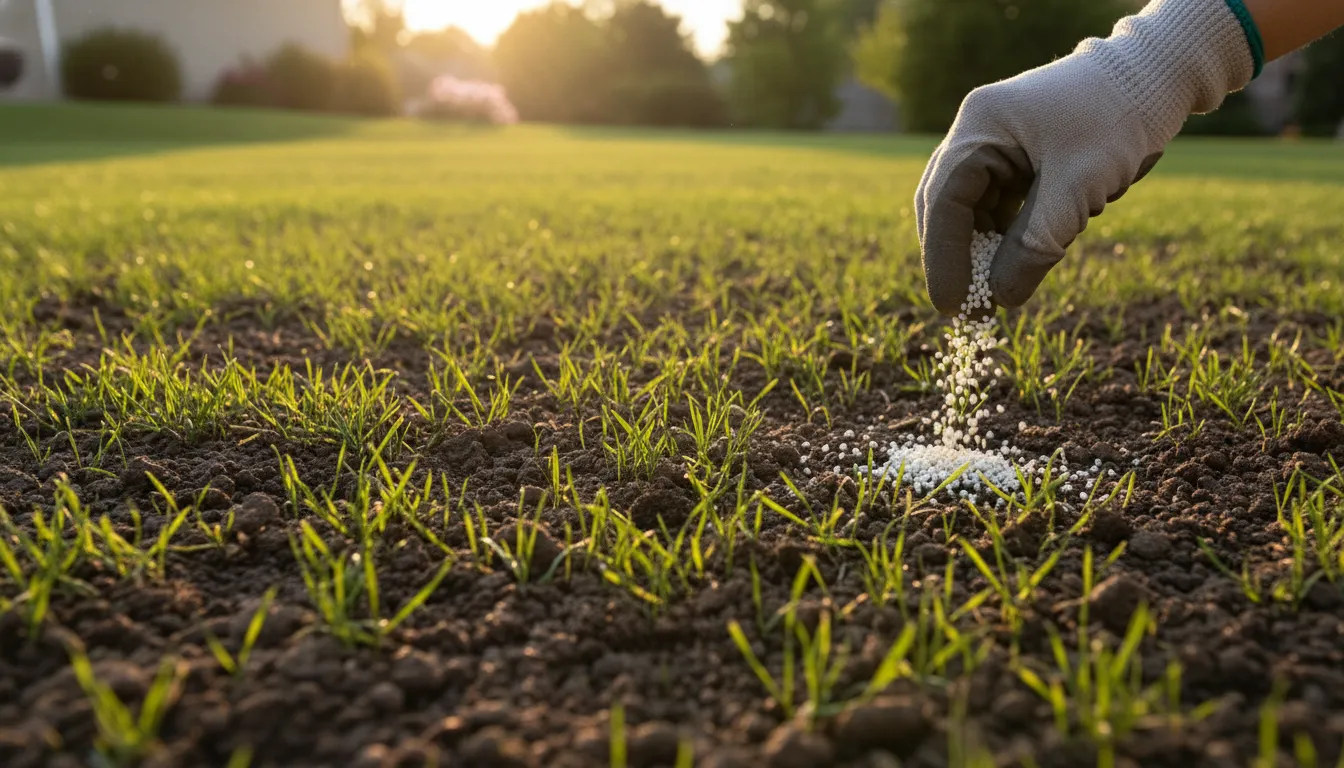
Grass type, growing season, soil, drainage, weather, irrigation, and recent seeding all change how often to fertilize lawn areas. Use those conditions to adjust a seasonal plan instead of copying a fixed schedule from another region or property.
There is no single number that answers how often to fertilize lawn areas in every region. Several variables should be considered together.
Grass type and growing season
Cool-season grasses usually benefit from nutrition during spring and fall growth, with caution during peak summer heat. Warm-season grasses have a different active-growth pattern. Confirm the turf variety before using a schedule written for another region.
Soil, pH, and drainage
Soil can store or release nutrients at different rates. Sandy soil may allow nutrients to move quickly, while compacted or poorly drained soil can stress roots even when nutrients are present. ExperiGreen’s Preferred+ program includes soil analysis and lime when those services are appropriate to the lawn’s needs.
Weather, irrigation, and stress
Heat, drought, heavy rain, and long periods of wet weather can change the timing. Avoid feeding turf that is under severe stress simply because the calendar suggests an application. Let current growth and soil moisture guide the decision.
New seed and thin areas
Newly seeded turf needs coordinated soil preparation, seed selection, moisture, and starter nutrition. It should not be managed like established grass. If you are planning overseeding, review this guide to seeding and fertilizing a lawn before combining the two tasks.
A Simple Checklist for Your Next Fertilizer Application
Before applying any fertilizer, use this quick checklist:
- Identify the grass type and confirm that it is actively growing.
- Check soil moisture and postpone treatment during severe heat, drought, or saturated conditions.
- Review a soil test or local recommendation before choosing a nutrient product.
- Read the label and measure the application rate instead of estimating.
- Calibrate the spreader and plan the coverage pattern.
- Keep product away from hard surfaces, drains, ponds, and streams.
- Follow label directions for watering, mowing, and keeping people or pets off treated areas.
- Record the date, product, rate, weather, and lawn response.
If the schedule feels difficult to match to your turf, a lawn care professional can help evaluate the property and plan the next step. The objective is not to fertilize as often as possible. It is to support steady growth, healthy roots, and a lawn that can handle changing conditions.
Request a quote for a seasonal lawn fertilization plan from ExperiGreen.
Frequently Asked Questions
How often should you fertilize your lawn?
Most established cool-season lawns benefit from several well-timed applications during active growth. A common planning range is about every 5 to 7 weeks, adjusted for grass type, soil, weather, irrigation, and product release rate. Fall often deserves special attention because cool-season grass is actively growing and developing roots as temperatures moderate.
Can I fertilize my lawn every two weeks?
Usually, no. A two-week interval can add more nitrogen than the turf can use, particularly during heat, drought, or slow growth. Overfeeding may produce excessive top growth, fertilizer injury, disease pressure, and runoff. Follow the product label or a customized plan rather than adding fertilizer whenever the lawn loses color.
How often should I fertilize my lawn in spring?
Apply fertilizer in spring only when the grass has resumed steady active growth and the lawn needs nutrition. Avoid heavy or repeated nitrogen applications that force rapid shoots before summer. Soil testing and local extension guidance can help determine whether an application is needed and when to schedule it.
How often should I fertilize my lawn in summer?
Do not assume summer requires more fertilizer. Cool-season turf may be dormant or semi-dormant during peak heat, so routine nitrogen can add stress. If growth resumes in late summer, a measured application may support recovery. Weather, irrigation, soil moisture, and grass condition should guide the timing.
What is the best lawn fertilizer schedule?
The best schedule is seasonal and property-specific. It supplies nutrients during active growth, gives fall appropriate attention for cool-season turf, and avoids applications that the lawn cannot use. ExperiGreen programs typically space services 5 to 7 weeks apart, with Essential at 6 to 8 services and Preferred at 8 to 10 services per year. Not every visit is the same fertilizer treatment.
Request a quote for a seasonal lawn fertilization plan from ExperiGreen.
ExperiGreen Service Areas
ExperiGreen serves homeowners in Chicago, Charlotte, Canton/Akron, Cincinnati, Columbus, Detroit, Indianapolis, South Bend, and more.
- Chicago: lawn care in Chicago.
- Charlotte: lawn care in Charlotte.
- Canton/Akron: lawn care in Canton and Akron.
- Cincinnati: lawn care in Cincinnati.
- Columbus: lawn care in Columbus.
- Detroit: lawn care in Detroit.
- Indianapolis: lawn care in Indianapolis.
- South Bend: lawn care in South Bend.
Local timing can vary by neighborhood and grass type. A local lawn care professional can help you choose the right schedule for your property.
Request a quote to get started with a customized lawn care schedule.