
A thin lawn is often blamed on the seed, but the soil beneath it can decide whether new grass takes hold. Uneven grades, compacted ground, poor drainage, and a weak seedbed can leave even quality seed struggling to establish.
Request a quote for professional soil preparation and seeding
The best topsoil for grass seed is a screened, crumbly soil that drains excess water while holding enough moisture for young roots. Apply it over a properly prepared surface, keep the layer level and firm, and maintain consistent moisture throughout germination. A soil test can also show whether pH adjustments are needed before seeding.
Good preparation does not mean piling on soil and hoping for the best. It means choosing material that supports your grass type, blending or loosening the existing bed where needed, and creating reliable seed-to-soil contact. Start by evaluating the soil itself, then choose a topsoil that gives new roots a stable place to grow.
What Topsoil Should You Use for Grass Seed
The best topsoil for grass seed is screened, loamy soil with a loose, crumbly structure and a balanced mix of sand, silt, clay, and organic matter. It should be free of visible weeds, roots, stones, and construction debris so new roots get a dependable, well-drained starting environment.
Look for balanced structure and drainage
Good topsoil contains a practical balance of sand, silt, clay, and organic matter. It should hold enough moisture to support young roots while allowing excess water to drain away. Soil that stays saturated can limit root development, while soil that dries immediately after watering leaves seed without the consistent moisture it needs. Organic matter can improve water retention and nutrient availability in the top few inches of soil, according to the supplied research. Learn more about topsoil characteristics.
Check pH before adding amendments
Most turfgrass seed germinates best in soil with a pH between 6.0 and 7.0. That range is a useful guide, not a reason to add lime automatically. A soil test is the reliable way to identify whether the lawn needs lime or another amendment. Testing first prevents an unnecessary change that could create a different nutrient imbalance.
Match the application to the existing lawn
Keep the two topsoil depths distinct. For covering newly spread seed, use only a light 1/4- to 1/2-inch dusting so light, air, and moisture still reach the seed. A 2- to 4-inch layer applies to building up a thin, uneven, or depleted bed before seeding, not to burying the seed itself. Spread that deeper layer evenly, rake it smooth so seed does not collect in low areas, and leave a firm surface that young roots can grip.
Topsoil is only one part of soil conditioning. ExperiGreen can evaluate the lawn, address compaction, and coordinate soil preparation with seeding. Aeration and overseeding services can help seed reach the soil in compacted areas, while the full lawn care services offer options for improving the conditions that support long-term growth.
How Much Topsoil Do You Need for Grass Seed
The right amount of topsoil for grass seed depends on the project. Overseeding an existing lawn typically needs a 2- to 4-inch prepared layer, while covering newly spread seed takes only a 1/4- to 1/2-inch dusting. This range is consistent with guidance summarized by MulchPros for overseeding applications. Learn more about topsoil depth for grass.
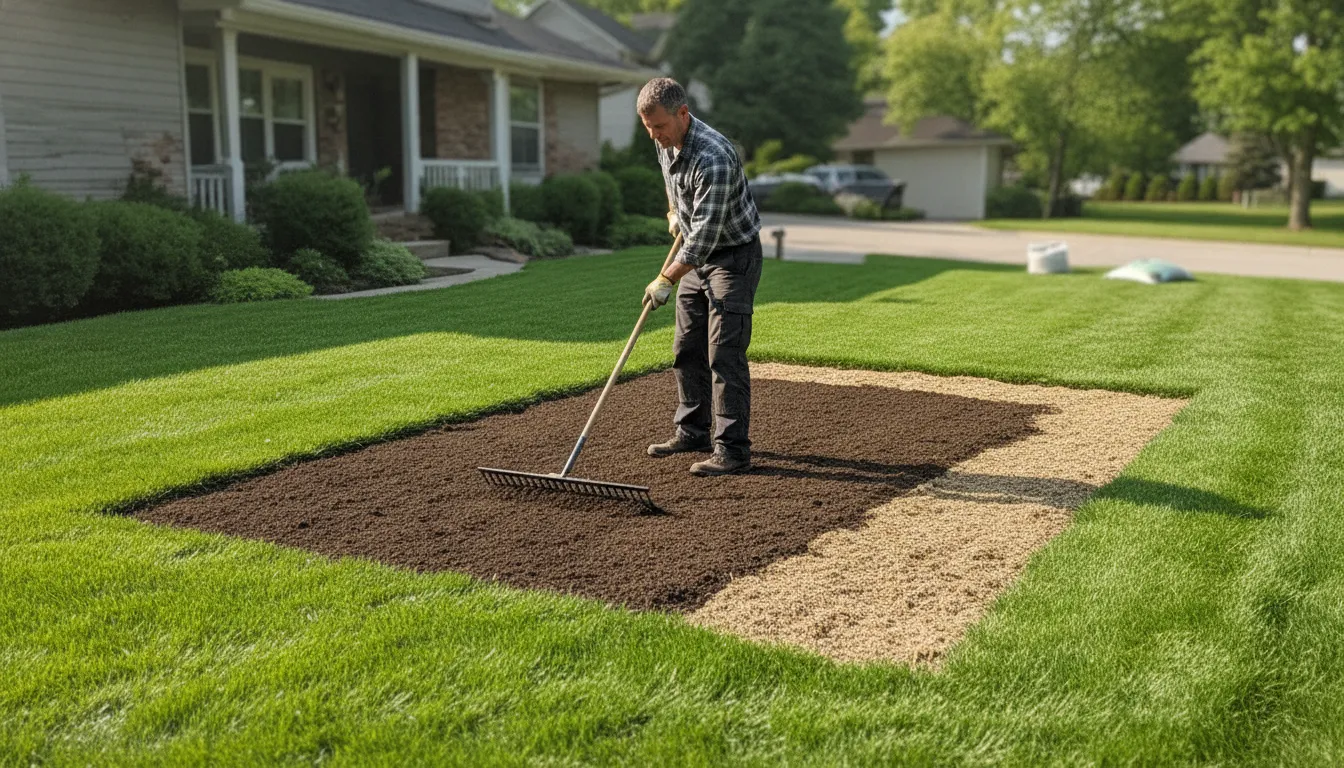
Overseeding an existing lawn
Measure the area you plan to improve, then choose a depth within that range based on the condition of the soil. If the lawn has thin coverage but reasonably good soil, you may need less material after aerating and raking. If the surface is uneven, compacted, or missing usable soil, a deeper layer may be appropriate. Aeration and overseeding can help seed reach direct contact with the soil, but topsoil should still be spread evenly rather than piled over the turf.
As a simple estimating rule, approximately 1 cubic yard of topsoil covers about 100 square feet at 3 inches deep. Actual coverage varies with the material’s settled depth and how accurately the area is measured. To estimate your order, multiply the lawn’s square footage by the depth in feet, then divide by 27 to convert cubic feet to cubic yards. For example, 1,000 square feet at 3 inches requires about 9.3 cubic yards before allowing for settling and minor measuring differences.
Preparing a new lawn over poor ground
A new lawn built on severely poor or shallow ground may need a deeper prepared bed, sometimes up to about 6 inches of screened, loamy topsoil. The goal is not simply to add volume. The new material should be blended or worked into the existing soil where appropriate, then leveled and firmed so roots have a stable transition zone. University of Minnesota Extension emphasizes that proper soil preparation supports long-term lawn health for seeded and sodded lawns alike: review its lawn establishment guidance.
Going deeper is not automatically better. An excessively thick, loose layer can settle unevenly, create an unstable root bed, and hold too much water above a compacted layer. For most projects, an even, prepared depth is more useful than a large mound of soil. A soil test and an assessment of drainage can help determine whether you need topsoil, an amendment, or a broader correction before seeding.
How to Prep the Soil Bed for Germination
Good soil preparation gives seed a level, stable place to root. Before adding topsoil for grass seed, work through the area in order so you do not bury debris, create uneven pockets, or leave loose soil that washes away. The steps below put careful site preparation into practice.
- Clear away debris and weeds. Remove sticks, stones, construction material, dead thatch, and other objects that could interrupt seed-to-soil contact. Pull or control existing weeds, including their roots where practical. A clean surface makes it easier to see uneven areas and prevents competing plants from taking moisture and nutrients from new seedlings.
- Loosen the top few inches. Use a garden rake, cultivator, or tiller to break up compacted soil near the surface. Work only as deeply as needed to create a workable rooting zone. Avoid over-tilling. Excessive disturbance can damage soil structure and leave the finished bed prone to settling and compaction later. If the existing soil is hard or heavily compacted, aeration and overseeding services can help open the soil and improve direct contact between seed and soil.
- Level low and high spots. Fill shallow depressions and shave down pronounced high areas, then blend the transitions with a rake. A smooth grade helps water spread evenly instead of collecting in low spots or running off raised areas. Check slopes carefully. Newly seeded soil can erode, and seed may wash out during heavy rain if the area lacks adequate stabilization.
- Add and spread screened topsoil and organic matter. Distribute a consistent layer of screened topsoil over the prepared surface, incorporating compatible organic matter where the soil needs better structure or moisture retention. For an overseeding bed, a 2- to 4-inch layer is generally cited as sufficient, but the correct amount depends on the existing grade and site condition. Do not use an unplanned deep layer to hide drainage or grading problems.
- Rake the surface into a fine seedbed. Break up remaining clumps and remove newly exposed stones or roots. The finished surface should be finely textured, loose enough for roots, and free of large ridges. A fine bed lets seed settle into small contact points rather than resting on air pockets or hard clods.
- Firm the soil lightly. Press or roll the surface just enough to remove excessive air gaps and create stable seed-to-soil contact. Do not compact it into a sealed crust. After seeding, maintain consistent moisture through the initial establishment period because young seedlings are especially dependent on moisture in the topsoil layer. On sloped ground, use appropriate erosion protection before rainfall can move the seed.
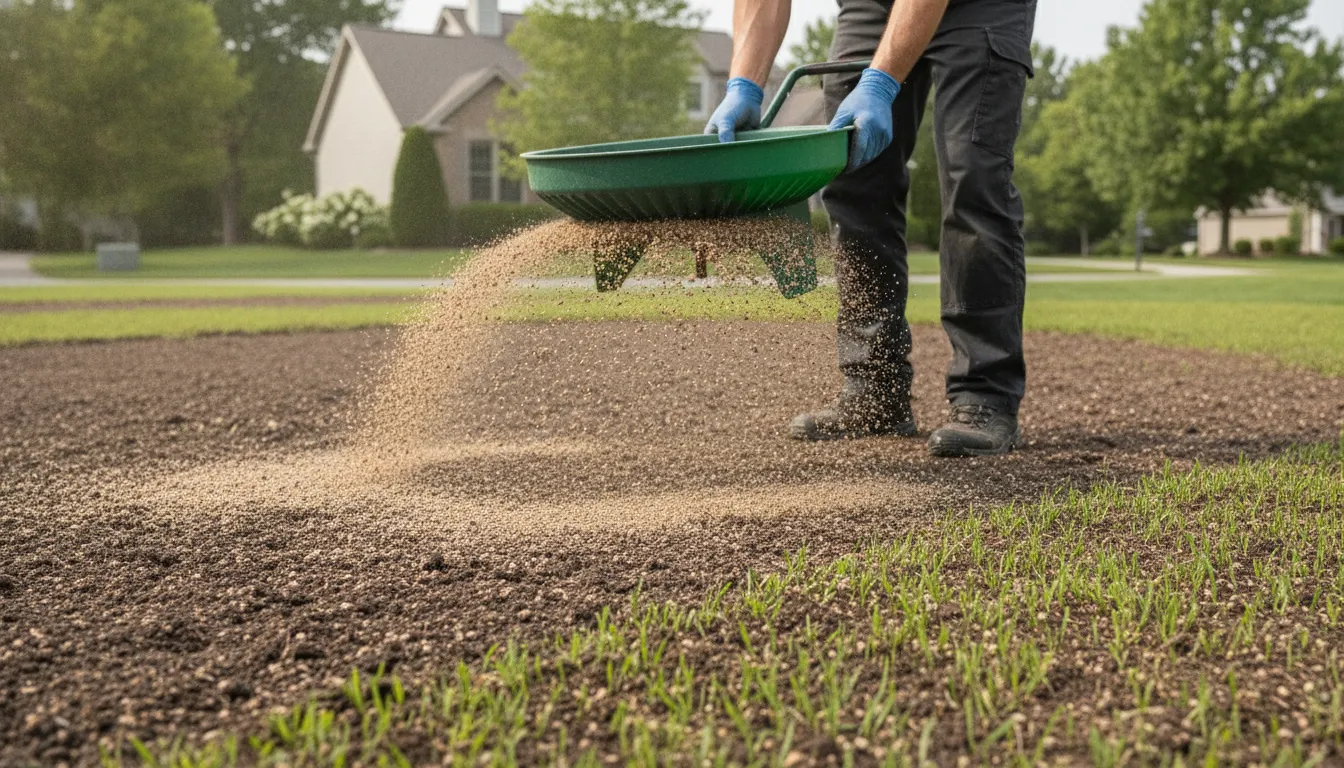
The University of Minnesota Extension recommends preparing the site carefully before seeding or sodding so seed reaches firm, workable soil. Keeping these steps in order reduces the risk of buried debris, uneven pockets, and seed that washes away before roots form.
Common Topsoil Mistakes That Hurt Germination
Even the best seed can struggle when the soil surface is prepared incorrectly. These are the most common errors homeowners make when working with topsoil for grass seed: burying seed too deeply, using fill dirt, skipping soil testing, and leaving compaction untouched.
Covering the seed too deeply
Grass seed needs light and close contact with the soil surface to germinate. A heavy layer of topsoil can bury the seed beyond the conditions it needs, leaving thin or uneven coverage. After seeding, use a light dusting of screened topsoil or compost rather than creating a deep cap. A thin layer can help protect seed while still allowing light, air, and moisture to reach it.
Using fill dirt or construction soil
Low-cost fill dirt and construction soil may contain rocks, debris, weed seeds, or inconsistent materials. These problems create an uneven seedbed and can introduce competition before the new grass is established. Choose screened topsoil with enough organic matter to retain moisture while still draining excess water. The right balance supports young roots without leaving the surface soggy. Learn more about topsoil quality and drainage.
Skipping soil testing before applying lime
Do not add lime simply because a lawn looks thin. Soil testing is the accurate way to determine whether lime or fertilizer is needed for a specific area. Soil below pH 7 is acidic, pH 7 is neutral, and values above 7 are alkaline. Most turfgrass seed germinates best around pH 6.0 to 7.0, but the correct amendment and application rate depend on test results. Applying lime without testing can move the soil farther from the range your grass needs. For background on testing and liming, see Penn State Extension’s turfgrass guidance.
Leaving compacted soil untouched
Hard, compacted soil limits the spaces that hold air and water. It also makes it difficult for roots to move into the soil. Loosen the surface before adding topsoil, and remove debris so the seedbed is smooth and receptive. Where compaction is extensive, aeration and overseeding services can improve seed-to-soil contact without relying on a thick surface layer.
Letting the seedbed dry out or over-tilling
Newly seeded areas need consistent moisture during initial establishment because young seedlings are especially vulnerable to drying. Water lightly and regularly enough to keep the topsoil moist, not saturated. At the same time, avoid excessive tilling. Over-tilling can destroy soil structure and leave the surface prone to settling and compaction later. Prepare only as deeply as needed to loosen the soil, then level and firm the bed before seeding. Good preparation creates a stable foundation without turning the soil into a loose, fragile powder.
Topsoil Versus Compost for New Grass Seed
Topsoil and compost serve different purposes in a new seedbed. Topsoil supplies the mineral foundation that roots need for support. Compost adds concentrated organic matter that can improve the soil’s ability to hold water and make nutrients available. A blended mix combines both benefits, which is why it is often the most practical choice when preparing an area for new grass seed.
Use this comparison to match the amendment to the condition of your lawn:
Topsoil
Mineral content: High; provides the basic soil structure and rooting base.
Nutrient density: Low to moderate, depending on its source and quality.
Moisture retention: Moderate when it contains a balanced mix of sand, silt, and clay.
Best use: Building up a thin or uneven area and creating a stable base.
Drainage: Good topsoil should drain excess water without drying too quickly.
Compost
Mineral content: Low; it is not a replacement for a mineral soil base.
Nutrient density: High in organic matter and useful nutrients.
Moisture retention: High; organic matter can improve water retention and nutrient availability.
Best use: Amending poor soil, supporting biology, and improving an existing seedbed.
Drainage: Can improve heavy soil, but too much may hold excess moisture.
Topsoil-compost blend
Mineral content: Moderate to high; topsoil supplies structure while compost improves the mix.
Nutrient density: Moderate to high, based on the compost proportion.
Moisture retention: Balanced when blended well, helping seed stay moist between waterings.
Best use: Preparing a sowing layer where roots need both support and accessible organic matter.
Drainage: Usually the best balance of drainage and moisture retention.
Choose topsoil when the primary problem is a shallow, eroded, or uneven soil base. Choose compost when the existing soil has adequate structure but needs more organic matter. For most new seedbeds, a quality blend is the most versatile option. Work it into the upper soil rather than leaving a loose layer that can dry out or shift.
Before spreading any material, check the soil’s pH if possible. Most turfgrass seed germinates best between 6.0 and 7.0, and a soil test is the reliable way to determine whether lime or another correction is needed. The goal is not simply to add the richest material. It is to create a firm, well-drained seedbed that holds consistent moisture while young roots establish. Learn more about aeration and overseeding services if compaction is limiting contact between seed and soil.
When to Seed a New Lawn for Best Results
For most homeowners in ExperiGreen’s Midwest service areas, early fall is the strongest time to seed a new lawn or overseed an established one. Aim for late August through September, when summer’s most intense heat is easing but the soil can still support active growth.
Why early fall is the ideal seeding window
Fall conditions tend to balance the two things new seed needs most: dependable moisture and time to establish. Seed must stay consistently moist through the initial germination and establishment phase, because young seedlings are especially vulnerable when the soil surface dries out. Cooler temperatures also reduce the stress caused by evaporation and heat. The University of Minnesota Extension identifies moisture as critical for young seedlings: consistent moisture supports successful germination.
Seeding also takes longer to produce a mature, durable lawn than installing sod. Starting in early fall allows the grass to use the remaining growing season to develop a stronger root system. A properly prepared layer of topsoil for grass seed can support that process, but it cannot compensate for a short establishment window or repeated drying.
When spring seeding makes sense
Early spring is a reasonable secondary window, especially when a lawn has bare areas that need attention or fall work was not practical. Choose a period after the soil is workable and plan to monitor moisture closely. Spring seedlings may face increasing heat, competition from actively growing weeds, and drier conditions as the season progresses. Those challenges make watering and early care particularly important.
Homeowners in Chicago, Detroit, Cincinnati, Columbus, Indianapolis, South Bend, and Canton/Akron should generally prioritize the late-August-to-September window. Charlotte homeowners may find that local temperature patterns shift the practical timing. Weather varies by property and year, so use soil conditions and the upcoming forecast as part of the decision rather than relying on a calendar date alone.
Summer seeding is usually the least forgiving choice. Heat and dry spells can quickly remove the moisture that germinating seed requires, increasing the risk of uneven establishment. If summer damage needs immediate attention, protect and prepare the area, then plan the main seeding work for the next suitable fall or spring window.
Request a quote for professional seeding and soil preparation
Frequently Asked Questions
Should I put topsoil over grass seed?
Yes, a very light layer can help hold moisture and protect seed from drying or washing away. Keep the covering thin, roughly 1/4 to 1/2 inch, because seed needs access to light and air. Press it gently into place rather than burying the seed deeply.
How much topsoil do I need for grass seed?
For covering newly spread seed, plan on about 1/4 to 1/2 inch of screened topsoil or compost. For a larger soil-bed correction or overseeding project, the total added topsoil depth may be greater. One landscape source generally recommends 2 to 4 inches for an overseeding bed, but the right amount depends on the existing grade and soil condition. Source: MulchPros.
Can I use topsoil instead of compost for new grass seed?
Yes. Quality topsoil gives seed a stable rooting medium, while compost adds organic matter that can improve moisture retention and nutrient availability. Either can work as a thin cover. For a poor or compacted bed, blending appropriate organic matter into the upper soil can be more useful than spreading a heavy layer of either material on top.
Do I need to till topsoil into existing soil for grass seed?
Not always. If you are correcting compacted, uneven, or depleted soil, lightly incorporating topsoil and organic matter into the upper layer can improve structure and drainage. Avoid aggressive or repeated tilling, which can damage soil structure. For a thin topdressing over an otherwise prepared bed, raking it evenly into the surface is usually enough. Source: University of Minnesota Extension.
What is the best topsoil mix for grass seed?
Choose a screened, reasonably fine soil that drains excess water but still holds moisture around developing roots. Avoid fill dirt, large debris, and material that stays saturated. A soil test can show whether pH or nutrient corrections are needed before seeding; grass seed commonly performs best around pH 6.0 to 7.0. Source: Penn State Extension.
Let ExperiGreen Prepare Your Soil and Seedbed
Great grass starts below the surface. Choosing the right screened topsoil, preparing an even seedbed, and keeping the soil moist during germination all help seed establish into a thicker, healthier lawn. If the project feels like more than a weekend of raking, ExperiGreen can handle the soil preparation and seeding for you across the Midwest and surrounding service areas.
Request a quote from ExperiGreen today
ExperiGreen serves homeowners in Chicago, Charlotte, Canton/Akron, Cincinnati, Columbus, Detroit, Indianapolis, South Bend, and more.
Chicago | Charlotte | Canton/Akron | Cincinnati | Columbus | Detroit | Indianapolis | South Bend