Signs of Grubs in Your Lawn: How to Identify and Address Grub Damage
You water consistently, fertilize on schedule, and mow at the right height — but patches of your lawn are turning brown and dying anyway. If this sounds familiar, grubs may be the problem. White grubs — the larval stage of Japanese beetles, June bugs, European chafers, and other scarab beetles — live beneath the soil surface and feed on grass roots, severing the connection between the grass plant and its water and nutrient supply. The damage often appears suddenly, but the grubs have been feeding for weeks or months before symptoms become visible.
Identifying grub damage early is critical because the window for effective treatment is narrow, and untreated infestations can destroy large areas of turf that take months to recover. This guide covers the specific signs to look for, how to confirm whether grubs are the cause, the lifecycle that drives when damage appears, and what professional treatment looks like.
The Five Key Signs of Grub Damage
Grub damage can mimic other lawn problems — drought stress, disease, or fertilizer burn can all produce brown patches. But grub damage has distinctive characteristics that set it apart once you know what to look for.
1. Irregular Brown Patches That Spread
The most visible sign of grub damage is patches of grass that turn brown and die despite adequate watering. Unlike drought stress (which typically affects the entire lawn uniformly) or fertilizer burn (which follows the pattern of your spreader passes), grub damage creates irregular brown patches that expand outward over weeks as the grubs feed through an area and move on.
These patches often appear in late August through October in Midwest climates, which is when grubs are largest and feeding most aggressively. The timing catches many homeowners off guard because they have been watering all summer and cannot understand why sections of lawn are suddenly dying. The grass above the feeding zone turns brown because the roots have been severed — no amount of water can save grass that no longer has roots to absorb it.
2. Turf That Feels Spongy or Lifts Like Carpet
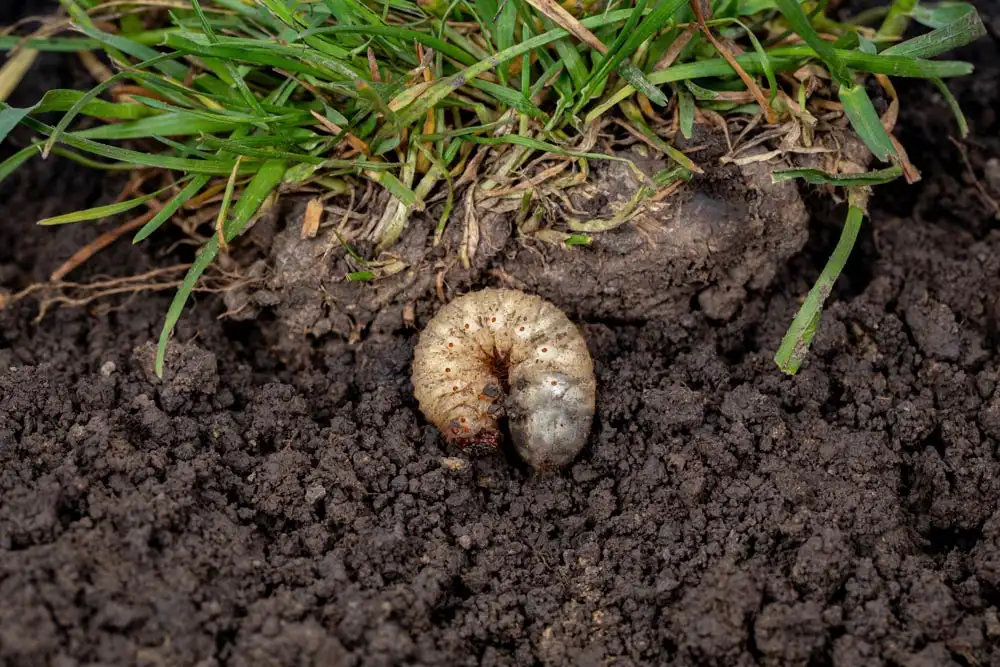
This is the most definitive physical sign of grub damage. Walk across the brown or damaged areas and pay attention to how the turf feels underfoot. Grub-damaged turf feels spongy and loose because the roots have been eaten away. In severe cases, you can literally grab a handful of brown grass and peel it back like a carpet, revealing the soil underneath — and often the white, C-shaped grubs themselves.
Healthy grass is anchored firmly to the soil by an extensive root network. When grubs sever those roots, the grass mat detaches from the soil and sits loosely on top. This carpet-like quality is nearly unique to grub damage — drought-stressed grass stays firmly rooted even when brown, and disease-damaged grass typically maintains its root attachment as well.
3. Increased Animal Digging Activity
Grubs are a high-protein food source that attracts a variety of wildlife. If you notice increased digging activity in your lawn — small holes, torn-up patches, or rolled-back sections of turf — animals are likely feeding on grubs beneath the surface.
Skunks and raccoons are the most common culprits in suburban Midwest neighborhoods. They dig small, cone-shaped holes in the turf to extract individual grubs, often working overnight and leaving a lawn that looks like it was attacked with a garden trowel by morning. Moles create raised tunnels (visible ridges in the lawn surface) as they hunt for grubs and other soil insects. Crows and starlings peck at the turf surface, creating small divots as they probe for grubs.
The animal damage is often more visually dramatic than the grub damage itself. A raccoon can tear up a 10-square-foot section of lawn in a single night looking for grubs. The frustrating part is that treating the animal problem without addressing the grubs is futile — the animals will return as long as the food source is present.
4. Grass That Does Not Recover From Drought or Heat
Cool-season grass naturally goes dormant during extended heat or drought, turning brown to conserve energy. This is a survival mechanism, and dormant grass typically recovers within 2–3 weeks once temperatures cool and moisture returns. If sections of your lawn turn brown during summer stress but fail to green up when conditions improve, grub damage is a likely explanation.
Grubs have eaten the roots that the grass needs to recover from dormancy. Without a functioning root system, the grass cannot absorb the water and nutrients required to break dormancy and resume growth. The brown areas stay brown — and often get worse — while the rest of the lawn greens up around them. This contrast is a strong indicator that something below the surface is preventing recovery.
5. Increased Beetle Activity in Early Summer
Adult beetles are the parent generation of the grubs damaging your lawn. Japanese beetles, June bugs, and European chafers lay eggs in lawn soil during June and July. If you notice significant adult beetle activity in and around your yard during early summer — Japanese beetles on your roses, June bugs buzzing around porch lights, swarms of beetles over the lawn at dusk — there is a high probability that eggs have been laid in your soil and grubs will emerge to feed later in the season.
This is a leading indicator rather than a symptom of current damage, and it represents the best opportunity for preventive treatment. A grub preventive applied in June or early July kills newly hatched grubs before they grow large enough to cause significant root damage. Once you are seeing brown patches in September, the grubs are large and established, and curative treatment is more difficult and less effective than prevention would have been.
How to Confirm Grubs Are the Problem
Before assuming grubs are responsible for brown patches, confirm the diagnosis. The tug test and visual inspection are reliable methods that any homeowner can perform.
The tug test: Grab a handful of grass at the edge of a brown patch and pull firmly upward. If the grass lifts easily from the soil with minimal resistance — peeling up like loose carpet — the roots have been severed, which is consistent with grub feeding. Healthy grass or grass damaged by drought or disease will resist pulling and stay anchored.
Visual inspection: Cut three sides of a 1-foot square section of turf at the edge of a damaged area using a flat-bladed shovel, cutting about 2–3 inches deep. Fold the turf back like a flap and examine the soil surface and root zone. White grubs are C-shaped, milky white larvae with brown heads, ranging from a quarter inch to over an inch long depending on species and maturity. Count the grubs you find in the 1-square-foot section.
The threshold for treatment is generally 8–10 grubs per square foot for most cool-season lawns. Finding 2–3 grubs per square foot is normal and does not typically cause visible damage — healthy grass can tolerate low grub populations. At 8–10 or more per square foot, the feeding pressure exceeds the lawn’s ability to regenerate roots, and damage becomes visible and progressive. Check multiple areas of the lawn, including both damaged and healthy-looking sections, to understand the scope of the infestation.
Understanding the Grub Lifecycle and Damage Timing
White grubs follow a predictable annual lifecycle that determines when damage occurs and when treatment is most effective. Understanding this cycle explains why grub damage seems to appear suddenly and why timing matters so much for control.
Adult beetles emerge from the soil in June and July, mate, and lay eggs in lawn soil — preferring moist, well-maintained lawns with short-mowed grass (ironically, the nicest lawns often attract the most egg-laying). Eggs hatch in late July through August, and the tiny first-instar grubs begin feeding on grass roots immediately. At this stage, the grubs are small and feeding pressure is minimal — you would not notice any damage.
Through August and September, the grubs grow rapidly through second and third instar stages, increasing in size from a quarter inch to over an inch long. Their feeding intensity increases proportionally. Third-instar grubs are voracious root feeders, and this is when visible lawn damage appears — typically late August through October in Midwest climates. By the time you see brown patches, the grubs have been feeding for 6–8 weeks and have already done significant root damage.
As soil temperatures drop in late October and November, grubs burrow deeper (8–12 inches) to overwinter below the frost line. They are essentially dormant through winter. In spring (April–May), they return to the root zone for a brief feeding period before pupating into adult beetles, and the cycle begins again. The spring feeding period is shorter and less damaging than fall, but can cause problems in lawns already weakened by the previous year’s infestation.
Professional Grub Treatment vs. DIY: Why Results Differ
Grub control is one of the areas where the gap between professional and DIY results is largest. The timing precision, product selection, and application technique required for effective grub control make it particularly difficult for homeowners to manage successfully on their own.
Preventative vs. Curative Treatment
Preventive treatment is far more effective than curative treatment, but it requires applying the right product at precisely the right time — before grubs are large enough to cause visible damage. Professional grub control programs apply preventive products in late spring or early summer, targeting newly hatched grubs when they are small and most vulnerable. These professional-grade preventive products provide season-long protection with a single application, maintaining a chemical barrier in the soil that kills grubs throughout their active feeding period.
Retail grub products available to homeowners are typically curative rather than preventive — designed to kill existing grubs after damage is already visible. Curative products require the grubs to be actively feeding in the root zone to work, which means you are treating after the damage has occurred. They are also less effective against large, mature third-instar grubs than against the small, young grubs targeted by preventive treatments. Getting the right product on at the right time requires monitoring soil conditions and beetle activity, then acting within a narrow application window.
Proper Grub Control Application
Application technique matters as well. Grub control products need to reach the root zone to be effective, which requires adequate watering-in after application — typically half an inch of irrigation within 24 hours. Insufficient watering leaves the product sitting on the surface where it degrades in sunlight rather than reaching the soil layer where grubs feed. Professional applicators know exactly how much product to apply per 1,000 square feet and advise on post-application watering requirements.
The cost comparison is closer than many homeowners assume. A single bag of retail grub control product covers 5,000–10,000 square feet and costs $25–50. Professional preventive treatment for the same area is typically $75–150 — but it includes the correct product at the correct rate, precise timing based on local conditions, and guaranteed results. When a $40 retail product fails because it was applied at the wrong time or watered in insufficiently, the cost of reapplication plus lawn repair often exceeds what professional treatment would have cost in the first place.
Recovering From Grub Damage
Once grubs have been treated and eliminated, the damaged areas need help recovering. Grass with severed roots cannot regenerate on its own — new seed or sod is typically needed to restore the damaged sections.
For small damaged areas (under 50 square feet), hand-seeding with a quality grass seed blend matched to your existing lawn type is often sufficient. Loosen the top inch of soil with a rake, spread seed at the rate specified on the bag, and maintain consistent moisture for 2–3 weeks until germination occurs. Fall is the best time for this repair work, as cool temperatures and fall moisture support rapid establishment.
For larger damaged areas, professional overseeding paired with core aeration produces faster, more uniform recovery. Aeration creates thousands of seed-to-soil contact points that dramatically improve germination rates, and it addresses the soil compaction that often worsens in grub-damaged areas from animal digging and foot traffic. ExperiGreen’s aeration and overseeding service restores grub-damaged lawns efficiently, and the fall fertilization program provides the nutrients young seedlings need to establish before winter.
Recovery takes time. Newly seeded areas need 6–8 weeks to fully establish, and the repaired sections may look slightly different in color or texture from the surrounding lawn for the first season. By the following spring, with proper fertilization and continued grub prevention, the repair areas will blend seamlessly into the rest of the lawn.
Preventing Future Grub Problems
The best approach to grubs is preventing the damage before it starts. A professional grub preventive applied annually in early summer eliminates most grub problems before they develop. ExperiGreen’s grub control program uses preventive products timed to target newly hatched grubs during their most vulnerable stage, providing season-long protection with a single application.
Healthy lawn practices also reduce grub vulnerability. A thick, well-fertilized lawn with deep roots can tolerate moderate grub populations (5–7 per square foot) without showing visible damage. Regular fertilization, proper mowing height (3–3.5 inches for cool-season grass), and adequate irrigation support the root density that makes grass more resilient to feeding pressure. These practices do not prevent grubs, but they raise the threshold at which grub feeding causes visible damage.
Monitoring for adult beetle activity in June and July gives you an early warning system. If you see heavy Japanese beetle or June bug activity in your yard, grub eggs are almost certainly being laid in your soil. This is the time to ensure preventive treatment is in place — not September, when the damage has already occurred.
Frequently Asked Questions
How many grubs per square foot is too many?
The damage threshold for most cool-season lawns is 8–10 grubs per square foot. Below that level, healthy grass can usually regenerate roots faster than grubs can eat them. Above that level, the feeding pressure exceeds the lawn’s recovery capacity and visible damage begins. Lawns that are already stressed from drought, poor fertilization, or compaction may show damage at lower grub counts.
When is the best time to treat for grubs?
Preventive treatment in late spring or early summer (June–early July) is far more effective than curative treatment after damage appears. Preventive products target small, newly hatched grubs when they are most vulnerable. Curative products applied in September or October work against larger grubs but are less reliable and treat after damage has already occurred.
Do grubs come back every year?
Yes — adult beetles lay new eggs in lawn soil each summer, creating a new generation of grubs annually. A grub problem this year means you should apply preventive treatment next year as well. Annual prevention is the most reliable approach to long-term grub management.
Will my lawn recover from grub damage on its own?
Mild damage (scattered thin spots) may recover with proper fertilization and watering over several months. Severe damage (large dead patches where turf peels up) will not recover without reseeding or sodding, because the roots have been completely destroyed. Professional overseeding after grub treatment is the most effective recovery strategy for significant damage.
Can I prevent grubs naturally without chemicals?
Beneficial nematodes and milky spore are biological control options that can reduce grub populations. However, their effectiveness is inconsistent and highly dependent on soil conditions, temperature, and proper application. They work best as supplements to a comprehensive program rather than standalone solutions. For reliable, season-long protection, professional-grade preventive products remain the most effective option.
Should I treat for grubs myself or hire a professional?
Grub control is one of the most timing-sensitive lawn care applications. The difference between applying preventive treatment at the right time versus three weeks late can mean the difference between zero grub damage and a destroyed lawn. Professional programs monitor local beetle emergence and soil conditions to time applications precisely. The cost of professional treatment ($75–150) is modest compared to the cost of lawn restoration after a failed DIY treatment ($200–500+ for seed, topsoil, and labor).
Does ExperiGreen offer grub control?
Yes — ExperiGreen’s grub control program includes a preventive application timed for maximum effectiveness against newly hatched grubs in your area. The program is available across all service markets in Ohio, Michigan, Indiana, Illinois, North Carolina, Georgia, Missouri, and Connecticut.
Grub damage is far easier to prevent than to fix. Schedule a grub inspection with ExperiGreen and let our lawn pest control experts protect your lawn before the damage starts — because by the time you see brown patches, the grubs have already won.