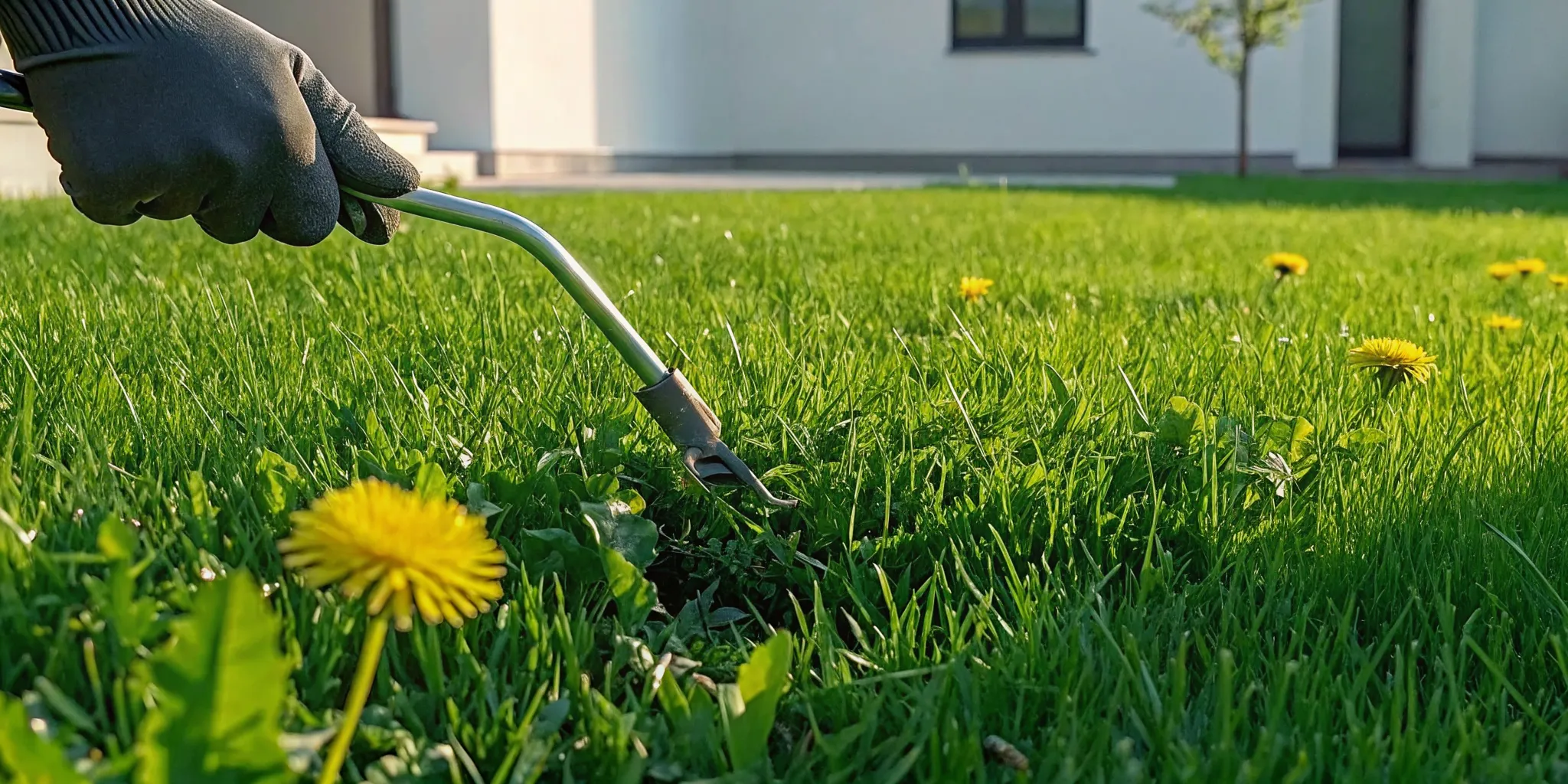
One snapped dandelion root can turn a quick pull into another yellow bloom. Removing the weed is only half the job; protecting the grass and closing thin spots keeps it from returning.
Request a free lawn care quote from ExperiGreen to control dandelions and build thicker turf.
To get rid of dandelions, dig scattered plants after rain and remove as much taproot as possible. For widespread weeds, use a selective broadleaf treatment labeled for your grass. Then prevent regrowth by mowing, watering, fertilizing, aerating, and filling thin turf.
The real challenge is choosing a control method that removes dandelions while preserving the turf you want to keep. How to get rid of dandelions without hurting your grass explains the safest options for small patches and established infestations. Here’s how.
How to get rid of dandelions without hurting your grass
The safest way to get rid of dandelions is to match the method to the size of the problem. Dig out isolated plants, spot-treat larger patches with selective broadleaf control, and help thin turf grow dense again. This approach targets the weeds while limiting stress on the surrounding grass.
Remove isolated plants by the root
Hand removal works well when only a few dandelions are scattered across the lawn. Water the soil first or work after a soaking rain, when the ground is easier to dig. Slide a dandelion tool beside the taproot, loosen the soil, and lift the full plant.
Do not simply pull off the leaves and flower. Dandelions can grow again from broken root pieces, so remove as much of the taproot as possible. The University of Minnesota Extension explains why complete root removal helps prevent regrowth. Check the spot later and dig again if new leaves appear.
Treat larger patches without harming turf
Hand digging becomes less practical when dandelions cover a broad area. In that case, use a selective broadleaf weed control made for lawns rather than a product that kills all plants. Apply it only to the weeds and follow every direction on the product label.
A selective treatment can control established dandelions while leaving suitable lawn grasses in place when used as directed. Avoid spraying on windy days, since drift can reach nearby flowers or garden plants. ExperiGreen’s fertilization and weed control programs pair targeted weed treatment with ongoing turf care.
Do not mow right before treatment if the product needs leaf surface for contact. Also, do not assume one treatment will solve a long-running problem. Watch for fresh growth, then address remaining weeds with the same careful, targeted approach.
Build thicker grass to prevent a return
Dandelions often take hold where turf is bare or thin. Once active weeds are under control, focus on filling those open spaces. Proper mowing, watering, and feeding help grass compete for the light, moisture, nutrients, and room that weeds need.
Regular feeding supports dense turf, but more fertilizer is not always better. Base the schedule on grass type, season, and lawn condition. ExperiGreen’s guide to lawn fertilization schedule explains how timing fits into long-term lawn care.
Repair bare spots and correct issues that keep the lawn thin, such as poor watering or compacted soil. Keep checking treated areas as the grass fills in. Removing new dandelions early is easier than waiting for another large patch to form.
Why dandelions spread so fast in lawns
Dandelions spread quickly because they can survive, regrow, and produce many windborne seeds. They also gain ground where grass is thin or stressed. The same traits that help them spread explain why quick surface fixes often fail.
Explore fertilization and weed control if dandelions are spreading faster than you can pull them.
A perennial life cycle and deep taproot
Unlike annual weeds, dandelions live for more than one growing season. Their leaves may die back during cold weather, but the crown and root can survive below ground. When conditions improve, stored energy helps the plant send up fresh leaves and flowers.
A mature dandelion builds a strong taproot that can reach deep into the soil. Cutting off the leaves only removes visible growth, while the root remains ready to regrow. Even small broken root pieces can form new plants, as this dandelion biology guide explains. That is why mowing or snapping off flowers does not remove an established plant.
Seeds built to travel
Each yellow flower can become a round seed head filled with tiny seeds. The seeds have parachute-like structures that let the wind carry them into open spots. A single plant can produce up to 20,000 viable seeds, according to Oregon State University. Even after you clear one patch, seeds from nearby lawns can start another.
Dandelions take hold most easily where grass leaves gaps. Thin turf exposes soil and gives new seedlings access to light, water, nutrients, and space. Disturbed soil also creates open areas with little grass competition. Poor watering or excess thatch can make those weak spots worse.
Weak turf and compacted soil
Compacted soil can slow grass root growth and reduce turf vigor. Dandelions can tolerate these stressed sites, so they may keep growing as nearby grass thins. Their presence can point to compaction and low calcium, though soil testing should guide any correction. Aeration can help relieve compaction and create better growing conditions for turf.
Low grass competition gives new dandelion seedlings room to establish. A lasting plan for how to get rid of dandelions must address both the weed and the lawn conditions around it. Proper watering, mowing, and how often to fertilize your lawn help grass fill bare space. Otherwise, new seeds and surviving roots can quickly replace the plants you removed.
How should you pull dandelions by hand?
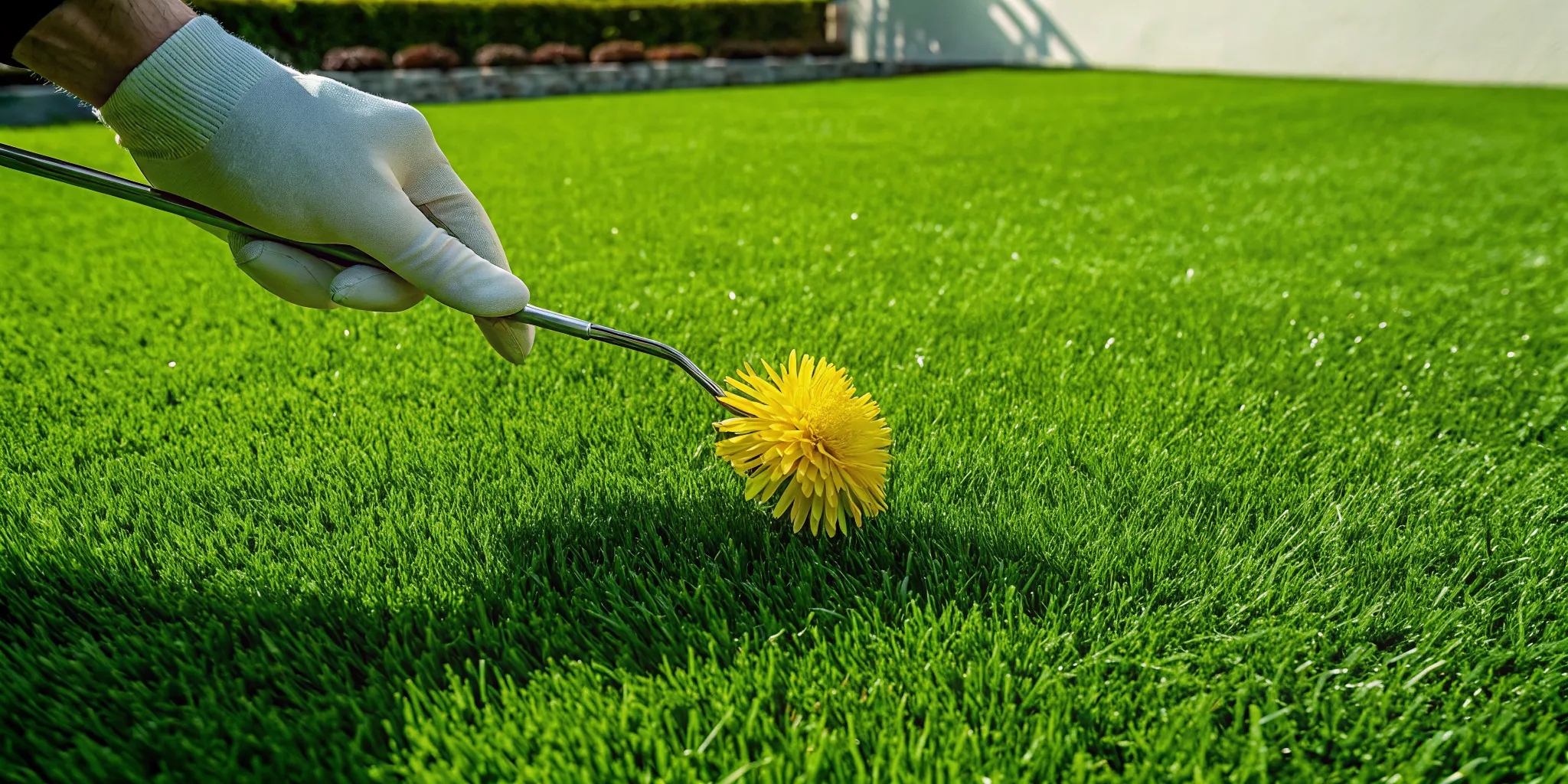
When hand pulling makes sense
Hand pulling works best when a lawn has a small patch or a few scattered dandelions. It lets you target each plant without treating nearby grass. For a wide or established problem, pulling every plant may take too much time.
The goal is to remove the whole taproot, not just the leaves and flower. Dandelions can grow again from broken root pieces left in the soil. The University of Minnesota Extension explains why removing as much root as possible helps prevent regrowth.
A six-step removal method
Use this process when learning how to get rid of dandelions by hand. A narrow dandelion digger or weeding fork works better than pulling the leaves alone. Wear gloves, and keep a small bucket nearby for removed plants.
Work slowly around nearby grass roots. A careful dig leaves less bare soil and makes the small repair easier. Avoid yanking the leaf cluster because it often breaks away before the root moves.
-
Water the area deeply, or work after a soaking rain. Moist soil loosens its grip on the taproot and makes clean removal easier.
-
Find the plant’s center, where the leaves meet the soil. Move the leaves aside so you can place the tool close to the crown.
-
Push the dandelion digger straight down beside the taproot. Go as deep as the tool allows without tearing up nearby grass.
-
Gently rock the tool to loosen the soil around the root. Then lift the plant from its base with slow, steady pressure.
-
Check the root after removal. If the end looks snapped, dig again and remove any root pieces you can find.
-
Backfill the hole with soil, press it lightly, and water the spot. Add grass seed when needed to avoid leaving bare ground.
What to watch after pulling
Place removed plants in a yard-waste container, especially if they have seed heads. Do not leave them on the lawn. Mark each cleared spot so you can check it again during your normal mowing routine.
Look for fresh leaves over the next few weeks. New growth often means part of the root remained, so repeat the digging process while the plant is small. Pair this check with proper proper feeding frequency and help grass fill open spaces.
A snapped root does not mean the effort failed. It means the spot needs another check. Keep the soil around regrowth moist, loosen it again, and dig below the new crown before lifting.
What kills dandelions without killing the lawn?
A selective broadleaf weed control product is usually the most direct way to kill dandelions while protecting established turf. These products target broadleaf plants, including dandelions, rather than the grass species listed as safe on the label.
Natural and home methods can help with a few scattered weeds. Yet many of them also harm grass or fail to reach the taproot. The right choice depends on the number of weeds, their location, and your willingness to repeat treatment.
Natural and home methods
Hand digging is the lowest-risk choice for grass when only a few dandelions are present. Work after rain or deep watering, then remove as much taproot as possible. Small root pieces left behind can form new plants, according to the University of Minnesota Extension.
Household vinegar may burn exposed leaves, but it often does not kill an established dandelion. Horticultural vinegar is stronger, yet it can burn nearby grass as well. Treat it only as a precise spot treatment, and keep it away from turf you want to preserve.
Boiling water and other nonselective home treatments create the same basic problem. They may damage any plant tissue they touch. These options make more sense in pavement cracks than in the middle of a lawn.
Selective broadleaf weed control
Selective post-emergent products are made for weeds that are already growing in turf. Common active ingredients used for dandelion control include 2,4-D, MCPA, dicamba, and triclopyr. Always confirm that the label lists your grass type and follow its directions.
Spot spraying each dandelion limits product use and reduces contact with nearby plants. Avoid spraying flowers, garden plants, or trees unless the label permits it. Established or widespread patches may call for a planned broadleaf weed control approach instead of repeated home treatments.
Selective does not mean harmless to every plant. Drift can injure nearby flowers, shrubs, and garden crops. Apply with care, use the amount listed, and stop if wind could carry spray beyond the target.
- Hand digging: best for a few scattered weeds. Low turf risk when done carefully, but root pieces may regrow.
- Household vinegar: best for tiny leaf spot treatments. It can burn nearby grass and often misses the root.
- Horticultural vinegar: best for precise treatment away from turf. It is nonselective and strong.
- Selective broadleaf herbicide: best for dandelions growing in lawns. It must match the grass type and label directions.
- Professional weed control: best for recurring patches, uncertain grass types, or lawns with several broadleaf weeds at once.
| Method | Best use |
|---|---|
| Hand digging | Scattered weeds |
| Selective broadleaf control | Lawn infestations |
How to protect the surrounding grass
Before treating, identify the weed and check the product label. Apply only under the listed weather and lawn conditions. More product is not better, and overspray can reach plants you did not mean to treat.
Treatment works best as one part of a wider lawn care plan. Thick turf leaves less open space for weeds to take hold. Proper watering, mowing, and fertilization timing for dense turf can help reduce future dandelion pressure.
How fertilization and thick turf keep dandelions from coming back
Removing visible dandelions solves only part of the problem. New seeds can settle wherever turf is bare, weak, or thin. A dense lawn leaves less open soil for those seeds to reach and use. That is why long-term prevention depends on steady lawn care, not just spot treatment.
Feed grass without feeding weeds
Fertilizer helps grass produce the roots and blades needed to fill open space. The right product and schedule depend on grass type, soil needs, and the season. ExperiGreen’s guide to planned lawn feeding explains why a planned approach works better than random applications.
More fertilizer is not always better. Too much can stress turf, cause fast top growth, or wash away before grass uses it. A soil test can show which nutrients are lacking. Use those results to support steady growth instead of guessing.
Mowing and watering habits
Mow often enough that you remove only part of each grass blade at one time. Keep the lawn at the right height for its grass type. Scalping exposes soil and weakens the turf canopy. The University of Georgia notes that proper mowing height and frequency can limit many weeds.
Consistent watering also helps grass hold its ground. Too little water can thin the lawn, while too much may weaken roots or create other turf problems. Water based on weather and soil moisture rather than a fixed habit. Check shaded, sunny, and sloped areas because they may dry at different rates.
- Use sharp mower blades to make clean cuts.
- Avoid mowing wet grass or taking off too much at once.
- Adjust watering after rain, heat, or long dry spells.
- Watch for recurring thin spots before weeds fill them.
- Repair bare areas quickly so dandelion seeds have less open soil to use.
Repair thin and compacted areas
Compacted soil limits the air, water, and root space grass needs. Dandelions may also point to compaction, so repeated growth in one area deserves a closer look. Aeration can loosen packed soil and help turf roots spread. Overseeding after aeration can then add grass plants where the lawn lacks density.
Match repair work to the growing season for your grass type and region. Seed needs good soil contact, steady moisture, and time to become established. Keep foot traffic low while young grass develops. Fertilize and mow it with care so the new turf can fill gaps.
Seasonal timing matters because dandelions can bloom from spring through fall. Treat active plants before they seed, then strengthen weak turf as conditions allow. ExperiGreen’s Weed Wednesday dandelion overview offers more help with spotting and managing this persistent weed.
When professional broadleaf weed control makes sense
Hand removal can work when only a few dandelions appear. Professional help makes more sense when plants cover several lawn areas or return after careful digging. At that point, the issue is often bigger than the yellow flowers you can see.
Get professional fertilization and weed control when dandelions keep coming back.
Signs that DIY removal is falling short
Repeated regrowth is one clear sign that roots remain below the soil. Dandelions have deep, branching taproots, and new plants can grow from broken root pieces. The University of Minnesota Extension notes that removing as much root as possible helps prevent regrowth.
A large number of plants can also make hand pulling hard to manage. While you dig one patch, other plants may bloom or spread seeds elsewhere. Professional control may be useful when the work keeps growing faster than your removal efforts.
Concern about harming the grass is another reason to seek help. Broadleaf weed products and application timing must fit the lawn and current conditions. A trained local technician can assess the weeds, turf type, and lawn stress before choosing an approach.
Why the lawn needs attention too
Learning how to get rid of dandelions is not only about treating each plant. Thin or bare turf leaves open space where weeds can take hold. Watering habits, mowing, soil compaction, and thatch can all play a role in weak lawn growth.
A professional can look for those underlying lawn issues while planning weed control. This wider view matters when dandelions keep returning in the same spots. It also helps avoid a cycle of treating visible weeds without improving the turf around them.
Healthy turf is an important part of long-term prevention. Proper watering, mowing, and a consistent fertilization plan can help grass fill open areas. These steps support weed control, but they need to match the season and the lawn’s condition.
Season-long control for established weeds
Established infestations often need more than one round of attention. Dandelions can bloom from early spring through fall, so new growth may appear after an early treatment. A season-long plan tracks regrowth and adjusts care as lawn conditions change.
Professional broadleaf weed control can combine targeted weed treatment with steps that support denser turf. ExperiGreen’s local teams can assess weed pressure and recommend care based on regional growing conditions. Homeowners can also review ExperiGreen’s guide to broadleaf weed control for help spotting other weeds.
Professional help is most useful when the infestation is established, roots keep regrowing, or lawn health is unclear. It may also reduce the guesswork around product choice and timing. The goal is a practical plan that addresses both current weeds and the conditions that let them return.
When is the best time to treat dandelions?
The best time to treat established dandelions is usually fall, while early spring is useful for prevention and quick removal. Timing depends on whether you are targeting a mature plant, a new seedling, or seeds that have not sprouted. Start before yellow flowers turn into seed heads whenever possible.
Fall treatment for established dandelions
Fall is a strong time to treat mature dandelions because these perennial weeds are preparing for winter. During this period, dandelions move nutrients into their roots. A suitable post-emergent herbicide can travel with that flow and reach the taproot. The University of Minnesota Extension identifies fall as the best time to use herbicides on dandelions for this reason.
Treat green, actively growing leaves rather than plants stressed by drought or a hard freeze. Follow every product label for application rates, weather limits, and mowing guidance. A selective broadleaf product is made to target weeds without harming listed lawn grasses when used as directed.
Early spring prevention and removal
Early spring gives homeowners a chance to address young plants before they form seed heads. Hand-dig small patches when the soil is moist, taking care to remove as much taproot as possible. This early action limits new seed spread and makes each plant easier to manage.
A pre-emergent product may help stop dandelion seeds from sprouting, but it will not remove established plants. Use it as one part of your spring plan, not as the only answer. Your local climate and grass type affect the right application window, so check the label before use. ExperiGreen’s guide to seasonal lawn care timing offers more help with planning spring work.
What to do during active bloom
Do not wait for the perfect season if open flowers are already appearing. Remove flowers and seed heads first to reduce spread, then choose a control method that fits the size of the patch. Dig isolated plants or use a labeled post-emergent treatment for wider growth.
Dandelions can bloom from early spring through fall, so check the lawn often during the growing season. If plants keep returning, look beyond spot treatment. Thin turf leaves room for weeds, while proper mowing, watering, and fertilization to crowd out weeds can help reduce future openings.
For homeowners learning how to get rid of dandelions, the most practical schedule combines quick spring action with a focused fall treatment. Keep treating active plants before they seed, and support dense turf between treatments. This approach targets current weeds while making the lawn less welcoming to the next crop.
Frequently Asked Questions
How do you kill dandelions without killing the grass?
Use a selective broadleaf herbicide labeled for your grass type, and apply it only as the label directs. Products containing 2,4-D, dicamba, or triclopyr can control dandelions in lawns, according to the University of Minnesota Extension. Avoid nonselective herbicides because they can injure nearby grass. Spot-treating individual weeds also limits unnecessary exposure across the lawn.
Should you pull dandelions out by hand?
Hand-pulling works well for a small number of dandelions if you remove as much of each taproot as possible. Water the area first or work after rain, when moist soil makes digging easier. Use a dandelion fork to loosen the soil before lifting the root. Broken root pieces can produce new plants, so check the area later and remove any regrowth.
Will vinegar kill dandelions?
Household vinegar usually does not kill an established dandelion and may damage grass that it touches. Horticultural vinegar can burn exposed leaves, but it may not eliminate the deep taproot. It can also harm nearby plants and irritate skin or eyes. For dandelions growing within turf, careful hand removal or a lawn-safe selective broadleaf herbicide is generally a more reliable option.
When is the best time to apply dandelion killer?
Fall is often the best time to treat established dandelions because the plants move nutrients toward their roots before winter. This movement can also carry herbicide into the taproot, as the University of Minnesota Extension explains. Apply on a calm, dry day when dandelions are actively growing. Always follow the product label for temperature limits, mowing intervals, watering, and safety precautions.
Ready to Stop Dandelions Before They Spread?
Waiting gives established dandelions more time to compete with your grass each week, while repeated surface removal can leave the underlying lawn problem unresolved. Starting now helps you address visible weeds sooner and begin building the dense, well-fed turf that makes future dandelion growth harder. A clear treatment plan also saves you from spending another season pulling weeds that return from roots left behind.
Request a free lawn care quote to get a practical plan for weed control, fertilization, and stronger turf.
Contact ExperiGreen now so your lawn can begin improving before another round of dandelions takes hold.