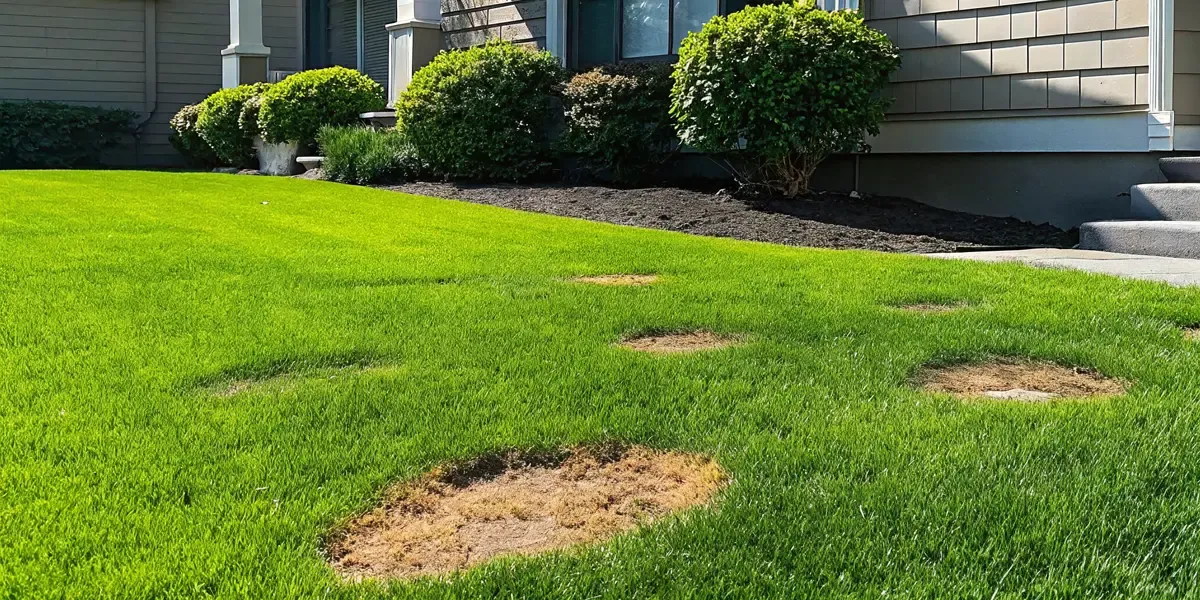
A brown lawn patch is a clue, not a diagnosis. Treating every discolored area as fungus can waste time while the real cause keeps damaging grass.
Brown patches in lawn areas can come from drought stress, fungal disease, grubs, short mowing, pet urine, compacted soil, or poor drainage. Start by studying each patch’s shape, timing, moisture, and grass blades before choosing a fix, since the wrong treatment may worsen damage. Circular light-brown areas may signal brown patch fungus, which Penn State Extension says is caused by Rhizoctonia solani. Turf that lifts like loose carpet suggests grubs, while tiny circles near a pet’s usual route often point to urine damage rather than fungal disease. Once you identify the likely cause, correct watering or mowing, improve soil, repair damaged turf, control confirmed pests, or seek a professional diagnosis.
The right repair depends on reading those clues before damaged turf spreads or returns next season. Next, “What causes brown patches in lawn areas?” breaks down the signs that separate drought, disease, pests, and care mistakes. Compare the shape, texture, location, and recent weather before choosing a response. Here’s how.
Need help diagnosing brown patches? ExperiGreen can help you compare symptoms with professional lawn disease treatment, grub control, lawn care programs, and lawn care services.
What causes brown patches in lawn areas?
Brown patches in lawn areas are a symptom, not a diagnosis. Before choosing a treatment, study the patch shape, grass blades, roots, soil, and recent weather. A quick guess can waste time or make the real problem worse.
Common causes to consider
Start by reviewing what changed before the grass turned brown. Heat, watering habits, foot traffic, mowing, pets, and recent lawn products can each leave useful clues. The most common causes include:
- Drought stress: Dry grass often fades across sunny or high spots and may feel crisp.
- Fungal disease: Disease can form circles, rings, or uneven patches while leaving marks on individual grass blades.
- Grubs or insects: Root-feeding pests may leave weak turf that lifts easily from the soil.
- Mowing stress: Scalping, dull blades, or cutting too short can create brown streaks or broad stressed areas.
- Pet urine: Small, repeated spots often appear where a pet regularly visits.
- Compaction or thatch: Dense soil or excess thatch can limit water, air, and root growth.
- Nutrient issues: Too much, too little, or uneven fertilizer can cause fading, stripes, or burned grass.
Several causes can overlap. For example, compacted soil can weaken roots, while poor drainage can create conditions that favor disease. Homeowners can also review signs of common lawn pests before assuming every brown area needs fungicide.
Pattern clues above the soil
Shape and timing help narrow the list. A broad area that browns during hot, dry weather points more toward drought stress. Straight lines can follow mower paths, fertilizer spread patterns, or sprinkler gaps. Small spots in repeat locations may point toward pet urine.
True brown patch disease often creates light brown circular areas on home lawns. It can also leave tan lesions with dark borders on tall fescue blades. These signs are described by Penn State Extension’s brown patch guide. Other turf diseases can look similar, so circles alone do not prove the cause.
Check how the affected area changes over several days. A patch that grows after warm, wet nights suggests a different issue than turf that fades after missed watering. Note whether nearby shaded, low, or sunny areas show the same damage.
Root and soil checks
Next, tug gently on the brown turf and inspect the soil below it. Grass with damaged roots may lift with little effort, which can suggest grub feeding. Firm soil, standing water, or shallow roots may point toward compaction, drainage, or thatch problems.
Healthy-looking roots with damaged leaf tips may shift attention toward mowing stress or disease. Uneven color without clear lesions may call for a soil test before adding fertilizer. A deeper diagnosis helps determine whether to change care practices, manage pests, or revive dead or thinning grass.
Use the full set of clues instead of relying on color alone. Patch shape, blade marks, root strength, soil condition, weather, and recent lawn care create a more reliable decision guide.
Use this brown patch decision tree before you treat
Clues to note before you begin
Brown patches in lawn areas can come from disease, pests, water problems, pet urine, or poor soil. Start with the clues you can see before applying fertilizer, fungicide, or insect control.
Note when each spot appeared, how fast it changed, and which parts of the yard are affected. Photos taken several days apart can help you track its shape and spread.
Seven diagnostic checks
Work through these steps in order. Each answer narrows the cause and helps you choose a fix that addresses the real problem.
-
Check how water reaches the patch. Run each irrigation zone and watch for clogged heads, missed areas, puddles, or runoff. Then press a screwdriver into the soil inside and outside the patch. Hard, dry soil points toward poor coverage or compaction. Wet soil and long-lasting leaf moisture can favor fungal growth, so correct drainage and watering before treating disease.
-
Use the tug test. Gently pull the damaged turf near its edge. Grass that lifts like loose carpet may have root damage from grubs. Peel back a small section and inspect the soil before choosing insect control. ExperiGreen’s guide explains how to manage lawn grubs after you confirm they are present.
-
Study the patch shape and grass blades. Brown patch disease often forms light brown, circular areas that range widely in size. A dark purplish edge, called a smoke ring, may appear on some closely cut turf. Tall fescue can show tan leaf lesions with dark borders. Compare these signs with the brown patch symptoms described by Penn State Extension.
-
Review mowing and fertilizer. Note whether the lawn was cut shorter than usual, mowed with a dull blade, or fed before symptoms began. Short mowing can stress grass. Too much nitrogen can also create soft growth that is more open to brown patch. Pause extra fertilizer until the cause is clear.
-
Consider pet urine and spills. Small spots in places a pet visits may point to urine rather than fungus. Look for a repeat pattern along a walking route. Also consider fuel, fertilizer, salt, or other spills. Avoid treating these spots with fungicide because it will not fix the source.
-
Inspect compaction and thatch. Dense soil limits the movement of water, air, and nutrients around roots. A thick, spongy layer above the soil can also hold moisture near grass blades. Pay close attention near paths, play areas, and low spots. Professional lawn care services can assess soil, aeration needs, and the wider care plan.
-
Call a lawn care professional before treating. Ask for an inspection when symptoms overlap, spread fast, or return after basic care changes. A professional can separate fungal disease from insects, drought stress, and soil issues. That diagnosis helps prevent wasted products and supports a treatment plan suited to the grass and local conditions.
When the cause remains unclear
A single lawn may show more than one source of damage at the same time. Regional weather and grass type can also change how symptoms look. Avoid applying several products as a guess, since the wrong approach may add stress without solving the cause.
Fungus, grubs, or drought: how to tell the difference
Brown patches in lawn areas can look alike from a distance, but they do not share one cause. Start by noting the patch shape, recent weather, and how firmly the turf holds. These clues can narrow the cause before any treatment begins.
Side-by-side diagnostic clues
Brown patch is a summer disease caused by the fungus Rhizoctonia solani. According to Penn State Extension’s brown patch guide, high-cut turf often develops light brown, circular patches. On tall fescue, individual blades may also show tan lesions with dark brown edges.
. . . . . . . . . . . . . . . . . . . . . . . . . . . . . .
| Diagnostic clue | Brown patch fungus | White grubs | Drought dormancy |
|---|---|---|---|
| Common timing | Warm, humid periods with long leaf wetness | Often noticed in late summer | Hot, dry stretches with too little water |
| Patch pattern | Often circular or irregular expanding areas | Uneven, wilting, or thinning areas | Broad areas, often tied to dry soil or sprinkler gaps |
| Grass appearance | Light brown turf; leaf lesions may have dark borders | Brown or wilted turf with damaged roots | Tan blades that may remain rooted |
| Quick home check | Inspect blades at the patch edge for lesions | Gently tug turf and check whether it lifts easily | Probe the soil and compare sprinkler coverage |
| Likely next step | Reduce excess leaf wetness and confirm the disease | Inspect the root zone before choosing pest control | Check irrigation, then watch for recovery |
What the home checks can reveal
For a possible grub problem, grasp a small section near the edge of the damage and pull gently. Turf that lifts with little resistance may have root damage, but the tug test alone does not confirm grubs. Look beneath the loosened turf, then use a guide to manage lawn grubs only after the cause is clear.
Drought-stressed grass often appears across a wider area or follows weak sprinkler coverage. The soil may feel dry below the surface, while the turf remains firmly rooted. Dormant grass can look tan without being dead, so avoid assuming every dry patch needs reseeding.
Choosing the right next step
A quick check is useful, but several problems can occur in the same lawn. Shade, drainage, grass type, and local weather may also change how damage appears. If signs point to fungus, review ways to prevent lawn diseases while arranging a closer inspection.
Avoid applying fungicide, insect control, or extra water based on color alone. The wrong response may add stress or leave the real cause untreated. When the clues remain mixed, a professional inspection can assess the grass, roots, soil moisture, and patch pattern together.
How to fix brown patches without making them worse
The right fix depends on why the grass turned brown. More water will not repair every dry-looking spot, and it can make fungal disease worse. Before treating brown patches in lawn areas, check the soil, grass blades, roots, and recent weather. Then match the response to the likely cause.
Correct watering and mowing problems
First, push a screwdriver into the soil and check moisture below the surface. Dry soil may need a slow, deep watering. Soft, soaked soil calls for less water, better drainage, or sprinkler repairs. Water early in the morning so grass blades can dry during the day.
Avoid watering at night or adding small amounts each day. Long periods of leaf wetness can support turf disease. Penn State Extension explains how moisture management and drainage help limit conditions that favor fungal growth. Adjust sprinkler heads so healthy areas do not get soaked while dry zones stay missed.
Mowing habits matter too. Raise the mower deck if grass has been cut too short, and never scalp a stressed lawn. Sharp blades make clean cuts, while dull blades tear leaves and leave ragged tips. During heat or drought, reduce traffic and avoid heavy feeding that forces weak growth.
- Water the root zone deeply, then let the soil begin to dry.
- Mow only when the grass is dry.
- Keep mower blades sharp and remove no more grass than needed.
- Pause harsh treatments while turf is under heat or drought stress.
Relieve problems below the surface
Compacted soil can keep water, air, and roots from moving through the lawn. Thatch can also hold moisture near the grass blades and roots. Core aeration helps loosen compacted soil, while dethatching removes excess built-up plant material. Both jobs should be timed for the local grass type and growing season.
Do not aerate or dethatch a lawn during severe heat, drought, or active disease pressure. These jobs can add stress when turf has little energy to recover. If the patch is thin but living, proper care may help it fill in. Bare or dead areas may need overseeding after the underlying cause is fixed.
Recovery starts with the cause, not the seed. Otherwise, new grass may fail for the same reason as the old turf. ExperiGreen’s guide to revive dead or thinning grass covers the next steps for damaged areas.
Use targeted treatments only after diagnosis
Use a fungicide only when the pattern, grass symptoms, and conditions point to disease. Brown patch fungus often affects tall fescue, perennial ryegrass, and bentgrasses. Penn State Extension describes brown patch symptoms and susceptible grasses. A product used for the wrong problem wastes time and may add stress.
Likewise, do not apply grub control because a lawn looks brown. Check whether weak turf lifts easily and inspect the root zone for grubs. Treat only after confirming an active pest problem and choosing the right timing. Brown grass with firm roots may point to drought, disease, soil trouble, or another cause.
Once disease or pests are under control, repair lasting damage with aeration or overseeding when conditions suit the grass. Keep watering and mowing steady during recovery. A professional inspection can separate look-alike problems before treatment begins.
Not sure which fix your lawn needs? ExperiGreen lawn care programs pair a close lawn assessment with a plan for turf health, disease pressure, and damaged areas. Request a quote to get help choosing the next step.
How to prevent brown patches from coming back
Prevention starts with steady care that keeps grass roots strong and leaves dry. No single task can stop every cause of brown patches in lawn. A sound routine lowers stress while making changes easier to spot.
Watering and mowing habits
Water deeply and less often instead of giving the lawn a light daily spray. Deep watering helps moisture reach the root zone, while breaks between watering let the surface dry. Morning irrigation also gives grass blades time to dry before night. This matters because proper moisture and drainage management can make conditions less favorable for fungal growth.
Set mowing height for the grass type and avoid cutting more than one-third of the blade at once. Grass cut too short has less leaf area to support healthy roots. Keep mower blades sharp so they make clean cuts instead of torn edges.
- Check low areas after watering and improve drainage where water collects.
- Adjust sprinkler heads so each zone receives even coverage.
- Remove heavy clippings that hold moisture against the grass.
- Change mowing direction to limit wear and soil compaction.
Stronger soil and turf
Healthy soil helps roots reach water, air, and nutrients. Test the soil before changing a fertilizer plan, since the result can show nutrient or pH needs. Use balanced fertilizer at the right time and rate; excess growth can leave some grasses more open to disease.
Core aeration can ease compacted soil and improve movement into the root zone. Overseeding thin areas adds density, helping the lawn recover from drought, traffic, or past damage. These steps can also help homeowners prevent lawn diseases through better long-term turf care.
Check the thatch layer and address buildup when it blocks water or air. Do not assume every new brown area is disease. Grubs feed on roots and may cause wilted patches, while dry soil, mower injury, and pet urine need different fixes.
Seasonal disease monitoring
Watch the lawn closely during hot, humid weather, especially after wet nights or long rainy periods. Brown patch fungus can remain in soil or infected plant material, then become active when conditions favor it. Penn State Extension identifies brown patch as a major summer disease caused by Rhizoctonia solani.
Across ExperiGreen service areas, weather and grass types differ between the Midwest and South. That means irrigation, fertilizer timing, and disease pressure may also change by region. Check shaded and poorly drained areas first, since they may stay damp longer than open turf.
A professional seasonal lawn program can coordinate soil care, fertilizer, aeration, overseeding, grub monitoring, and disease checks. If patches return despite sound care, request an inspection before applying fungicide. A clear diagnosis helps match treatment to the cause and avoids wasting time on the wrong fix.
When should you call a lawn care professional?
Call a lawn care professional when brown patches spread, return after treatment, or have no clear cause. These patterns often point to more than dry grass. A trained inspection can separate disease, pest damage, soil trouble, and routine stress before another fix makes the problem worse.
Warning signs that need a closer look
A single dry spot may improve after you correct a missed sprinkler zone. Several growing patches or broad thinning need a closer look. Brown patch can affect several common turf species, and its symptoms can vary by grass type. Penn State Extension explains how brown patch symptoms differ across turfgrass.
Soft turf that lifts like loose carpet is another reason to seek help. It can point to root damage from grubs rather than a leaf disease. Check for other signs, then learn how professionals manage lawn grubs before choosing a treatment.
- Patches keep spreading after watering or mowing changes.
- The same brown areas return during similar weather.
- Turf feels loose, soft, or easy to pull back.
- Thin grass covers a large part of the lawn.
- Different symptoms overlap, making the cause unclear.
When repeated DIY fixes fail
Stop the trial-and-error cycle when several reasonable fixes have not helped. Adding water to a fungal problem may keep leaves wet longer. Applying a fungicide to grub damage will not address the harmed roots. The wrong fertilizer can also add stress when soil nutrients are already out of balance.
A professional can review the patch shape, leaf marks, roots, thatch, drainage, shade, and watering pattern. This full view matters because similar brown patches in lawn can have different causes. It also helps avoid treating a symptom while the main issue remains below the surface.
What a professional evaluation can clarify
A lawn care professional can identify the most likely cause and outline practical next steps. The visit may include a soil analysis when widespread thinning or poor growth suggests a deeper issue. Soil results can show whether the lawn needs a nutrient change instead of another surface treatment.
ExperiGreen can serve as a diagnostic partner when the cause is unclear or damage keeps returning. Its lawn care services can address turf health through a plan based on observed conditions. Recommendations may include cultural changes, disease care, grub control, aeration, or seeding. Results depend on grass type, weather, soil, and the extent of damage.
Before the visit, note when the patches appeared and whether they grew after rain, heat, or treatment. Share recent watering, mowing, fertilizer, and pest-control steps. Clear details give the professional a stronger starting point and reduce guesswork.
Frequently Asked Questions
How do you get rid of brown patches of grass?
First, identify the cause because fungus, drought, grubs, pet urine, mowing stress, and poor soil need different fixes. Correct watering or mowing problems, treat confirmed pests or disease, and remove dead material before reseeding. If grass pulls up like loose carpet, check for root-feeding grubs. Persistent or spreading patches may need a professional lawn inspection.
Will brown patch fungus go away on its own?
Brown patch symptoms may fade when weather becomes cooler or drier, but the fungus can remain in soil or infected plant material. The Penn State Extension notes that the pathogen can overwinter and return when conditions favor disease. Reduce prolonged leaf wetness, improve drainage, and seek treatment if patches keep spreading or return often.
How do I get brown spots out of my lawn?
Inspect the pattern and test the soil before choosing a repair. Deeply water drought-stressed turf, raise the mowing height if grass was scalped, and address pet spots promptly. Treat grubs or fungus only after confirming the cause. Once the problem is controlled, rake away dead grass, loosen the surface, add suitable seed, and keep the repaired area evenly moist.
What is the best fungicide for brown patches in the lawn?
The best fungicide depends on the confirmed disease, grass type, local conditions, and product label. Brown areas are not always fungal, so applying fungicide without a diagnosis can waste time and leave the real cause untreated. For severe or recurring disease, request a professional assessment. Always follow label directions, including application timing, rate, watering instructions, and any required repeat treatments.
Ready to Stop Brown Patches From Spreading?
Waiting to address brown patches can allow a small lawn problem to spread, making recovery slower and leaving more damaged grass to repair. Starting now gives you time to identify the likely cause, choose the right next step, and support healthier growth through the coming season. A professional review can also help you avoid spending time and money on a fix that does not match the real issue.
Do not let uncertain symptoms delay your lawn’s recovery. Contact ExperiGreen today so you can plan treatment early and give stressed areas more time to recover. Ready to move forward? Request a lawn care quote to get clear next steps for your lawn.