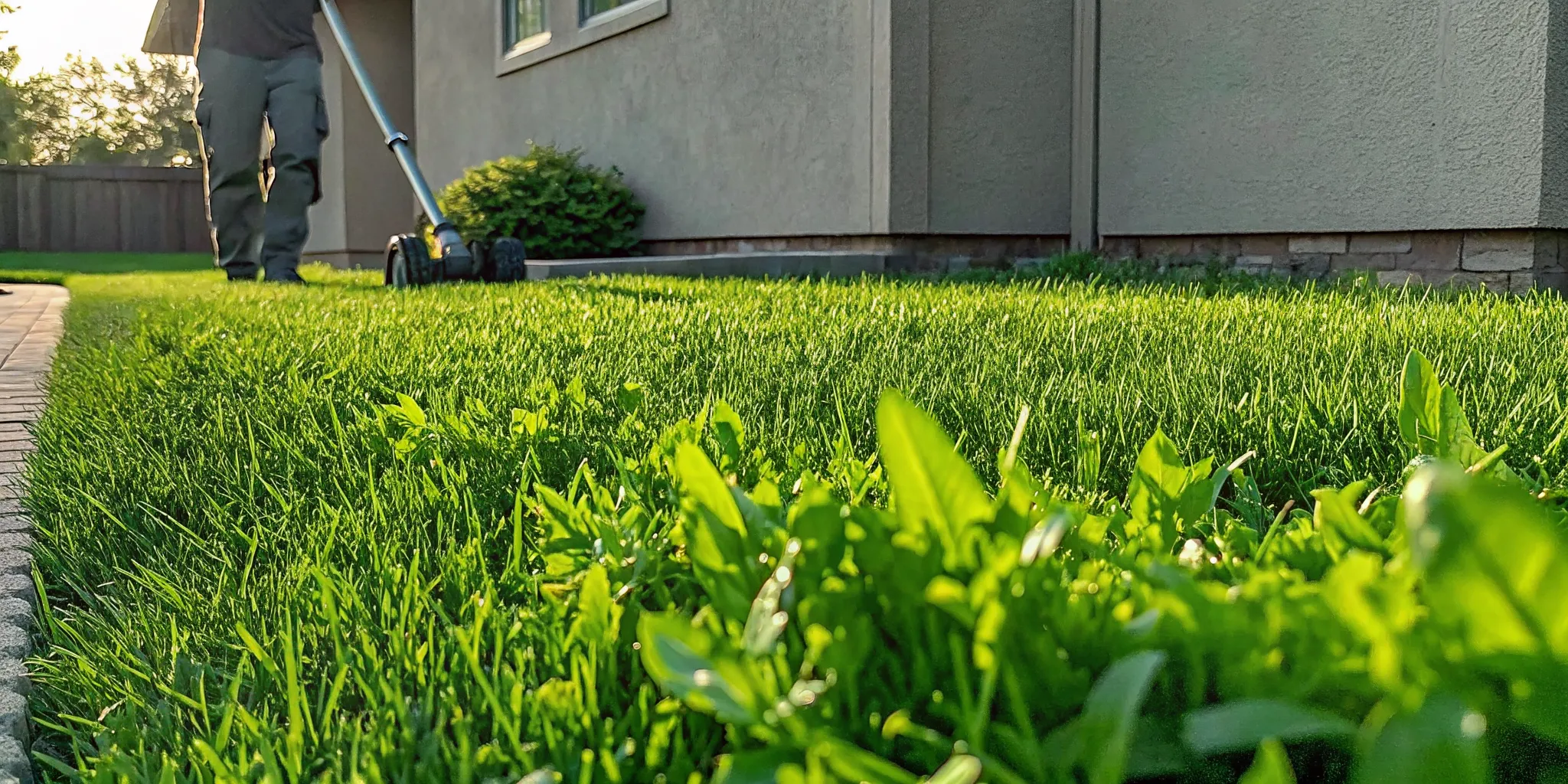
The best weed killer for lawns is not one bottle that works everywhere. It is the right treatment for the weed species, grass type, growth stage, and weather on application day. A selective post-emergent product can control visible dandelions without intentionally harming compatible turf, while a well-timed pre-emergent can stop certain annual weeds before they emerge. Accurate identification and careful timing make the difference between a useful treatment and a wasted application.
Want a weed control plan tailored to your lawn? Get a FREE Quote.
Best Weed Killer For Lawns: What Makes a Weed Killer the Best Choice for a Lawn?
A good lawn weed killer controls the target weed while fitting the condition of the turf. That definition matters because an effective product used in the wrong place can injure desirable grass, nearby ornamentals, or both. Before buying anything, ask four questions: What weed is present? What grass is growing around it? Is the weed already visible? Is the lawn healthy enough to tolerate treatment?
The product label is the final authority. It identifies weeds the product is designed to control, turf species on which it may be used, application rates, temperature limits, protective equipment, and required waiting periods. If the weed or grass species is not listed, choose another approach. Do not assume that a product labeled for one kind of lawn is suitable for every turf type.
For scattered weeds, spot treatment is often more precise than spraying the whole yard. For a widespread problem, a broader application may be appropriate only when the label allows it and conditions are suitable. Granular products can fit some programs, while liquid treatments can make it easier to target individual plants. The formulation matters less than correct identification, accurate measurement, and complete label compliance.
| Product or approach | Best fit | Main limitation | Key timing point |
|---|---|---|---|
| Selective post-emergent | Visible weeds growing among compatible lawn grasses | May not control every species and can injure sensitive turf | Apply while target weeds are actively growing |
| Nonselective post-emergent | Isolated weeds where desirable plants can be fully avoided | Can damage or kill contacted lawn grass | Use on calm days with precise placement |
| Pre-emergent | Preventing labeled annual weeds before germination | Does not remove established weeds and may affect seeding plans | Apply before expected germination and activate as labeled |
| Hand removal and turf care | Small infestations and lawns where chemical treatment is unnecessary | Requires consistent follow-up | Remove before weeds flower or set seed |
Identify the Weed Before You Treat It
Weeds differ in life cycle and structure, so identification directs the treatment plan. Broadleaf weeds such as dandelion have wider leaves with branching veins. Grassy weeds resemble lawn grass but may differ in blade shape, color, growth habit, or seedhead. Sedges can look grasslike but often have a distinct triangular stem and prefer certain site conditions. A product made for broadleaf weeds may do little for a grassy weed or sedge.
Life cycle also guides timing. Annual weeds complete their life cycle in one growing season and rely heavily on seed. Biennials typically grow leaves in the first season and flower in the next. Perennials can return from roots, rhizomes, or other underground structures. Pulling the top from a persistent perennial may provide a temporary cosmetic improvement without removing its ability to regrow.
Look at several intact plants, not just one damaged leaf. Note the leaf arrangement, margins, stems, roots, flowers, seedheads, and growth pattern. Take clear photos before mowing. Compare those details with a reliable identification resource or review ExperiGreen’s guide to common lawn weeds and how to get rid of them. If identification remains uncertain, delay treatment. A few days spent confirming the species is better than applying a product that cannot solve the problem.
Weeds can also reveal why the lawn is struggling. Thin areas may point to shade, compacted soil, poor drainage, drought stress, mowing damage, or weak turf nutrition. Treating the plant without correcting the condition can leave an open space for the next weed. Identification should therefore include both the weed and the lawn environment around it.
Selective, Nonselective, Pre-Emergent, and Post-Emergent Options
Selective products protect compatible turf when used correctly
Selective herbicides are designed to control certain plants while leaving listed turf species unharmed when applied according to the label. Many lawn treatments target broadleaf weeds, but selectivity is not universal. Grass tolerance varies, and a product suitable for one turf species may damage another. Check both the target weed and the lawn grass on the label before use.
Nonselective products require strict placement
Nonselective herbicides can injure most green plants they contact, including desirable grass. They may fit limited situations, such as treating an isolated weed in a hardscape crack or preparing a small area for renovation. But they are not a routine answer for weeds scattered through a healthy lawn. Wind, splash, overspray, and walking through a wet treatment can move product to plants you intended to protect.
Pre-emergents prevent; post-emergents treat visible weeds
A pre-emergent creates a treatment zone that disrupts the early development of labeled weeds as seeds germinate. It does not make existing weeds disappear. Application must occur before the target weed germinates, and some products require watering to activate the barrier. Because certain pre-emergents can also interfere with desirable grass seed, coordinate treatment with overseeding or lawn renovation plans.
A post-emergent is applied after a weed is visible. It works best when the target plant is actively growing and able to take up the treatment. Mature, drought-stressed, recently mowed, or weather-stressed weeds may respond poorly. Learn more about the practical differences between pre-emergent and post-emergent weed control before building a seasonal plan.
These categories are tools, not rankings. The right choice depends on the problem in front of you. A pre-emergent is valuable for preventing a known annual weed at the right time, but it will disappoint when the lawn is already full of visible plants. A selective post-emergent may address those visible weeds, yet it will not correct the bare soil or weak turf that allowed them to establish.
Timing Weed Control for Better Results
Timing begins with the weed’s growth cycle, then narrows according to local weather and the product label. Preventive treatments must be in place before target seeds germinate. Treatments for visible weeds generally perform best while those weeds are young and actively growing. Waiting until a weed is large, flowering, or stressed can make control more difficult and may allow it to produce seed.
Weather on application day is equally important. Wind can carry spray away from the target. Rain too soon after application may wash off products that need time on the leaf, while some soil-applied products require irrigation or rainfall for activation. Extreme heat, drought, or other stress can increase turf injury risk or reduce weed response. Follow the label’s specific guidance for temperature, wind, rain, watering, and mowing.
Think in seasonal windows, not calendar promises
Spring often brings active growth and opportunities to address emerging broadleaf weeds or prevent certain warm-season annuals. Fall can be an effective period for treating some perennial broadleaf weeds while they are actively moving resources toward their roots. Yet the correct window varies by weed, climate, turf type, and year. Soil and air conditions are more useful than a date copied from a national calendar.
Local differences matter. A treatment window in Charlotte may not match the same week in Detroit, and conditions can vary within a single market. Keep simple notes on what appeared, where it grew, and when it became visible. Those observations help shape next season’s prevention plan and reduce guesswork.
If repeated applications have not improved the lawn, stop and reassess rather than adding more product. The weed may be misidentified, the timing may be wrong, or site conditions may be driving reinfestation. ExperiGreen’s weed control services can help homeowners build a more deliberate approach.
How to Apply Lawn Weed Killer Safely
Safe application starts before the container is opened. Read the full label each time, even if you have used a similar product before. Labels differ by formulation and may change. Keep children and pets away from the mixing and treatment area, wear the required protective equipment, and use only the labeled rate. More product does not mean better control.
- Confirm the target. Identify the weed and turf species, then verify that both are addressed on the label.
- Inspect lawn conditions. Delay treatment if grass is severely stressed, newly seeded, recently sodded, or otherwise excluded by the label.
- Check the forecast. Choose a calm application window that meets label requirements for temperature, rain, and watering.
- Measure the area and product. Calibrate equipment and mix only the amount needed at the labeled rate.
- Protect nearby plants and water. Prevent drift, runoff, and contact with flowers, shrubs, vegetable gardens, storm drains, and surface water.
- Apply evenly or spot-treat precisely. Avoid overlapping passes and never spray nonselective product over desirable turf.
- Clean up and store responsibly. Follow label directions for equipment cleaning, disposal, storage, and reentry to the treated area.
- Evaluate after the labeled interval. Give the product time to work before deciding whether any follow-up is appropriate.
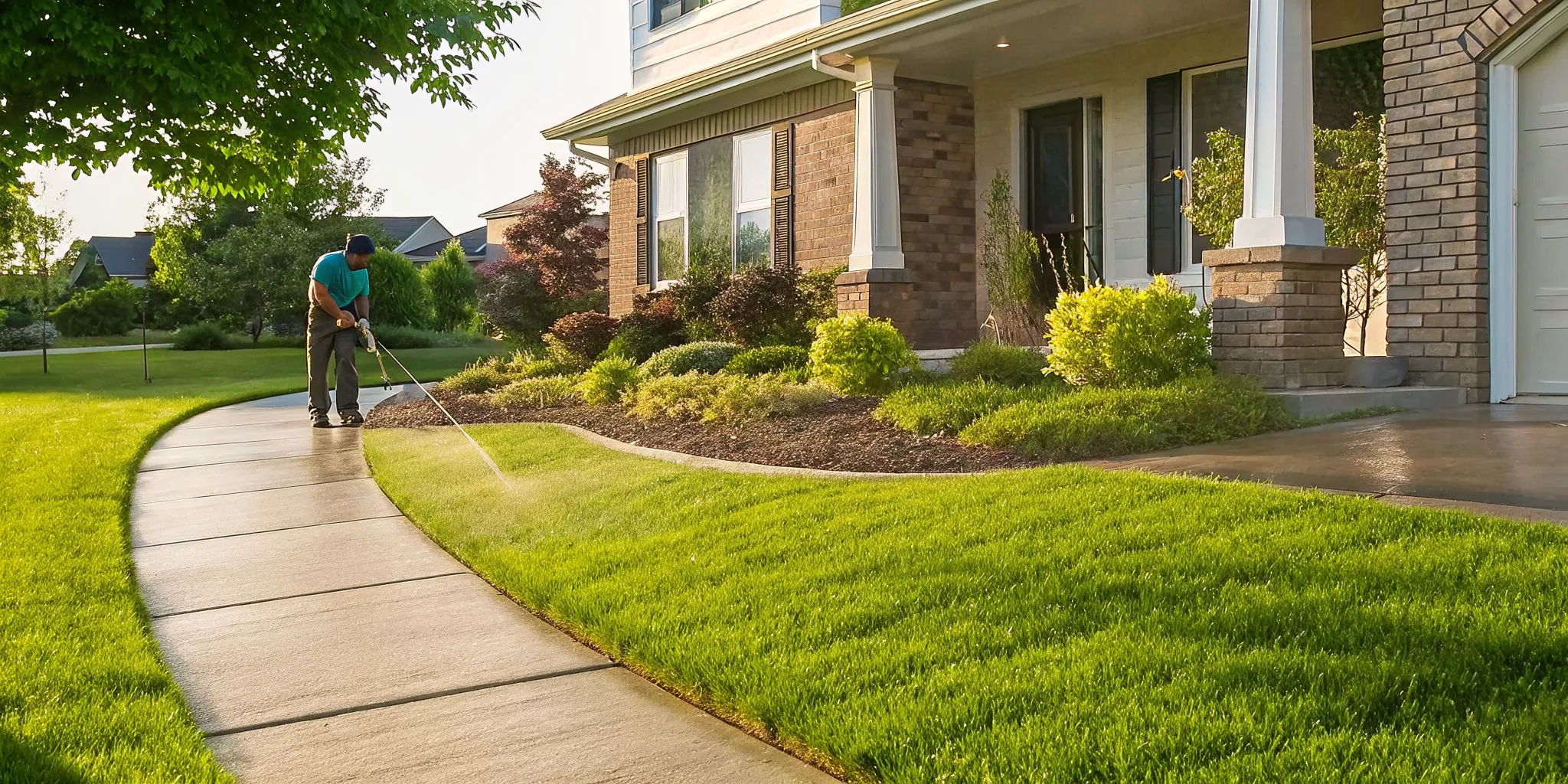
Use a dedicated, clearly labeled sprayer for herbicides. Residue in a multipurpose sprayer can harm desirable plants during a later use. Never transfer lawn products into food or drink containers, and keep them in their original labeled packaging. Store them as the label directs, out of reach of children and pets.
Pay attention to the path beyond the target weed. Treatment that lands on a sidewalk may wash into a drain. Spray drifting onto a garden can injure plants. Granules left on hard surfaces should be handled exactly as directed on the label. Precision protects the lawn, the landscape, and the surrounding environment.
Prefer help with product selection and timing? Get a FREE Quote for professional lawn care.
Build a Thicker Lawn That Crowds Out Weeds
Weed control works better when paired with turf care. Weeds take advantage of openings, so the long-term goal is a dense lawn suited to the site’s sunlight, soil, and moisture. A spray can reduce current weeds, but healthy turf makes it harder for new plants to gain space.
Mow at an appropriate height for the grass species and avoid removing too much blade in one cut. Taller, healthy turf can shade the soil surface and support deeper roots. Use sharp mower blades so grass is cut cleanly rather than torn. Change mowing direction periodically and avoid scalping uneven areas.
Water deeply enough to support roots, but avoid frequent shallow watering that keeps the surface continually wet. Actual needs depend on rainfall, soil, grass type, and season. Correct drainage problems where possible, and avoid working on saturated soil. Compaction limits air and water movement, weakens roots, and can favor weeds adapted to difficult conditions.
Fertilization should be based on turf needs rather than the idea that more is better. Excessive or poorly timed fertilizer can stress grass, encourage unwanted growth, or move away from the target area. A coordinated lawn fertilization and weed control program combines nutrition, prevention, and treatment instead of viewing each task in isolation.
Repair bare areas at a time suitable for the turf species, but coordinate seeding with pre-emergent use. Some preventive herbicides can interfere with grass seed establishment. Also consider why the area became bare. Shade, pet traffic, compacted soil, or an irrigation problem may need attention before new grass can persist.
Monitor the lawn after making changes. Mark recurring patches on a simple yard map and photograph them every few weeks from the same position. A pattern near a downspout, walkway, shaded fence, or heavily traveled route can reveal a site problem that product selection alone will not fix. Record mowing height, rainfall, irrigation, treatments, and seeding dates as well. These notes do not need to be elaborate. They simply help separate a short-term flush of weeds from a persistent issue and make future decisions more accurate.
When removing a few weeds by hand, work when the soil is moist enough to release roots without creating a large divot. Fill and repair disturbed areas so they do not become new germination sites. Bag mature seedheads when appropriate rather than scattering them across the yard. Small, consistent actions support the same goal as treatment: fewer open spaces and stronger desirable turf.
When to Hire a Lawn Care Professional
DIY treatment can be reasonable for a small number of correctly identified weeds when a homeowner can follow the label and protect nearby plants. Professional help becomes valuable when weeds cover a large area, keep returning, are difficult to identify, or grow alongside stressed turf. It is also worth considering when the treatment schedule conflicts with seeding plans or when several lawn problems overlap.
A professional can evaluate weed species, turf condition, seasonal timing, and site factors together. That does not mean every lawn needs the same treatment or that one visit can prevent every future weed. It means recommendations can be based on what is actually growing and why it may be thriving. Ask what the plan targets, how results will be evaluated, and what cultural practices will support the treatment.
Consider help when safe placement is difficult, especially near ornamental beds, gardens, water, or areas used frequently by children and pets. Homeowners who cannot comfortably measure the area, calibrate equipment, or interpret the label should not guess. ExperiGreen offers broader lawn care services that can connect weed management with the health of the entire lawn.
No responsible approach should promise a permanently weed-free lawn. Seeds can arrive by wind, animals, soil movement, and mowing equipment. A realistic program aims to reduce troublesome weeds, improve turf density, monitor results, and adjust as conditions change.
Frequently Asked Questions About Lawn Weed Killer
What is the best weed killer for lawns with mixed weeds?
The best choice depends on identifying each weed and confirming the surrounding grass is listed as tolerant on the product label. Mixed infestations may require more than one carefully timed approach. Do not use a broad treatment simply because it lists many weeds; match it to the species actually present and follow every label direction.
Should I apply pre-emergent or post-emergent weed killer?
Use a labeled pre-emergent before target annual weeds germinate and a labeled post-emergent after target weeds are visible and actively growing. Pre-emergent will not remove established weeds, while post-emergent does not create the same preventive barrier. Seeding plans, turf type, and local conditions should guide the choice.
How soon after mowing can I apply weed killer?
Follow the specific product label because required timing varies. Many foliar treatments need enough leaf surface to absorb the product, so mowing immediately before or after application may reduce effectiveness. The label also explains watering, rainfall, and reentry intervals that must be respected.
Why do weeds return after treatment?
Weeds may return because seeds remain in the soil, roots survived, new seeds arrived, the product missed the target species, or weak turf left open space. Recheck identification and timing, then correct contributing issues such as thin grass, compaction, drainage, shade, or mowing stress.
Choose the Right Plan for Your Lawn
The best results come from a simple sequence: identify the weed, understand its life cycle. Select a compatible option, wait for the right conditions, apply it exactly as labeled, and strengthen the surrounding turf. This approach avoids the common mistake of choosing a product first and asking questions later.
If your lawn has recurring weeds or you want support coordinating treatment with fertilization and seasonal care, ExperiGreen can help assess the next step. Get a FREE Quote and start building a practical lawn care plan.
Weed pressure, turf type, and treatment timing vary by market. Explore ExperiGreen lawn care in Chicago, Charlotte, Canton and Akron, Cincinnati, Columbus, Detroit, Indianapolis, and South Bend.